

Maddy summaryHB 1827 expands who can certify eligibility for Missouri disabled license plates and placards by adding licensed occupational therapists to the list of "other authorized health care practitioners" under Section 301.142. This change directly affects individuals seeking disabled placards (who now have more healthcare providers able to issue the required certification) and licensed occupational therapists (who gain authority to provide these certifications). The bill modifies the definition to include occupational therapists licensed under Chapter 324, allowing them to issue physician's statements for conditions they are legally authorized to diagnose and treat, while maintaining existing requirements for the certification format and content.
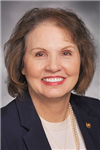
Rep. Deanna Self
Sponsored bills
Maddy summaryHB 1740 updates the state's point system for driving violations, affecting drivers who accumulate points on their license record. It sets specific thresholds for license suspension (e.g., 8 points in 18 months) and revocation (12 points in 12 months), while allowing drivers to avoid full suspension by installing an alcohol interlock device in their vehicle. License reinstatement requires proof of financial responsibility (like insurance) and takes 30-90 days depending on prior suspensions, with shorter timelines for first-time offenses. The bill also clarifies that points cannot be reduced during suspension periods and mandates reinstatement fees for suspended drivers.
Maddy summaryHB 1839 requires commercial websites distributing more than one-third "sexual material harmful to minors" (defined as content appealing to minors' sexual interests without serious artistic value) to implement age verification for users under 18. It mandates that businesses use reasonable age-verification methods (like government ID checks) and prohibits retaining personal user data during verification. Websites must display specific health warnings about pornography's effects and a national helpline notice in 14-point font. The law excludes bona fide news organizations and internet service providers from compliance, and the Missouri Attorney General can enforce it through lawsuits seeking damages or injunctions.
Maddy summaryHCR 46 is a symbolic resolution designating October 14th annually as "Charlie Kirk Day" in Missouri. It honors Charlie Kirk, founder of Turning Point USA, through commemorative observances without creating new laws or affecting specific groups. The resolution encourages Missourians to reflect on his advocacy for free speech, conservative principles, and civic engagement. It is a non-binding commemorative measure, not a policy change.
Maddy summaryHB 3125 would create a property tax exemption for Missouri homeowners aged 65 or older who own and live in their primary residence (homestead). Starting in 2027, eligible owners would not pay real property taxes on their homestead, but they would lose eligibility for other property tax credits or relief programs. The state would reimburse local governments for lost tax revenue due to this exemption. This exemption cannot be transferred or combined with other tax relief for the same property.
Maddy summaryHB 3124 requires most criminal cases involving children under 17 to be handled in juvenile court instead of adult court. The bill only allows transferring a case to adult court if a judge certifies the child as an adult, typically for serious offenses. This directly affects minors accused of crimes in Missouri, keeping them in the juvenile system unless certification occurs. The bill modifies existing juvenile justice procedures to strengthen this default jurisdiction, without specifying certification criteria.
Maddy summaryHJR 179 proposes a constitutional amendment that would exempt Missouri residents aged 65 or older from paying state and local taxes on their tangible personal property, such as vehicles, furniture, and other movable belongings. The amendment would also include existing exemptions for homesteads, manufacturers' inventories, and non-profit properties, but the primary focus is on seniors. If approved by voters in the November 2026 election or a special election, this exemption would take effect immediately for qualifying individuals. As a constitutional amendment, it requires voter approval to become law and does not change current tax rates for other property types.
Maddy summaryHB 2160 adds mifepristone (a medication used in medical abortions) to Missouri's Schedule I controlled substances, placing it under the most restrictive drug classification. The bill also creates a new criminal offense for "coerced criminal abortion by means of fraud," which would penalize individuals who fraudulently induce an abortion. These changes directly affect healthcare providers, patients seeking abortion care, and individuals accused of coercive abortion practices. The law modifies Missouri's controlled substances scheduling framework and introduces a specific criminal penalty related to abortion procedures. (Note: The bill text lists mifepristone under Schedule I, not Schedule IV as stated in the title.)
Maddy summaryHB 2314 prohibits businesses from designating changing rooms or restrooms (other than family restrooms) for use by people of both sexes, or allowing individuals to use facilities designated for the opposite sex. It defines "sex" as determined by a person's original birth certificate and requires "family restrooms" to be single-stall, fully enclosed, lockable, and ADA-compliant. The bill applies to all places of public accommodation, including businesses that collect membership fees, and includes procedures for handling discrimination complaints while protecting privacy during investigations. It aims to clarify facility access rules but does not address broader discrimination protections beyond public accommodations.
Maddy summaryHB 2313 prohibits using fetal organs or tissue obtained from elective abortions for medical, research, therapeutic, or any other purpose. It bans offering money or incentives to women to conceive or abort specifically to harvest fetal tissue, though it allows payments for burial, medical exams, or pathological examinations of fetal remains. The bill directly affects medical researchers, hospitals, and clinics that might have used such tissue, applying only to patient-choice abortions - not medically necessary procedures. It does not restrict other uses of fetal tissue or impact abortion access generally.