

Maddy summaryHB 3327 creates "entertainment districts" in cities bordering the Missouri River with populations between 46,000 and 51,000. It allows special licenses for bars, restaurants, and portable bars within these districts to serve alcohol until 1:30 a.m. Monday-Saturday and 6:00 a.m.-1:30 a.m. Sunday, with containers marked by the licensee. Licensees pay a $300 annual fee and are responsible for alcohol violations on their premises or in common areas. The bill also prohibits taking alcohol outside the district boundaries and requires city governing bodies to adopt district rules via ordinance. (Note: The bill was introduced February 17, 2026, and is pending further action.)

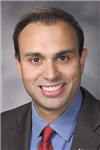
Rep. Ben Keathley
Sponsored bills
Maddy summaryThis resolution (HCR 24) formally congratulates Shen Yun Performing Arts on its 20th anniversary and recognizes its performances in Missouri cities like St. Louis, Kansas City, and Springfield. It acknowledges Shen Yun's mission to showcase traditional Chinese culture and its artists' work despite reported security threats. The resolution directs the Missouri House Clerk to present a signed copy to Shen Yun Performing Arts. As a commemorative resolution, it does not create new laws or affect policy.
Maddy summaryHJR 168 proposes a constitutional amendment requiring most charter counties in Missouri to amend their charters to make the circuit clerk an elected position. It specifically exempts counties with populations between 600,000 and 700,000 and mandates that St. Louis County’s charter must require an elected circuit clerk. The amendment would replace current constitutional language (Section 18(b)) and requires voter approval at the 2026 general election or a special election called by the governor. This change would directly affect all Missouri charter counties except those in the specified population range.
Maddy summaryHB 3128 bans lobbyists from accepting any payment - cash, goods, or other benefits - to lobby on behalf of foreign governments designated as "adversaries" by federal law, their political parties, or specific entities tied to those governments (including officials, their families, or government-linked businesses). It directly affects lobbyists working for foreign governments or their designated clients within the U.S. legislative process. Violators must return all payments received and face civil fines of up to $1,000 per violation, enforced by the Attorney General through investigations and court actions. The law aims to prevent foreign governments from influencing U.S. policy through lobbying activities.
Maddy summaryHB 2084 updates Missouri's rules for spousal maintenance (alimony) in divorce or legal separation cases. It requires courts to consider specific factors like each spouse's income, education needs, marriage duration, and the recipient's ability to support themselves when setting maintenance amounts and duration. The bill mandates that all maintenance orders include a termination date, which must automatically end when the paying spouse reaches full retirement age (unless both parties agree otherwise), and requires six months' notice before retirement. These changes apply to all new maintenance orders and modifications after the law takes effect.
Maddy summaryHB 2079 exempts the retail sale of food from Missouri's state sales tax starting August 2026, while phasing out local sales and use taxes on food over four years (2027-2030). It defines "food" narrowly to exclude prepared meals from restaurants, fast food, and similar establishments where over 80% of revenue comes from immediate consumption. The bill directs the revenue from the remaining 1% state tax (until 2026) to the school district trust fund, as required by existing law. This directly affects grocery stores, convenience stores, and food retailers, but not restaurants or eateries meeting the defined exclusion.
Maddy summaryHB 2078 requires Missouri school districts to adjust how they allocate funds for administrative staff and teachers. Starting in the 2027-28 school year, at least 88% of total compensation (salaries, wages, and benefits) must go to classroom teachers, increasing by 1% annually until reaching 95% by 2028-29 and beyond. The bill defines "teacher" as certified classroom educators and excludes non-classroom roles like coaches or advisors from this calculation. This directly affects all Missouri public school districts in their budgeting for staff compensation.
Maddy summaryHB 2081 requires Missouri-based entities participating in the federal 340B drug pricing program (which provides discounted medications to safety-net hospitals and clinics) to submit detailed annual reports to the state Department of Health and Senior Services by April 1st. The reports must include specific financial data on drug acquisition costs, payments received, charity care expenses, and how savings from the program are used. Entities failing to submit on time face daily fines of $1,000. The department will then compile and publicly share aggregated data annually, while keeping individual entity reports confidential. This bill directly affects Missouri hospitals, clinics, and outpatient facilities that operate under the federal 340B program.
Maddy summaryHB 2428 restricts where charter schools can operate in Missouri and defines who can sponsor them. It limits charter schools to specific districts (e.g., unaccredited districts, certain urban areas, or counties with 150,000-200,000 residents) and prohibits school districts with over 1,550 students from allowing more than 35% of enrollment in locally sponsored charters. The bill also specifies eligible sponsors (like local school boards, accredited colleges, or nonprofits) and bans sponsors from charging application fees for charter proposals. These changes directly affect charter schools, school districts, and potential sponsors by altering operational rules and financial requirements.
Maddy summaryHB 2425 changes Missouri's license plate requirement for noncommercial vehicles, requiring only one plate instead of two beginning August 28, 2026. Owners of noncommercial vehicles with a front license plate as of that date must surrender it to the Department of Revenue. The bill specifies that one plate must be displayed on the rear of most vehicles (except commercial vehicles, which may request two plates with an additional fee). It also mandates that all plates include state name, "SHOW-ME STATE," expiration date, and reflective features for visibility. This policy affects all Missouri residents who register noncommercial vehicles under current law.