

Maddy summarySF 3210 prohibits discrimination against individuals with disabilities by public or private entities receiving state funding in Minnesota. The bill requires these organizations to provide reasonable accommodations and ensures people with disabilities cannot be excluded from services or denied benefits due to their disability. It specifically bans the denial of access to service animals in public places like restaurants and hotels, and prohibits charging extra fees for service animals. This law directly affects state-funded organizations and individuals with disabilities across Minnesota.

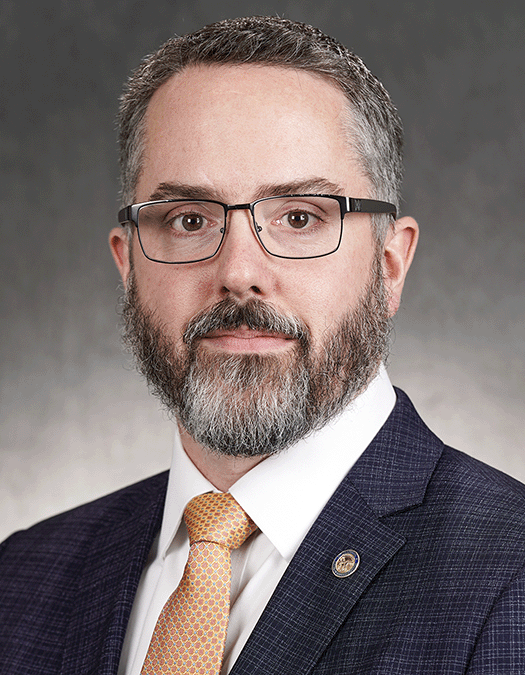
Rep. Luke Frederick
Sponsored bills
Maddy summaryThis bill appropriates state funds to the Department of Corrections to settle specific legal claims against the government. The money is designated for individuals who suffered injuries or losses while incarcerated in state facilities or while performing correctional work. It authorizes full and final payments under existing statutes for medical services and injuries sustained during these periods. The funds are available for fiscal year 2027 and must be expended by June 30 of that year.
Maddy summaryThis bill introduces new regulations in Minnesota to restrict the ownership and sale of semiautomatic military-style assault weapons and large-capacity magazines, while also banning the sale of binary trigger systems. It expands criminal penalties for possessing dangerous weapons in schools and for negligently storing firearms, and it specifically criminalizes the manufacture and sale of untraceable "ghost guns." Additionally, the legislation strengthens the state's extreme risk protection order system, requires law enforcement to report firearm discharges more comprehensively, and allocates funding to support public awareness campaigns and mental health services.
Maddy summaryHF 2380 prohibits discrimination against individuals with disabilities in services, programs, or activities receiving state funding in Minnesota. It directly affects public and private entities (like schools, hospitals, and businesses) that receive state money. The bill requires these entities to provide reasonable accommodations and bans exclusion or denial of benefits due to disability. It also specifically prohibits businesses from banning service animals or charging extra fees for them, defining "disability" broadly to include conditions substantially limiting major life activities.
Maddy summaryThis bill prohibits Minnesota municipalities from signing nondisclosure agreements that prevent them from sharing information about projects funded with public money. It directly affects local governments, including cities, counties, school districts, and other political subdivisions that manage public funds. The law makes any such restrictive contracts automatically unenforceable and requires municipalities to publicly disclose any agreements that violate this rule. The provision specifically covers projects involving land development, economic initiatives, tax revenues, bonds, and other debt obligations.
Maddy summaryHF 2904 requires certain Minnesota school employers - including school districts, charter schools, and vocational education centers - to join the state's public employees insurance program. It establishes an "educator group insurance program" specifically for school employees, mandating coverage tiers that match existing school employee pool options and including high-deductible plans. The bill creates a labor management committee with 12 members (including seven from Education Minnesota and representatives from unions and school administrators) to study program issues like cost efficiency. It also requires mutual agreement between the commissioner and the committee before changing cost-sharing plans. This bill directly affects school employees and their employers by integrating them into the state's insurance framework with specific administrative structures.
Maddy summaryThis bill prohibits the sale and use of paraquat dichloride, a pesticide, in Minnesota. Starting January 1, 2027, no one can sell or distribute this product, and by January 1, 2028, its use is also banned. The commissioner of agriculture must collect and dispose of any remaining stock of this pesticide and submit a report on its historical use and current supply chain status by January 1, 2028. The law directly affects pesticide sellers, distributors, and agricultural users who currently handle or apply this chemical.
Maddy summaryHF 76 limits how much Minnesota utility customers can pay for executive compensation. It prohibits utility regulators from approving rate increases that cover the top 10 executives' pay at public utilities with 300,000+ Minnesota retail customers if that pay exceeds the governor's annual salary. The bill defines "compensation" broadly to include salary, bonuses, and other pay, but excludes standard benefits and expense reimbursements. Utilities may still pay executives from non-ratepayer sources (like investor funds), but regulators must ensure this doesn't unfairly burden customers in other states.
Maddy summaryThis bill repeals previous tax exemptions that allowed certain preferred seats and amenities at athletic events to be sold without sales tax. It also provides funding for safe harbor shelter and housing grants to support individuals experiencing homelessness. By removing the exemptions, the legislation ensures that these specific stadium seats and related amenities are now subject to standard sales tax like other retail items. The funding provision aims to allocate state money directly to organizations assisting with shelter and housing needs.
Maddy summaryThis bill allocates $1.5 million from the arts and cultural heritage fund to the City of Minneapolis to create a public memorial honoring Renée Good and Alex Pretti. The memorial will feature statues, educational exhibits, and a space for community reflection, focusing on their deaths and the broader issues of civil rights and immigration enforcement. The project requires a collaborative planning process involving local residents, civil rights groups, artists, and historians, with oversight provided by a partnership including city officials and state legislators. While the state provides the initial funding, the city is permitted to seek additional private donations and partnerships to cover design, programming, and long-term maintenance costs.