

Controlled substances: schedules; scheduling of certain controlled substances; modify. Amends sec. 7204 of 1978 PA 368 (MCL 333.7204).
SB 716 shortens Michigan's review period for aligning state controlled substance schedules with federal changes. It requires the state administrator to decide within 30 days (down from 91 days) whether to adopt federal scheduling changes for substances, rather than automatically following federal action. If the state chooses not to adopt a federal schedule, it must publish its reasons within 30 days of that decision. This directly affects the Michigan Department of Health and Human Services (the "administrator") and impacts how quickly Michigan regulates substances like drugs or chemicals under state law. The bill does not change which substances are controlled but streamlines the process for updating Michigan's schedules.
Bill status
signed
all 5 stages cleared
Introduction
Nov 2025
Committee Review
Jun 2026
Senate Passage
Mar 2026
House Passage
Jul 2026
Signed into Law
Jul 2026
Introduced Nov 13, 2025
Signed Jul 29, 2026
Maddy AI version diff · 4 comparisons
What changed between versions
As Passed by the House
→
Substitute (S-1)
·
3 edits
MINOR
SB 716 shortens the deadline from 91 days to 60 days for Michigan's controlled substances board to hold a meeting and make a determination when a substance is designated, rescheduled, or deleted under federal law. It also makes minor wording clarifications (changing 'shall' to 'must' and 'control' to 'schedule'). The change accelerates the state's response time to federal scheduling actions.
TIMELINE
The deadline for the administrator to hold a board meeting after receiving notice of a federal scheduling change was shortened from 91 days to not more than 60 days.
The deadline for publishing reasons if the administrator decides not to similarly schedule a substance was also shortened from 91 days to not more than 60 days.
TECHNICAL
Minor wording changes: 'shall' changed to 'must' and 'control' changed to 'schedule' for clarity, with no substantive policy impact.
Floor votes · Senate Mar 11, 2026 · House Jul 3, 2026
How they voted
35–1
Passed · 2 other
Total votes 38
Mar 11, 2026
D
Democratic19
94% Yea
R
Republican19
89% Yea
Vote distribution
All Yea
All Nay
Mixed
No data
Full legislative history
Actions timeline
Total actions
26
Key actions
7
Committee
7
Jul 29, 2026
Introduced
FILED WITH SECRETARY OF STATE 7/23/2026 11:30 AM
upper
Jul 29, 2026
Signed into law
APPROVED BY GOVERNOR 7/21/2026 1:30 PM
upper
Jul 3, 2026
Lower · Passed
passed; given immediate effect Roll Call #303 Yeas 102 Nays 6 Excused 0 Not Voting 2
lower
Jun 17, 2026
Committee
referred to second reading
lower
Jun 17, 2026
Lower · Passed
reported with recommendation without amendment
lower
Mar 11, 2026
Committee
referred to Committee on Health Policy
lower
Mar 11, 2026
Introduced
received on 03/11/2026
lower
Mar 11, 2026
Upper · Passed
PASSED ROLL CALL # 29 YEAS 34 NAYS 1 EXCUSED 2 NOT VOTING 0
upper
Mar 10, 2026
Upper · Passed
SUBSTITUTE (S-1) CONCURRED IN
upper
Mar 10, 2026
Upper · Passed
REPORTED BY COMMITTEE OF THE WHOLE FAVORABLY WITH SUBSTITUTE (S-1)
upper
Mar 5, 2026
Committee
REFERRED TO COMMITTEE OF THE WHOLE WITH SUBSTITUTE (S-1)
upper
Mar 5, 2026
Upper · Passed
REPORTED FAVORABLY WITH SUBSTITUTE (S-1) 3/4/2026
upper
Nov 13, 2025
Committee
REFERRED TO COMMITTEE ON HEALTH POLICY
upper
Nov 13, 2025
Introduced
INTRODUCED BY SENATOR PAUL WOJNO
upper
1 primary · 0 co-sponsors
Sponsors
Role
Legislator
Party
State
District
P
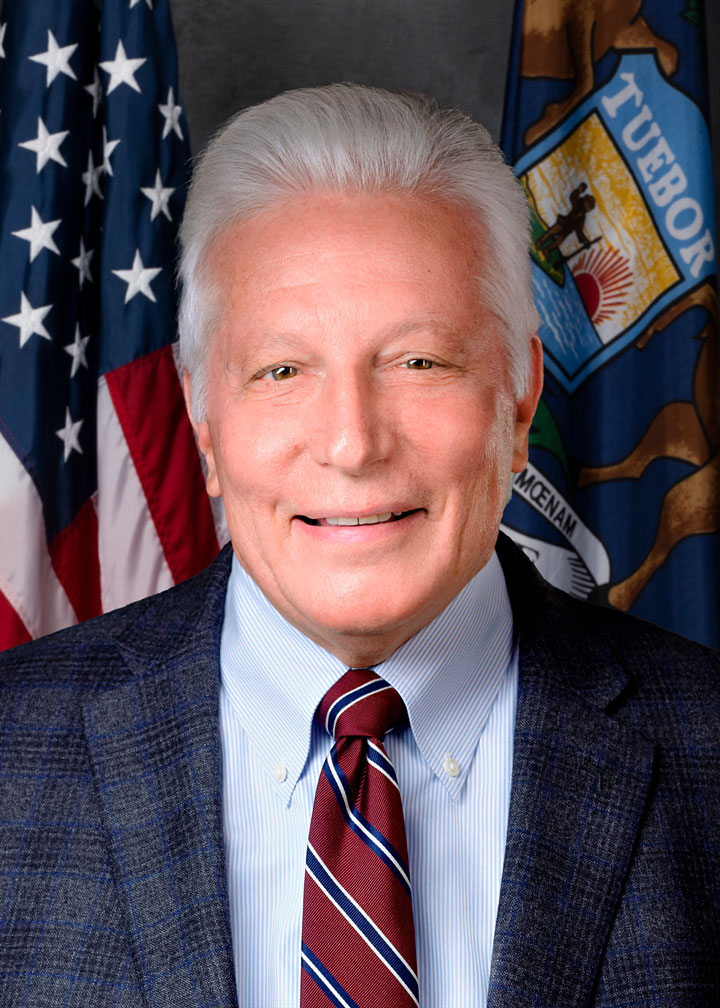
Paul Wojno
DDemocratic
Ask Maddy
·
AI policy assistant
Ask Maddy about SB 716
Scope: MI
Hi! I can help you understand SB 716. What would you like to know?
Try one of these
i
Maddy answers using official bill text and legislative records. Always verify before sharing.
Sources cited inline