

Maddy summaryThe Digital Asset Inventory and Audit Act of 2026 requires all federal agencies to scan seized electronic devices and data for cryptocurrency private keys and other digital assets within 180 days of enactment. The bill mandates that these assets be securely stored, with the Attorney General responsible for developing technical standards and training programs for law enforcement and forensic examiners. Federal agencies must conduct annual audits to verify secure custody and report their findings to Congress, while the Government Accountability Office will perform broader compliance reviews every three years. Funding for the necessary digital forensic tools is authorized through amendments to existing federal forfeiture funds.

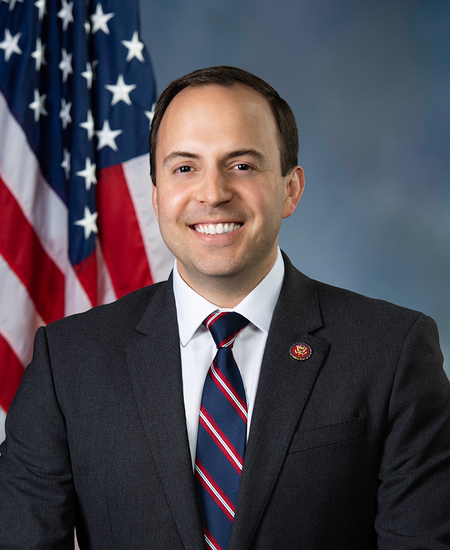
Rep. Lance Gooden
Sponsored bills
Maddy summaryThis bill, known as the Congressional Records Protection Act, aims to shield the personal and official communications of Members of Congress and their employees from government searches and subpoenas. It directly affects federal, state, and local law enforcement agencies by prohibiting them from obtaining records related to these individuals unless the person is the specific target of a criminal investigation. Under the new rules, agencies must notify the affected Member or employee before searching their records, except in urgent cases where notice could endanger lives or destroy evidence. Additionally, any materials found during a search that belong to a protected individual cannot be reviewed for 30 days to ensure they are not accessed without proper oversight.
Maddy summaryHR 5267, the American Franchise Act, clarifies when franchisors can be considered joint employers of franchisee employees under federal labor laws. It defines "substantial direct and immediate control" over essential employment terms like wages, benefits, hours, hiring, and discipline - requiring franchisors to actively set these terms to be deemed joint employers. The bill explicitly excludes routine brand standards, training, or minimal safety requirements from constituting such control. This directly affects franchisors and franchisees by limiting joint employer liability to cases where franchisors exert significant, ongoing influence over core employment decisions. The law applies prospectively to new cases after enactment, not past disputes.
Maddy summaryThe End Gas Station Heroin Act amends the Controlled Substances Act to place 7-hydroxymitragynine and mitragynine pseudoindoxyl in Schedule I, while exempting naturally occurring kratom products that meet specific low-concentration limits. The bill also creates a new enforcement mechanism for emerging synthetic opioids by treating them as Schedule I controlled substances when they are manufactured or distributed commercially. This provision applies to synthetic opioids that are more potent than morphine and not approved for medical use, but it explicitly prohibits criminal or civil penalties for simple possession or personal use.
Maddy summaryThe RESET Act prohibits social media platforms from allowing users under 16 to create or maintain accounts. Platforms must identify existing minor accounts within 60 days of enactment, notify users within 180 days, and terminate accounts within 30 days of notification. Upon termination, platforms must delete all personal data collected from minors and provide a readable, portable copy of that data for 90 days after termination. Enforcement is handled by the Federal Trade Commission and allows states to pursue legal action for violations.
Maddy summaryThe Fair Treatment of Religious Organizations Act of 2026 changes how the IRS determines if a group qualifies for tax-exempt status based on its religious beliefs. Specifically, it ensures that beliefs regarding marriage, sexuality, or gender identity are not automatically considered illegal or against public policy when evaluating a religious organization's purpose. Additionally, the bill clarifies that a belief does not need to be central to a religion to be recognized as a valid religious belief for tax purposes. These rules will apply to tax years starting after December 31, 2025, affecting how various faith-based groups are assessed under the Internal Revenue Code.
Maddy summaryThis bill, known as the Bankruptcy Threshold Adjustment Act of 2026, raises the maximum debt amounts individuals and small businesses can owe while still being eligible to file for Chapter 13 bankruptcy. For small businesses, it increases the debt limit from $2,750,000 to $7,500,000, while for individual consumers, it raises the limit from $483,000 to $2,750,000. The changes apply to cases filed on or after the bill becomes law and affect people who meet the income requirements for Chapter 13 repayment plans. The bill excludes large corporations and certain affiliated business groups from the new higher limits.
National Law Enforcement Officers Remembrance, Support and Community Outreach Act. [ sic ] This bill temporarily directs the Department of the Interior to award a grant to the National Law Enforcement Officers Memorial Fund for the expenses associated with operating and enhancing the community outreach, public education, and officer safety and wellness programs of the National Law Enforcement Museum.
Maddy summaryThis House resolution formally honors the life and legacy of the late Representative Kay Granger from Texas, recognizing her historic achievements in public service. The bill highlights her roles as the first woman elected mayor of Fort Worth, the first Republican woman to represent Texas in the U.S. House, and the first Republican woman to chair the House Committee on Appropriations. It also acknowledges her contributions to national defense, including her work on the F-35 fighter jet program and the naming of a Navy ship for Fort Worth. The resolution expresses sympathy to Granger's family and directs the Clerk of the House to send an official copy of the document to her loved ones.
Maddy summaryThe Right to Worship Act makes it unlawful for individuals to knowingly disrupt religious services or prevent people from entering houses of worship within 100 feet of an entryway during the hour before and after a scheduled service. The bill applies to conduct that meaningfully interferes with a service's normal operation or unreasonably hinders participation, while explicitly allowing free speech as long as it adheres to these specific time, place, and manner restrictions. Violators face escalating civil fines ranging from $2,500 for a first offense to $10,000 for subsequent offenses, assessed by the Attorney General. Additionally, the act permits aggrieved individuals, the U.S. Attorney General, or state attorneys general to file civil lawsuits seeking injunctive relief, compensatory damages, and attorney fees.