

Maddy summaryThis House concurrent resolution directs the President to withdraw U.S. Armed Forces from hostilities with any presidentially designated terrorist organization in the Western Hemisphere. The directive is issued under section 5(c) of the War Powers Resolution and applies unless Congress has separately authorized military action through a declaration of war or specific legislation.

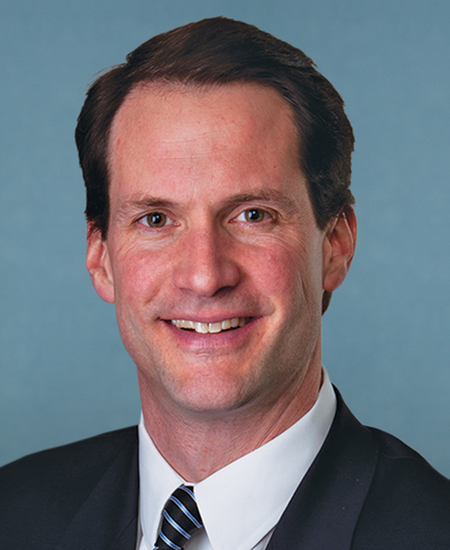
Rep. James A. Himes
Sponsored bills
Maddy summaryThe End Tuberculosis Now Act of 2026 amends the Foreign Assistance Act to designate ending the global tuberculosis emergency as a major objective of U.S. foreign policy and authorizes the President to provide funding for prevention, diagnosis, and treatment programs worldwide. The bill sets specific targets to be achieved by 2030, including an 80 percent reduction in new infections and a 90 percent reduction in deaths compared to 2015 levels, while also requiring that 30 million individuals receive preventive treatment. Key provisions mandate the use of innovative diagnostic tools, support for drug-resistant TB care, and coordination with private sector partners to develop vaccines and lower treatment costs. The legislation requires annual reports to Congress detailing program progress and expenditures, and it includes a sunset clause that terminates these specific authorities on January 1, 2033.
Maddy summaryThis bill restricts states from taxing the income of individuals who live in one state but work remotely for employers located elsewhere. It establishes that a state can only tax an individual's compensation if they are physically present within that state during the time the work is performed, preventing taxation based on where the employer is headquartered. The legislation specifically prohibits states from using "convenience of the employer" tests to claim taxing rights over workers who are physically located in another jurisdiction. These rules apply immediately upon enactment and affect nonresident employees and independent contractors, while leaving corporate taxes and unearned income regulations unchanged.
Maddy summaryThe NO PROFIT Act prohibits social media platforms from selling or providing paid, early access to posts made by federal government officials and their immediate family members. It also makes it illegal for any person to buy or sell securities, commodities, or prediction market contracts while possessing this non-public information before it is available to the general public. The bill targets a wide range of officials, including the President, members of Congress, executive branch employees, and judges, as well as their spouses and dependent children. Violations by social media platforms result in civil penalties equal to the revenue earned from the unauthorized early access, while individuals who trade on this information face enforcement actions by the Securities and Exchange Commission or the Commodity Futures Trading Commission.
National Law Enforcement Officers Remembrance, Support and Community Outreach Act. [ sic ] This bill temporarily directs the Department of the Interior to award a grant to the National Law Enforcement Officers Memorial Fund for the expenses associated with operating and enhancing the community outreach, public education, and officer safety and wellness programs of the National Law Enforcement Museum.
Maddy summaryThe Lori Jackson-Nicolette Elias Domestic Violence Survivor Protection Act aims to reduce intimate partner homicides by strengthening federal laws that prevent abusers from accessing firearms while restraining orders are active. It expands the definition of "intimate partner" to include dating partners and clarifies that emergency or temporary restraining orders must also trigger gun restrictions. The bill requires courts to automatically issue firearm surrender orders when a protection order is granted, mandating that abusers turn in their guns within 24 hours and prohibiting them from buying new ones for the duration of the order. Additionally, the legislation creates a new grant program to help states and local governments implement these surrender procedures and partner with domestic violence service providers.
Maddy summaryThis bill reauthorizes and expands the Accelerating Access to Critical Therapies for ALS Act through 2031, extending funding for research into treatments for amyotrophic lateral sclerosis. It requires drug manufacturers to share interim clinical trial data with the FDA to better assess the progress of investigational drugs and clarifies that phase 3 clinical trial definitions include combined phase 2/3 trials and planned trials not yet enrolling participants. The legislation also mandates the FDA to publish an updated five-year action plan for ALS and other rare neurodegenerative diseases, including resource needs and coordination strategies with broader disease communities. Additionally, the bill requires the Government Accountability Office to submit a report on the program's implementation four years after enactment.
Maddy summaryThis bill reauthorizes federal programs focused on preventing and responding to tick-borne diseases through 2026-2030, extending existing efforts beyond their previous expiration. It updates the National Strategy for Vector-Borne Diseases to emphasize identifying, reporting, preventing, and responding to these illnesses. The bill modifies two sections of the Public Health Service Act to continue funding for health departments working on vector-borne disease control. It directly affects public health programs and state/local health departments managing tick-borne disease prevention and response.
Maddy summaryThe AADAPT Act reauthorizes and expands Project ECHO grants to improve Alzheimer’s and dementia care through technology-enabled training. It specifically funds grants for healthcare providers in rural, frontier, or medically underserved areas to enhance early diagnosis, quality care, and provider retention for dementia patients. The bill authorizes $1 million annually (2027-2032) for these dementia-focused training programs, requiring funds to supplement - not replace - existing resources. This directly supports primary care providers licensed to serve underserved communities, using collaborative online learning to address care gaps.
Maddy summaryThis bill establishes a legal framework allowing banks and credit unions to provide financial services to businesses operating marijuana or hemp industries under state laws without fear of losing federal protections. It specifically shields these institutions from penalties, insurance termination, or liability if they accept deposits or make loans to state-sanctioned marijuana or hemp companies. The legislation also clarifies that income from these businesses can be used to qualify for federally backed mortgages and requires regulators to update guidance on how to handle suspicious activity reports related to these sectors. Additionally, the bill mandates annual reports and studies to assess access to banking services for minority-owned and small businesses within the industry.