

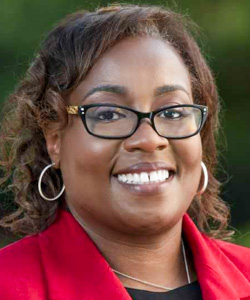
Photo of Nicole Williams
D Maryland House · District 22

Rep. Nicole Williams

Compare
Total votes
6,880
all sessions
Attendance
91%
640 missed
Lower than 96% of chamber peers
With party
99%
of cast votes
Near the chamber average
Bipartisan score
0%
crosses aisle rarely
Near the chamber average
Sponsored
393
bills & resolutions
Near the chamber average
Committees
2
assignments
393 bills and resolutions

Sponsored bills

Total
393
Primary
393
Co-sponsor
0
This page
393
matching current filters
Primary HB 849
Signed into law · Maryland House · Lead sponsor
Child Care Scholarship Program - Freeze in Enrollment - Exceptions and Waitlist

Maddy summaryHB 849 prevents certain groups from being cut off from Maryland's Child Care Scholarship Program if a freeze on new enrollments is implemented. It specifically protects families receiving Temporary Cash Assistance, TANF, or Social Security Income; siblings of currently enrolled children; individuals who recently lost jobs (within 30 days); and government workers furloughed due to a shutdown lasting over 7 days. The bill adds these exceptions to the existing rules that would otherwise allow the program to freeze enrollment. This change ensures these vulnerable groups maintain access to child care assistance during enrollment freezes.

Signed into law May 26, 2026 0 co-sponsors
Primary HB 776
Signed into law · Maryland House · Lead sponsor
Juvenile Law - Child in Need of Supervision - Mandatory Petition (NyKayla Strawder Memorial Act)

Maddy summaryHB 776, the NyKayla Strawder Memorial Act, requires Maryland intake officers to automatically file a petition declaring a child under 13 a "child in need of supervision" if the child is alleged to have caused a death through a criminal act (e.g., homicide or manslaughter). This applies specifically to cases where the child's actions would be a felony if committed by an adult. The bill removes the intake officer's discretion to handle such cases informally or dismiss them, mandating formal juvenile court processing. Law enforcement must also forward these complaints directly to the Department of Juvenile Services.

Signed into law May 26, 2026 0 co-sponsors
Primary HB 1326
Signed into law · Maryland House · Lead sponsor
Child Abuse and Neglect - Disclosure of Reports and Records

Maddy summaryHB 1326 expands who can access child abuse and neglect reports in Maryland. It allows the Department of Human Services to disclose these records to school personnel (including principals and superintendents), child care facility operators, and higher education institutions when they need to investigate or take action against employees or contractors who interact with children. The bill requires safeguards to protect the identity of reporters and others whose safety could be endangered by disclosure. This directly affects schools, child care centers, and colleges by enabling them to address potential abuse concerns involving staff or contractors.

Signed into law May 26, 2026 0 co-sponsors
Primary HB 738
Signed into law · Maryland House · Lead sponsor
Real Property - Transfer-on-Death Deed - Establishment

Maddy summaryHB 738 establishes a legal mechanism for Maryland property owners to transfer real estate automatically to designated beneficiaries upon death, bypassing probate court. It creates "transfer-on-death deeds" (TODDs) with specific requirements for creation, revocation, and recording in county land records, while exempting these deeds from certain property transfer taxes. The bill directly affects Maryland homeowners who wish to simplify estate planning for real property, including those with existing life estate deeds that meet specific conditions. Key provisions include standardized forms for TODDs, retroactive application to qualifying pre-existing deeds, and updated recording rules for county clerks.

Signed into law May 26, 2026 0 co-sponsors
Primary HB 396
Signed into law · Maryland House · Lead sponsor
Residential Child Care Programs - Education of Children and Training of Child and Youth Care Practitioners

Maddy summaryHB 396 requires operators of licensed residential child care programs (like group homes and emergency shelters) to ensure children aged 5-16 in their care receive proper education. It mandates enrolling children in local schools (or approved in-house programs), transferring academic records, meeting with teachers, and providing study time, homework help, and support for extracurricular activities or individualized education plans. The bill also sets new training standards for child care practitioners, requiring background checks, education credentials, and approved training on child development and their role. These changes directly affect residential programs receiving state funding and their staff in Maryland.

Signed into law May 26, 2026 0 co-sponsors
Primary HB 573
Signed into law · Maryland House · Lead sponsor
Fair Housing and Housing Discrimination - Regulations, Intent, and Discriminatory Effect

Maddy summaryHB 573 updates Maryland's fair housing laws to prohibit discriminatory housing practices based on *effect* - not just *intent*. It explicitly states that actions creating segregated housing patterns or disproportionately harming protected groups (based on race, disability, sexual orientation, etc.) are illegal, regardless of whether the actor intended harm. The bill requires the Department of Housing to adopt regulations ensuring local governments and housing authorities actively "affirmatively further fair housing" through assessments in comprehensive planning. This directly affects housing providers, landlords, local governments, and housing authorities by expanding prohibited conduct and mandating proactive fair housing measures.

Signed into law May 26, 2026 0 co-sponsors
Primary HB 634
Signed into law · Maryland House · Lead sponsor
Police Training - Autism and Dementia (LEAD Act of 2026)

Maddy summaryHB 634 (LEAD Act of 2026) requires Maryland police training programs to include specific instruction on interacting with individuals with dementia or autism. It directly affects all entrance-level and in-service police training curricula across state, county, and municipal departments. Key provisions mandate training in six areas: locating wandering individuals, searching near water, sensory-aware approaches, reunification, documentation, and interagency coordination. The law amends Maryland's Public Safety Code to add these requirements, effective October 1, 2026. It focuses on practical, life-saving protocols rather than broader policy changes.

Signed into law May 26, 2026 0 co-sponsors
Primary HB 750
Signed into law · Maryland House · Lead sponsor
Criminal Law - Obstruction or Interference With Exercise of Religious Beliefs - Prohibition

Maddy summaryHB 750 prohibits anyone from physically blocking another person from entering or leaving a religious facility, such as a church, mosque, synagogue, cemetery, or religious school. It specifically bans detaining, obstructing, or hindering someone’s path to or from these locations. Violating this law would be a misdemeanor punishable by up to 90 days in jail or a $1,000 fine. The bill includes exemptions for facility staff, law enforcement, and religious authorities acting in good faith, and explicitly does not restrict protected speech.

Signed into law May 12, 2026 0 co-sponsors
Primary HB 1152
Signed into law · Maryland House · Lead sponsor
Department of State Police - Special Police Officers - Study

Maddy summaryHB 1152 requires the Maryland Department of State Police to study the employment and use of special police officers - individuals with limited law enforcement authority hired by private entities or local governments. The study must examine commissioning processes, training standards, jurisdiction, oversight mechanisms, and best practices in Maryland and neighboring states. The Department must consult with police associations, employers, training academies, and other stakeholders before compiling findings. The Department must submit a final report to the Governor and legislature by December 1, 2026, with recommendations for potential policy changes.

Signed into law May 12, 2026 0 co-sponsors
Primary HB 1165
Signed into law · Maryland House · Lead sponsor
State Procurement - Apprenticeship Program Accountability and Completion

Maddy summaryHB 1165 requires contractors working on certain state procurement contracts (called "covered procurements") to use apprenticeship programs with a minimum 25% completion rate, as determined by the Maryland Department of Labor. This applies to state contracts meeting specific criteria established by the Chief Procurement Officer. Contractors must provide written verification of program compliance before receiving a contract. The bill aims to ensure apprenticeship programs meet quality standards for state-funded projects.

Signed into law May 12, 2026 0 co-sponsors
Showing 1 to 10 of 393 bills
1 2 3 40 Next