

Local Boards of Elections - Board Counsel - Qualifications
HB 621 changes the qualifications for legal counsel appointed by Maryland county election boards. It requires that board counsel must be a registered voter in their specific county (previously required to be a registered voter in the entire state). This bill directly affects all 24 Maryland county election boards when hiring their legal counsel. The key change eliminates the statewide voter registration requirement, making it a local county residency requirement instead. The bill amends Sections 2-201(a)(1) and 2-205(a) of Maryland's Election Law.
Bill status
signed
all 5 stages cleared
Introduction
Jan 2026
Committee Review
Apr 2026
House of Delegates Passage
Apr 2026
Senate Passage
Apr 2026
Signed into Law
Apr 2026
Introduced Jan 30, 2026
Signed Apr 28, 2026
Maddy AI version diff · 1 comparison
What changed between versions
First - Local Boards of Elections - Board Counsel - Qualifications
→
Third - Local Boards of Elections - Board Counsel - Qualifications
·
3 edits
MINOR
The bill was updated to reflect its progression through the legislative process, including a favorable committee report and adoption by the House. The text of the law itself was reorganized to clarify that board counsel must be a registered voter of the State (removing the previous requirement to be a voter of the specific county) and must be admitted to practice law in the State.
Scope change
The scope of eligibility for board counsel was broadened by removing the county-specific voter registration requirement, allowing any registered voter in the state to serve as counsel regardless of their county of residence.
ELIGIBILITY
Changed the voter registration requirement for board counsel from being a registered voter of 'its county' to being a registered voter of 'THE STATE', expanding the pool of eligible candidates.
TIMELINE
Added procedural history indicating the bill received a favorable committee report, was adopted by the House, and was read a second time on February 22, 2026.
TECHNICAL
Added standard legislative formatting elements including a chapter placeholder, an explanation of markup symbols, and signature lines for the Governor and legislative leaders.
Floor votes · Senate Mar 19, 2026 · House of Delegates Feb 23, 2026
How they voted
45–0
Passed · 4 other
Total votes 49
Mar 19, 2026
D
Democratic36
88% Yea
R
Republican13
100% Yea
Vote distribution
All Yea
All Nay
Mixed
No data
Full legislative history
Actions timeline
Total actions
14
Key actions
10
Committee
6
Apr 28, 2026
Signed into law
Approved by the Governor - Chapter 256
executive
Apr 8, 2026
Lower · Passed
Returned Passed
lower
Apr 8, 2026
Upper · Passed
Third Reading Passed
upper
Apr 3, 2026
Upper · Passed
Favorable Adopted Second Reading Passed
upper
Apr 2, 2026
Upper · Passed
Favorable Report by Education, Energy, and the Environment
upper
Mar 19, 2026
Senate · Passed
Senate Vote: pass (45-0-4)
senate
Mar 5, 2026
Committee
Referred Education, Energy, and the Environment
upper
Mar 4, 2026
Lower · Passed
Third Reading Passed
lower
Mar 3, 2026
Lower · Passed
Favorable Adopted
lower
Mar 2, 2026
Lower · Passed
Favorable Report by Government, Labor, and Elections
lower
Feb 23, 2026
House Of Delegates · Passed
House of Delegates Vote: pass (110-20-12)
house of delegates
Jan 30, 2026
Committee
First Reading Government, Labor, and Elections
lower
4 primary · 0 co-sponsors
Sponsors
Role
Legislator
Party
State
District
P

Andrew Pruski
DDemocratic
P

Chris Tomlinson
RRepublican
P
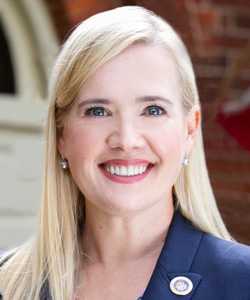
Dana Jones
DDemocratic
P
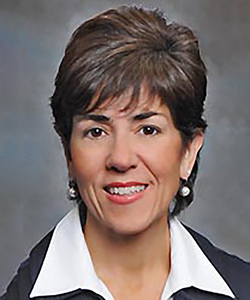
Mary Lehman
DDemocratic
Ask Maddy
·
AI policy assistant
Ask Maddy about HB 621
Scope: MD
Hi! I can help you understand HB 621. What would you like to know?
Try one of these
i
Maddy answers using official bill text and legislative records. Always verify before sharing.
Sources cited inline