

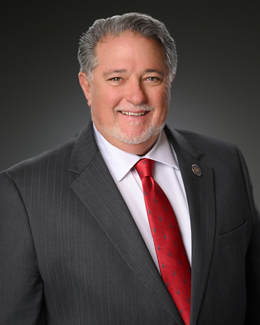
Maddy summaryThis bill amends the laws governing the Sewerage and Water Board of New Orleans to clarify the legal relationship between the board and the city. It explicitly states that the board's composition follows the New Orleans Home Rule Charter unless state law dictates otherwise. Additionally, the legislation grants the New Orleans City Council the authority to create rules for appointing board members and defining their terms of service. These changes aim to align the board's operational framework with existing city charter provisions while providing the city council with clearer regulatory powers over board governance.

Sponsored bills
Maddy summarySB 43 establishes Louisiana's Psychedelic-Assisted Therapy Program within the Department of Health to fund clinical studies using psychedelic medications (like psilocybin) for treating opioid use disorders, co-occurring substance use disorders, and treatment-resistant mental health conditions. The program requires academic health centers to meet strict federal and state compliance standards - including FDA approval, safety protocols, and therapist qualifications - to conduct these studies. Eligible patients, including those with the specified conditions, may participate, and parishes can use opioid settlement funds to enroll residents. The bill mandates annual progress reports from participating centers and requires coordination with other states conducting similar research. This is a research-focused program, not a policy allowing general therapeutic use.
Maddy summarySB 237 requires schools in Louisiana to immediately report allegations of physical or sexual abuse against school employees to the state Department of Education. It creates a database tracking these reports and mandates schools check this database before hiring new employees to identify potential patterns of abuse. The bill also requires the Department of Children and Family Services to notify the state child ombudsman within three business days of child abuse or neglect fatalities or near-fatalities, including specific details like prior department involvement. Additionally, it directs the child ombudsman to notify legislators within 24 hours of any child death linked to abuse or neglect investigations. These provisions directly affect schools, school employees, child welfare agencies, and state legislators.
Maddy summaryHB 431 requires mayors and governing authorities in Louisiana municipalities with 15,000 or fewer residents (per the latest federal census) to complete 16 hours annually of state-approved training. The training covers specific topics like ethics, harassment prevention, cybersecurity, procurement, and emergency preparedness, organized into 13 categories by the Louisiana Municipal Association. Compliance will be verified through annual attestation included with municipal financial reports and publicly listed by the legislative auditor. The law takes effect January 1, 2027, and applies to elected officials but not temporary appointees serving less than one year.
Maddy summaryThis bill amends the text of a Senate resolution regarding the removal of judges for serious offenses like malfeasance or incompetence. The changes involve correcting a spelling error in the word "canons" and adding the preposition "of" to clarify the reference to United States laws. These adjustments do not alter the substantive policy or the process for addressing judicial misconduct but ensure the legislative document is accurate. The bill is currently in the final stages of passage after being referred to a committee and amended.
Maddy summaryHB 750, the "Click-to-Cancel Act," requires businesses in Louisiana to clearly disclose automatic renewal terms before consumers sign up for subscriptions and provide an easy way to cancel. It directly affects consumers who subscribe to services (like streaming or software) and businesses offering those subscriptions. Key provisions mandate that businesses: (1) show all renewal details (including charges and cancellation policy) in clear, visible language before payment; (2) give a simple cancellation method as easy as signing up; and (3) keep records of consumer consent for at least three years. The law aims to prevent hidden charges and make it straightforward for consumers to stop recurring payments.
Maddy summaryHB 784 updates Louisiana's sex offender registration laws by expanding the definition of "sex offense" to include specific crimes like human trafficking (R.S. 14:46.2), certain deepfake violations (R.S. 14:73.13), and offenses against minors such as child pornography (R.S. 14:81.1) and molestation (R.S. 14:81.2). It requires individuals convicted of these offenses to register with law enforcement within three business days of establishing Louisiana residency. The bill also clarifies registration requirements for offenders convicted under other jurisdictions' laws and updates court notification forms. This affects anyone convicted of the specified offenses who must comply with Louisiana's registration system.
Maddy summaryHB 401 designates the elevated section of U.S. Highway 190 over the Bogue Falaya River in Covington, St. Tammany Parish, as the "Corporal Justin D. McLeese Memorial Bridge" to honor a military corporal. The bill requires the Louisiana Department of Transportation to install signage reflecting this name, using local or private funds to cover costs up to $2,250 per sign. This is a ceremonial naming bill with no substantive policy changes, solely commemorating an individual through a public infrastructure designation.
Maddy summaryThis legislative resolution asks the U.S. Congress to oppose any efforts to transfer, privatize, or remove parts of the Kisatchie National Forest in Grant Parish, Louisiana, from federal ownership. The bill highlights the forest's cultural, economic, and recreational value to the community while urging increased investment in outdoor activities and conservation. It does not change federal law but serves as a formal expression of local support for keeping the land under federal management.
Maddy summaryHB 1247 establishes a statewide Sexual Assault Nurse Examiner Coordinator to oversee and support forensic care for sexual assault survivors across the state. The bill directly affects healthcare providers, law enforcement agencies, and survivors by creating a centralized role to improve the consistency and quality of medical examinations and evidence collection. Key provisions include defining the coordinator's responsibilities, setting up a funding mechanism, and outlining procedures for training and certification of Sexual Assault Nurse Examiners. The legislation aims to streamline the response to sexual assaults by ensuring survivors receive standardized, trauma-informed care from qualified professionals.