

CIVIL PROCEDURE: Provides for the garnishment process for banks. (8/1/26)
SB 173 changes Louisiana's rules for how banks handle garnishments (where a bank must pay a debtor's money to a court). It allows banks to immediately pay the sheriff up to $1,000 in a debtor's account without a court order, if they admit holding the funds and face no opposition. For amounts over $1,000, banks must wait 30 days after filing their answer before paying the sheriff. The bill applies to banks but excludes wage, salary, or commission garnishments. This directly affects banks and debtors in civil judgment cases.
Bill status
signed
all 5 stages cleared
Introduction
Feb 2026
Committee Review
Apr 2026
Senate Passage
Apr 2026
House Passage
May 2026
Signed into Law
May 2026
Introduced Feb 25, 2026
Signed May 15, 2026
Maddy AI version diff · 3 comparisons
What changed between versions
SB173 Original
→
SB173 Act
·
3 edits
MINOR
This bill updates the garnishment process for federally insured banks, allowing them to automatically release funds to the sheriff without a court order if the account balance exceeds $1,000 and no opposition is filed. Previously, banks had to deliver funds immediately regardless of the amount, which could disrupt cash flow for larger accounts. The change introduces a 30-day waiting period for accounts over $1,000 to balance creditor rights with financial institution operations.
Scope change
The bill applies specifically to federally insured financial institutions and modifies the threshold for immediate fund release from all amounts to amounts greater than $1,000.
REQUIREMENT
Changed the requirement for federally insured banks to deliver funds immediately to allowing a 30-day waiting period for accounts with balances over $1,000.
ELIGIBILITY
Added a specific exemption stating that the new 30-day rule does not apply to garnishments of wages, salaries, tips, or commissions.
TIMELINE
Extended the timeline for banks to deliver funds in larger accounts from immediate delivery to a 30-day waiting period after filing the garnishment answer.
Floor votes · Senate Apr 20, 2026 · House May 6, 2026
How they voted
35–0
Passed · 5 other
Total votes 40
Apr 20, 2026
D
Democratic12
83% Yea
R
Republican28
89% Yea
Vote distribution
All Yea
All Nay
Mixed
No data
Full legislative history
Actions timeline
Total actions
18
Key actions
4
Committee
4
Amendments
1
May 6, 2026
Lower · Passed
Read third time by title, roll called on final passage, yeas 90, nays 0. Finally passed, ordered to the Senate.
lower
Apr 28, 2026
Introduced
Reported without Legislative Bureau amendments.
lower
Apr 27, 2026
Lower · Passed
Reported favorably (6-0-1). Referred to the Legislative Bureau.
lower
Apr 21, 2026
Committee
Read by title, under the rules, referred to the Committee on Civil Law and Procedure.
lower
Apr 20, 2026
Upper · Passed
Read by title, passed by a vote of 35 yeas and 0 nays, and sent to the House. Motion to reconsider tabled.
upper
Apr 14, 2026
Upper · Passed
Reported favorably.
upper
Mar 9, 2026
Committee
Introduced in the Senate; read by title. Rules suspended. Read second time and referred to the Committee on Judiciary A.
upper
1 primary · 0 co-sponsors
Sponsors
Role
Legislator
Party
State
District
P
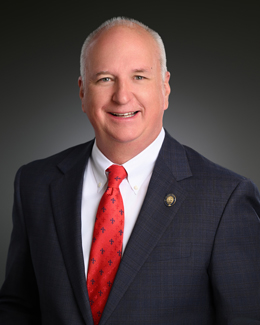
Jay Morris
RRepublican
Ask Maddy
·
AI policy assistant
Ask Maddy about SB 173
Scope: LA
Hi! I can help you understand SB 173. What would you like to know?
Try one of these
i
Maddy answers using official bill text and legislative records. Always verify before sharing.
Sources cited inline