

0 co-sponsors
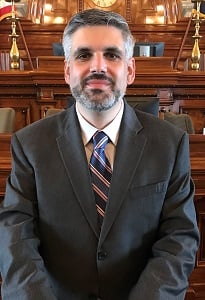
Rep. Dan Osman
Total votes
548
all sessions
Attendance
62%
330 missed
Near the chamber average
With party
94%
of cast votes
Lower than 76% of chamber peers
Bipartisan score
3%
crosses aisle rarely
Near the chamber average
Sponsored
71
bills & resolutions
Higher than 81% of chamber peers
Committees
5
assignments
71 bills and resolutions
Sponsored bills
Total
71
Primary
71
Co-sponsor
0
This page
71
matching current filters
0 co-sponsors
Proposing to amend the constitution of the state of Kansas to provide that property tax exemptions be approved by the electors of the state.
Maddy summaryThis bill proposes to amend the Kansas Constitution to require voter approval for any property tax exemptions. If passed, the change would shift the authority currently held by the state legislature to the electorate, meaning voters would directly decide whether specific groups or properties receive tax breaks. The measure does not create new exemptions itself but establishes a new rule for how future exemptions must be approved. It directly affects Kansas voters, property owners, and local governments by altering the process for determining tax relief.
died Apr 10, 2026
0 co-sponsors
Increasing the household income and appraised value thresholds for eligibility of seniors and disabled veterans.
Maddy summaryHB 2632 raises eligibility thresholds for Kansas seniors (65+) and disabled veterans to qualify for property tax refunds. It increases the household income limit from $50,000 to $75,000 and the homestead appraised value limit from $350,000 to $500,000 for tax years starting in 2026. The bill also adds an automatic cost-of-living adjustment to the income threshold each year. This change directly affects more Kansas residents aged 65+ or disabled veterans who previously earned too much or owned homes exceeding the old value limits.
Budget & TaxesSupports Budget & TaxesExpands property tax refund eligibility for seniors/disabled veterans by increasing income/value thresholds, providing targeted tax relief to lower/middle-income groups.
VeteransSupports VeteransBill expands property tax refund eligibility for disabled veterans by raising income/value thresholds and adding cost-of-living adjustments, directly advancing financial support.
died Apr 10, 2026
0 co-sponsors
Providing the authority for counties and cities to levy an additional liquor enforcement tax for property tax reduction.
Maddy summaryHB 2630 allows Kansas counties and cities to levy a 2% additional tax on liquor sales revenue (from retailers, microbreweries, distributors, and other sellers), but only after voter approval via local election. The tax revenue must be used exclusively to reduce the following year's property tax levy by an equal amount. Local governments must hold an election and secure majority voter approval before implementing the tax, with collections starting 60 days after the election. This bill directly affects property taxpayers in participating counties and cities by providing a new funding mechanism for property tax relief.
died Apr 10, 2026
0 co-sponsors
Proposing to amend the constitution of the state of Kansas to decrease the assessed valuation for real property used for residential purposes from 111/2% to 9%.
Maddy summaryThis bill proposes to change the state constitution to lower the property tax assessment rate for residential real estate in Kansas from 11.5% to 9%. The change would directly affect homeowners and communities with mobile or manufactured homes by reducing the percentage of their property's value used to calculate taxes. If approved by voters, the new rate would apply to properties starting January 1, 2027, while other property classes like agricultural land and commercial buildings would keep their current assessment percentages.
Budget & TaxesSupports Budget & TaxesBill lowers property tax assessments for residential owners, providing tax relief and reducing the fiscal burden on homeowners.
HousingSupports HousingLowering property tax assessments for residential real estate reduces the financial burden on homeowners, thereby supporting affordable housing and property stability.
died Apr 10, 2026
0 co-sponsors
Enacting the Kansas medical cannabis act to authorize the cultivation, processing, distribution, sale and use of medical cannabis and medical cannabis products.
Maddy summaryHB 2678 would establish Kansas' first legal medical cannabis program, allowing licensed businesses to cultivate, process, and sell cannabis products for medical use to qualifying patients. It requires the state to expunge past cannabis-related criminal records and imposes an excise tax on sales, with funds directed to child care, economic development, mental health, low-cost housing, and property tax rebates. The bill creates new licensing systems for cultivators, processors, and dispensaries, while exempting medical cannabis use from certain drug possession laws. It directly affects patients with qualifying medical conditions, licensed cannabis businesses, and the state's criminal justice and social service funding mechanisms.
Budget & TaxesSupports Budget & TaxesBill imposes excise tax on cannabis sales funding child care, mental health, housing, and property tax rebates, directly advancing public service funding through new revenue.
Criminal JusticeSupports Criminal JusticeRequires expungement of past cannabis convictions, reducing barriers for affected individuals and aligning with criminal justice reform goals.
HealthcareSupports HealthcareEnables medical cannabis access for patients and allocates excise tax revenue to mental health services, directly advancing healthcare access and funding.
HousingSupports HousingBill directs cannabis excise tax revenue to 'low-cost housing' programs, explicitly funding affordable housing initiatives as part of its tax allocation structure.
died Apr 10, 2026
0 co-sponsors
Enacting the adult use cannabis regulation act to regulate the cultivation, manufacturing, possession and sale of cannabis in this state.
Maddy summaryHB 2679 would establish a legal framework for the regulated sale and use of cannabis by adults 21 and older in Kansas. The bill creates licensing requirements for cannabis businesses (including growers, manufacturers, retailers, and testing facilities), mandates the clearing of past cannabis-related criminal records, and imposes an excise tax on cannabis sales. Revenue from this tax would fund child care, economic development, mental health services, low-cost housing, and property tax rebates through a new "cannabis business regulation fund." The law would replace existing cannabis laws and require businesses to follow specific safety, labeling, and operational standards.
Budget & TaxesSupports Budget & TaxesImposes excise tax funding child care, mental health, and housing programs per bill summary.
Criminal JusticeSupports Criminal JusticeMandates clearing past cannabis-related criminal records, a direct criminal justice reform measure to reduce barriers for individuals with prior convictions.
HealthcareSupports HealthcareBill allocates cannabis tax revenue to fund mental health services, directly advancing healthcare programs per topic description.
HousingSupports HousingBill allocates cannabis tax revenue to fund low-cost housing, directly advancing affordable housing programs per its summary.
died Apr 10, 2026
0 co-sponsors
Urging Congress to enact immigration reform.
Maddy summaryThis House Concurrent Resolution urges the U.S. Congress to pass comprehensive immigration reform to address issues caused by decades of federal inaction. The bill highlights how the lack of updated laws has negatively impacted states, local communities, and families through workforce shortages, economic instability, and family separation. It specifically calls for modernizing immigration pathways to reduce visa backlogs and ensuring that law enforcement actions are conducted with clear accountability and respect for due process. By requesting federal action, the resolution aims to restore predictability to immigration policy and protect vulnerable populations from the consequences of outdated statutes.
ImmigrationSupports ImmigrationBill urges Congress to enact comprehensive immigration reform to address workforce shortages and family separation, explicitly supporting immigrant integration and rights.
Labor & EmploymentSupports Labor & EmploymentBill addresses workforce shortages and economic instability caused by immigration inaction, implying support for labor market stability and worker availability.
died Apr 10, 2026
0 co-sponsors
Establishing the no kid hungry in schools program to reimburse school districts for the cost of providing certain meals to students attending public school.
Maddy summaryHB 2656 establishes Kansas' "No Kid Hungry in Schools" program, requiring public school districts with high student poverty rates to provide free breakfasts and lunches to all students. The state reimburses districts for the cost difference between federal meal reimbursements and the federal free-meal rate, covering up to one breakfast and one lunch per student daily. School districts must participate if they qualify under federal poverty thresholds for free meal eligibility, and must offer two federally reimbursable meals per student per day. The bill amends existing school meal funding laws to implement this state-level reimbursement system.
Budget & TaxesSupports Budget & TaxesState allocates budget funds to reimburse school districts for meal costs, increasing public service funding through state fiscal responsibility.
EducationSupports EducationReimburses districts for free meals, ensuring access to nutrition for students in high-poverty schools, directly supporting educational access and funding.
HealthcareSupports HealthcareProvides free school meals to high-poverty students, addressing nutritional health access as part of public health programs.
died Apr 10, 2026
0 co-sponsors
Ask Maddy
·
AI policy assistant
Ask Maddy about Dan Osman
Scope: kansas
Hi! I can help you understand Dan Osman's legislative record. What would you like to know?
Try one of these
i
Maddy answers using official bill text and legislative records. Always verify before sharing.
Sources cited inline