

Electric utility affordability.
Summary
Requires an electricity supplier, other than a municipally owned utility, that is under the jurisdiction of the Indiana utility regulatory commission (IURC) to do the following: (1) Beginning with the first monthly billing cycle that begins after June 30, 2026, apply a levelized billing plan (plan) to all active residential customer accounts: (A) for service provided under the electricity supplier's standard residential tariff to a household that is eligible for and has applied for assistance from the state's home energy assistance program; and (B) to which a plan does not already apply. (2) Not later than April 1, 2026, offer each customer a mechanism by which the customer may opt out of a plan at any time without penalty. (3) Not later than July 1, 2026, for any plan offered by the electricity supplier and applied to an active customer account, amend or design the plan so that plan's account reconciliation mechanism is applied at such times during a calendar year to reflect typical seasonal patterns of electricity usage by residential customers, but not more than two times during a calendar year. Prohibits an electricity supplier from referring to or promoting a levelized billing plan as a "budget billing plan" unless the levelized billing plan also provides other specified forms of relief for customers. Authorizes the IURC to adopt rules to implement these provisions. Amends existing law granting the IURC the authority to take certain actions with respect to the rates and services of public utilities during emergency circumstances, as judged by the IURC, to provide instead that the IURC may recommend that the governor declare a disaster emergency or proclaim a state of energy emergency during which the IURC may take such actions. Specifies that the emergency must result from: (1) a national economic depression; (2) an act of war; or (3) a disaster of unprecedented size and destructiveness. Provides that an electric utility, other than a municipally owned utility, may not terminate residential electric service to a customer on any day with respect to which the National Weather Service has forecast, not earlier than 48 hours in advance, a heat index of at least 95 degrees for the location where the customer receives service. Requires an electricity supplier, other than a municipally owned utility, that is under the jurisdiction of the IURC for the approval of rates and charges to report to the office of utility consumer counselor (OUCC) on a quarterly basis certain data concerning residential customer accounts. Requires the OUCC to annually compile and summarize the information contained in the reports and include the summary in the OUCC's annual report to the interim study committee on energy, utilities, and telecommunications. Provides that an investor owned electricity supplier that is under the jurisdiction of the IURC for the approval of rates and charges must petition the IURC for approval of any change in its basic rates and charges through the submission of a three-year multi-year rate plan (MYRP). Beginning in 2026, requires each electricity supplier to file its first petition with the IURC for approval of an MYRP according to a prescribed schedule. Provides that the base rates for the first rate year of an MYRP shall be established by the IURC in the same manner that base rates would be established in a proceeding for a change in basic rates and charges that occurs outside an MYRP. Specifies that in a petition to the IURC for a multi-year plan, an electricity supplier must include certain information in its case in chief. Provides that for each rate year in an electricity supplier's MYRP, the following apply: (1) A customer affordability performance metric and an associated performance incentive mechanism (PIM) that: (A) is based on the electricity supplier's performance in meeting the customer affordability performance metric; and (B) provides financial rewards or penalties to the electricity supplier based on that performance. (2) A service restoration performance metric and an associated PIM that: (A) is based on the electricity supplier's performance in meeting the service restoration performance metric; and (B) provides financial rewards or penalties to the electricity supplier based on that performance. Sets forth the methods by which the IURC must calculate the prescribed performance metrics and determine the associated PIMs. Sets forth specified findings the IURC must make in approving an electricity supplier's MYRP. Provides that at any time before the expiration of an electricity supplier's approved MYRP, the IURC may, upon its own motion, or at the request of the OUCC or the electricity supplier: (1) examine the electricity supplier's rates under the MYRP; (2) conduct periodic reviews with opportunities for public hearings and comments; and (3) adjust the base rates or PIMs under the MYRP. Beginning in 2029, requires the IURC to include in its annual report certain information about: (1) the status of electricity suppliers' MYRP filings and current MYRPs; (2) electricity suppliers' calculated performance metrics for the current rate year; and (3) the impact of all applicable PIMs on customer rates. Requires the IURC to adopt rules to implement these provisions. Requires an electricity supplier, other than a municipally owned utility, that is under the jurisdiction of the IURC to offer, not later than July 1, 2026, a low income customer assistance program (program) that provides financial assistance to low income residential customers for the payment of monthly bills for utility service. Requires an electricity supplier to annually fund its program in an amount equal to: (1) at least 0.2% of the electricity supplier's jurisdictional revenues for residential customers; plus (2) any contributions from governmental agencies or programs or from other third parties. Provides that if a customer who applies for assistance is eligible for assistance under the program, the electricity supplier shall enroll the customer in the program. Provides that an electricity supplier may, but is not required to, petition the IURC for approval to recover eligible program costs. Provides that "eligible program costs" do not include costs recovered by the electricity supplier through contributions that are provided at no cost to the electricity supplier. Beginning in 2027, requires the IURC to include each year in its annual report specified information concerning each electricity supplier's program with respect to the most recently concluded state fiscal year. Requires the IURC to adopt rules to implement these provisions.
Bill status
signed
all 5 stages cleared
Introduction
Jan 2026
Committee Review
Feb 2026
House Passage
Feb 2026
Senate Passage
Feb 2026
Signed into Law
Feb 2026
Introduced Jan 8, 2026
Signed Feb 26, 2026
Maddy AI version diff · 4 comparisons
What changed between versions
House Bill (H)
→
House Bill (S)
·
4 edits
MODERATE
The bill was amended to expand its scope by excluding municipally owned utilities from most requirements and adding a new provision that prevents service termination during extreme heat events. The effective date for multi-year rate plan filings was moved up from 2027 to 2026, and the bill now includes a Senate sponsor.
Scope change
The bill's applicability was narrowed to exclude municipally owned utilities from requirements regarding levelized billing plans, service termination restrictions, reporting, and low-income assistance programs.
REQUIREMENT
Added a prohibition on terminating residential electric service on days when a heat index of 95 degrees or higher is forecasted at least 48 hours in advance.
SCOPE
Added an exclusion for municipally owned utilities, removing them from requirements for levelized billing plans, service termination restrictions, reporting, and low-income assistance programs.
TIMELINE
Changed the start date for electricity suppliers to file multi-year rate plans from 2027 to 2026.
TECHNICAL
Added a Senate sponsor (Koch) and updated the engrossment and reading dates to reflect Senate action.
Floor votes · Senate Feb 17, 2026 · House Jan 28, 2026
How they voted
45–0
Passed · 4 other
Total votes 49
Feb 17, 2026
D
Democratic9
88% Yea
R
Republican40
92% Yea
Vote distribution
All Yea
All Nay
Mixed
No data
Full legislative history
Actions timeline
Total actions
64
Key actions
11
Committee
3
Amendments
26
Feb 26, 2026
Signed into law
Signed by the Governor
executive
Feb 25, 2026
Upper · Passed
Signed by the President of the Senate
upper
Feb 24, 2026
Upper · Passed
Signed by the President Pro Tempore
upper
Feb 23, 2026
Lower · Passed
Signed by the Speaker
lower
Feb 19, 2026
Lower · Passed
House concurred with Senate amendments; Roll Call 293: yeas 94, nays 2
lower
Feb 17, 2026
Upper · Passed
Third reading: passed; Roll Call 171: yeas 46, nays 0
upper
Feb 16, 2026
Amended
Amendment #18 (Pol) failed; Roll Call 167: yeas 14, nays 34
upper
Feb 16, 2026
Amended
Amendment #19 (Pol) failed; voice vote
upper
Feb 16, 2026
Amended
Amendment #2 (Pol) failed; Roll Call 160: yeas 18, nays 27
upper
Feb 16, 2026
Amended
Amendment #5 (Qaddoura) failed; Roll Call 161: yeas 16, nays 31
upper
Feb 16, 2026
Amended
Amendment #1 (Qaddoura) failed; Roll Call 162: yeas 16, nays 31
upper
Feb 16, 2026
Amended
Amendment #11 (Hunley) failed; Division of the Senate: yeas 13, nays 28
upper
Feb 16, 2026
Amended
Amendment #13 (Hunley) failed; Roll Call 163: yeas 20, nays 28
upper
Feb 16, 2026
Amended
Amendment #14 (Hunley) failed; Roll Call 164: yeas 23, nays 26
upper
Feb 16, 2026
Amended
Amendment #6 (Pol) failed; Roll Call 165: yeas 17, nays 31
upper
Feb 16, 2026
Amended
Amendment #7 (Pol) failed; voice vote
upper
Feb 16, 2026
Amended
Amendment #16 (Pol) failed; Roll Call 166: yeas 20, nays 28
upper
Feb 16, 2026
Amended
Amendment #17 (Pol) failed; voice vote
upper
Feb 12, 2026
Upper · Passed
Committee report: do pass, adopted
upper
Feb 9, 2026
Upper · Passed
Committee report: amend do pass adopted; reassigned to Committee on Appropriations
upper
Jan 28, 2026
Lower · Passed
Third reading: passed; Roll Call 149: yeas 89, nays 4
lower
Jan 27, 2026
Amended
Amendment #6 (Pryor) failed; Roll Call 92: yeas 31, nays 63
lower
Jan 27, 2026
Amended
Amendment #20 (Burton) motion withdrawn
lower
Jan 27, 2026
Amended
Amendment #7 (Pryor) failed; Roll Call 94: yeas 31, nays 61
lower
Jan 27, 2026
Amended
Amendment #13 (Andrade) failed; Roll Call 96: yeas 31, nays 63
lower
Jan 27, 2026
Amended
Amendment #16 (Andrade) failed; Roll Call 97: yeas 30, nays 65
lower
Jan 27, 2026
Amended
Amendment #19 (Andrade) failed; Roll Call 98: yeas 30, nays 64
lower
Jan 27, 2026
Introduced
Amendment #11 (Pierce M) ruled out of order
lower
Jan 27, 2026
Amended
Amendment #15 (Andrade) failed; Roll Call 88: yeas 33, nays 62
lower
Jan 27, 2026
Lower · Passed
Amendment #3 (Shonkwiler) prevailed; voice vote
lower
Jan 27, 2026
Amended
Amendment #10 (Pierce M) failed; Roll Call 89: yeas 34, nays 61
lower
Jan 27, 2026
Amended
Amendment #5 (Pryor) failed; Roll Call 90: yeas 32, nays 61
lower
Jan 27, 2026
Amended
Amendment #4 (Hamilton) failed; Roll Call 91: yeas 30, nays 62
lower
Jan 27, 2026
Amended
Amendment #14 (Andrade) failed; Roll Call 95: yeas 30, nays 61
lower
Jan 27, 2026
Amended
Amendment #8 (Pryor) failed; Roll Call 93: yeas 30, nays 62
lower
Jan 22, 2026
Lower · Passed
Committee report: amend do pass, adopted
lower
4 primary · 21 co-sponsors
Sponsors
Role
Legislator
Party
State
District
P

Alaina Shonkwiler
RRepublican
P
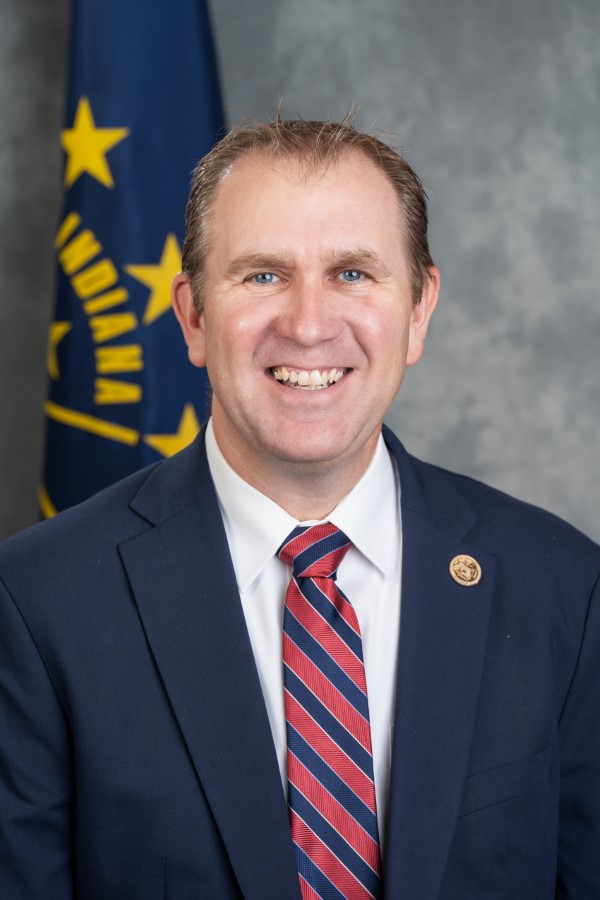
Brian Buchanan
RRepublican
P

Eric Koch
RRepublican
P

Stacey Donato
RRepublican
Co

Alex Burton
DDemocratic
Co
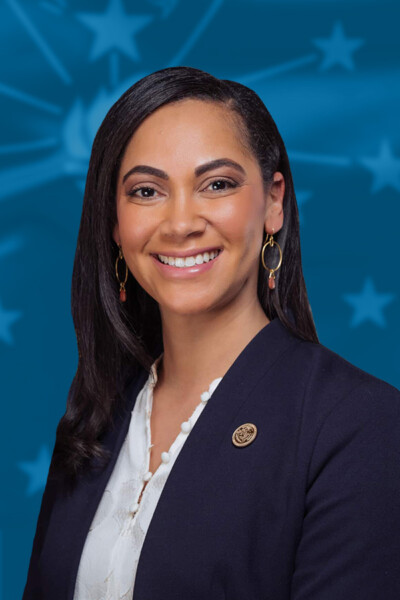
Andrea Hunley
DDemocratic
Co
Dan Dernulc
RRepublican
Co

Daryl Schmitt
RRepublican
Co
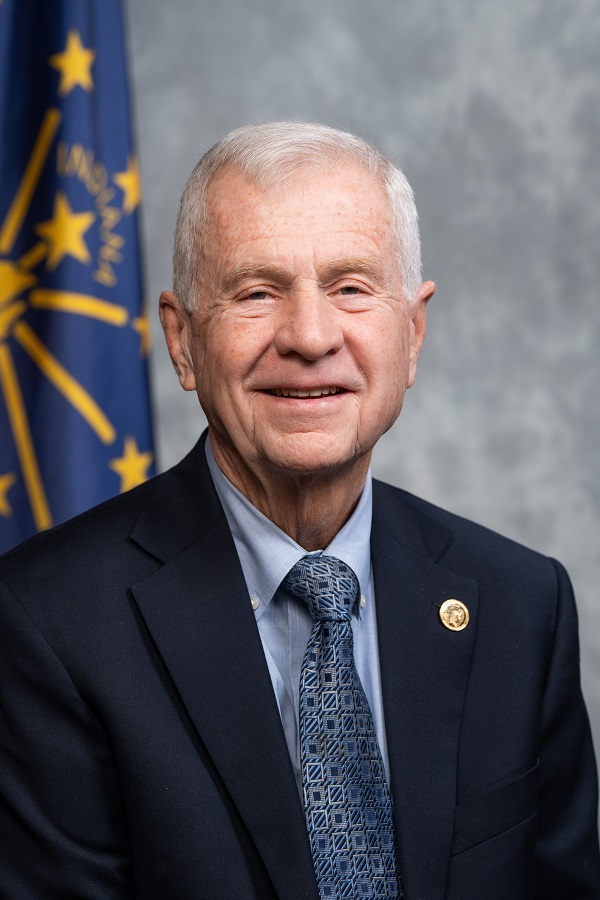
Ed Charbonneau
RRepublican
Co

Ed Soliday
RRepublican
Co

Fady Qaddoura
DDemocratic
Co
Gary Byrne
RRepublican
Co

J.D. Ford
DDemocratic
Co

Jeff Raatz
RRepublican







Ask Maddy
·
AI policy assistant
Ask Maddy about HB 1002
Scope: IN
Hi! I can help you understand HB 1002. What would you like to know?
Try one of these
i
Maddy answers using official bill text and legislative records. Always verify before sharing.
Sources cited inline