

Maddy summaryThis House resolution expresses support for designating the week of September 11 through September 17, 2026, as "Patriot Week." The bill encourages citizens, educational institutions, and government agencies at all levels to participate in activities that honor American history, founding documents, and national symbols. It specifically acknowledges the victims of the September 11, 2001, attacks while linking the commemorative period to Constitution Day on September 17.

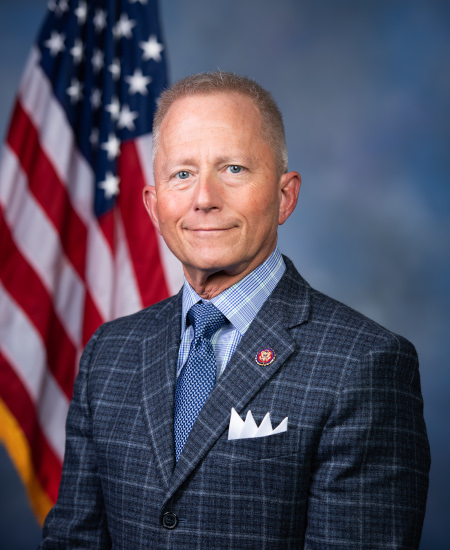
Rep. Jefferson Van Drew
Sponsored bills
Maddy summaryThe PROOF Act requires state agencies to provide specific records to the Attorney General when requested for investigating fraud in major federal assistance programs, such as Medicaid, food stamps, unemployment benefits, and disaster relief funds. This information sharing covers data like identity verification records, payment logs, and provider billing statements directly related to active investigations. To protect privacy, the bill mandates that the Justice Department handle all transferred data under existing privacy laws, use encryption for security, and destroy the information once legal proceedings are complete. Additionally, federal agencies may only use this data for fraud-related law enforcement purposes and must submit an annual report to Congress detailing the number of requests made and resulting convictions.
Maddy summaryThis bill, known as the Ratepayer Protection Act, modifies federal energy laws to ensure that large industrial customers pay for the specific infrastructure upgrades needed to serve their high electricity demands. It directly affects non-residential facilities with a peak power usage of 100 megawatts or more, requiring utilities to charge these customers the full incremental cost of any necessary generation, transmission, or distribution improvements. Under the new rules, large customers must also provide financial guarantees or contributions before such upgrades are made, ensuring utilities can recover costs even if the customer leaves the contract early. State regulators have two years to implement these standards, though the bill exempts utilities in states that have already enacted similar measures or are actively considering them.
Maddy summaryThis House resolution formally recognizes New Jersey's law enforcement officers, firefighters, and emergency medical personnel for their roles in the rescue and recovery efforts following the September 11, 2001 attacks. It highlights specific contributions, such as the large-scale waterborne evacuation across the Hudson River and the deployment of the state's urban search and rescue team to Ground Zero. The measure also honors those who have died from 9/11-related illnesses in the years since the attacks. Finally, it reaffirms the federal commitment to funding the World Trade Center Health Program and the September 11th Victim Compensation Fund.
Maddy summaryThe HOMEFRONT Act of 2026 prohibits U.S. courts from recognizing or enforcing foreign judgments based on censorship laws if the underlying conduct would be protected by the First Amendment in the United States. The bill places the burden of proof on the party seeking enforcement to demonstrate that the foreign court's jurisdiction and the specific judgment comply with U.S. constitutional standards and Section 230 of the Communications Act. It also bars federal, state, and local government officials from assisting foreign governments in enforcing such laws against U.S. persons and prevents the extradition of individuals for speech protected domestically. Additionally, the legislation grants affected individuals a private right of action to seek damages and requires the Attorney General to submit annual reports on foreign censorship impacts while directing the Federal Trade Commission to maintain a database of targeted speech instances.
Maddy summaryHR 5267, the American Franchise Act, clarifies when franchisors can be considered joint employers of franchisee employees under federal labor laws. It defines "substantial direct and immediate control" over essential employment terms like wages, benefits, hours, hiring, and discipline - requiring franchisors to actively set these terms to be deemed joint employers. The bill explicitly excludes routine brand standards, training, or minimal safety requirements from constituting such control. This directly affects franchisors and franchisees by limiting joint employer liability to cases where franchisors exert significant, ongoing influence over core employment decisions. The law applies prospectively to new cases after enactment, not past disputes.
Maddy summaryThis bill amends the Fair Labor Standards Act to clarify that direct sellers and qualified real estate agents (as defined under IRS rules) are not considered "employees" under federal labor law. It directly affects these workers by excluding them from FLSA protections like minimum wage and overtime pay. The key provision inserts a new definition into the law, changing how these professions are classified for labor rights purposes. This is a technical definitional change, not a new policy or program.
Maddy summaryHR 6152, the Foreign Robocall Elimination Act, establishes an interagency task force to address foreign robocalls entering the United States. The task force, composed of the FCC, FTC, DOJ, and private sector representatives, will study the origins, impacts, and potential solutions to foreign robocalls and must submit a report to Congress within 360 days. The bill also modifies existing law to require FCC notices about robocall mitigation every three years instead of annually, and introduces a bond requirement for providers using the Robocall Mitigation Database. This legislation affects telecommunications providers, federal agencies, and all U.S. telephone users who receive unwanted calls. The bill aims to improve coordination between U.S. agencies and foreign countries in combating illegal robocalls through concrete policy changes.
Maddy summaryThis House resolution formally recognizes the 80th anniversary of the Fulbright Program, which was established in 1946 to promote international goodwill through student and scholar exchanges. The bill highlights that the program currently operates in over 160 countries and has provided grants to more than 450,000 individuals since its inception. It encourages Congress to continue supporting educational and cultural affairs programs as tools for advancing foreign policy and national security. Additionally, the resolution congratulates past and present recipients and calls on global professionals to engage in cross-cultural partnerships.
Maddy summaryThis bill designates the U.S. Postal Service facility at 2407 State Route 71, Suite 1, in Spring Lake, New Jersey, as the "James J. Howard Post Office." All federal references to this location in laws, documents, or records will now use the new name. The bill is purely procedural and does not create new policies or affect any services or individuals.