

RELATING TO PROCEDURES FOR TAX APPEALS.
Summary
Requires a tax to be paid before the courts may entertain a second appeal on the merits of the dispute. Requires a taxpayer who partially prevailed during the taxpayer's first appeal to pay the amount determined to be due in that first appeal, rather than the entire assessment, in order to make a subsequent appeal. Clarifies that a taxpayer who does not appeal the decision of the body reviewing the initial tax assessment by the Department of Taxation is required to pay the tax as determined by the Taxation Board of Review or Tax Appeal Court or the tax assessment by the Department of Taxation if left unmodified and unamended by the Board or Court. (SD1)
Bill status
passed
3 of 5 stages cleared
Introduction
Jan 2026
Committee Review
Feb 2026
Senate Passage
Feb 2026
House Passage
Governor
Introduced Jan 30, 2026
Last action Feb 19, 2026
Maddy AI version diff · 1 comparison
What changed between versions
SB3300
→
SB3300_SD1
·
3 edits
MINOR
This bill revision clarifies the tax appeal process by adding a requirement for taxpayers to pay assessed taxes if they do not appeal the initial decision. It also modifies the conditions under which a taxpayer must pay to proceed with a second appeal, ensuring that only the amount determined due in the first appeal is paid rather than the full assessment. These changes aim to reduce delays in tax collection and provide clearer rules for handling disputes.
Scope change
The bill's scope now explicitly includes taxpayers who choose not to appeal the initial tax assessment decision, previously not addressed in detail.
REQUIREMENT
Added a requirement for taxpayers to pay the tax as determined by the review board or court if they do not file an appeal against the initial assessment.
Modified the payment conditions for a second appeal to specify that only the amount due from the first appeal needs to be paid, not the entire original assessment.
ADDED
Added clarification that failure to file a second appeal results in the obligation to pay the tax as determined by the reviewing body or the original assessment if unmodified.
Floor votes
How they voted
This bill passed the Senate by voice vote (no roll call recorded).
Full legislative history
Actions timeline
Total actions
7
Key actions
3
Committee
4
Feb 19, 2026
Upper · Passed
Report adopted; Passed Second Reading, as amended (SD 1) and referred to WAM.
upper
Feb 19, 2026
Committee
Reported from JDC (Stand. Com. Rep. No. 2442) with recommendation of passage on Second Reading, as amended (SD 1) and referral to WAM.
upper
Feb 10, 2026
Upper · Passed
The committee(s) on JDC recommend(s) that the measure be PASSED, WITH AMENDMENTS. The votes in JDC were as follows: 4 Aye(s): Senator(s) Rhoads, Gabbard, Chang, San Buenaventura; Aye(s) with reservations: none ; 1 No(es): Senator(s) Awa; and 0 Excused: none.
upper
Feb 5, 2026
Upper · Passed
The committee(s) on JDC has scheduled a public hearing on 02-10-26 9:15AM; Conference Room 016 & Videoconference.
upper
Feb 2, 2026
Committee
Referred to JDC, WAM.
upper
Jan 30, 2026
Introduced
Introduced.
upper
1 primary · 0 co-sponsors
Sponsors
Role
Legislator
Party
State
District
P
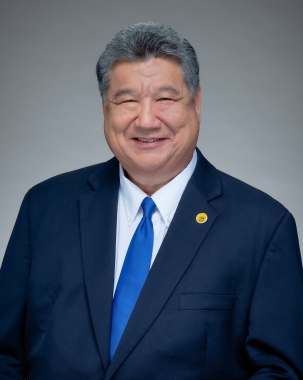
Ron Kouchi
DDemocratic
Ask Maddy
·
AI policy assistant
Ask Maddy about SB 3300
Scope: HI
Hi! I can help you understand SB 3300. What would you like to know?
Try one of these
i
Maddy answers using official bill text and legislative records. Always verify before sharing.
Sources cited inline