

RELATING TO THE RETENTION OF BIOLOGICAL EVIDENCE.
Summary
Specifies the types of cases in which evidence must be retained post-conviction and the process by which evidence may be disposed of earlier than the standard period of retention, which includes a procedure for defendants to oppose the disposal of biological evidence by filing an objection with the court. Authorizes the court, upon motion of a defendant or prosecutor or on the court's own motion, to order the retention of biological evidence in any felony case for a certain period under certain circumstances. Effective 9/1/2026. (CD1)
Bill status
signed
all 5 stages cleared
Introduction
Jan 2026
Committee Review
Apr 2026
Senate Passage
May 2026
House Passage
May 2026
Signed into Law
Jun 2026
Introduced Jan 26, 2026
Signed Jun 26, 2026
Maddy AI version diff · 3 comparisons
What changed between versions
SB3073_HD1
→
SB3073_SD1
·
5 edits
MODERATE
This bill revision shifts the primary focus from limiting mandatory evidence retention to specific serious felonies to a more flexible system that allows courts to retain biological evidence in any felony case upon request. It introduces new definitions for 'contested issue of identity' and 'biological evidence' to clarify when evidence must be kept versus when it can be disposed of earlier. The effective date of the law was also updated from the year 3000 to 2075, and minor formatting adjustments were made throughout the text.
Scope change
The scope of mandatory evidence retention was broadened from specific serious felony offenses to any felony case where the court determines biological evidence exists and is relevant to the case.
ELIGIBILITY
Changed the rule for mandatory evidence retention from applying only to 'serious felony offenses' to applying to 'any felony case' if the court finds biological evidence is relevant.
DEFINITION
Added a new definition for 'contested issue of identity' to specify when a defendant has disputed being the perpetrator.
Added a new definition for 'biological evidence' to clarify what materials must be retained.
TIMELINE
Updated the effective date of the legislation from July 1, 3000 to March 22, 2075.
REQUIREMENT
Reordered the legislative priorities to prioritize defining terms and allowing disposal of evidence in non-contested cases before authorizing court-ordered retention.
Floor votes
How they voted
This bill passed the Senate by voice vote (no roll call recorded).
Full legislative history
Actions timeline
Total actions
41
Key actions
13
Committee
11
Amendments
2
May 6, 2026
Lower · Passed
Passed Final Reading as amended in CD 1 with none voting aye with reservations; none voting no (0) and none excused (0).
lower
May 1, 2026
Upper · Passed
Passed Final Reading, as amended (CD 1). Ayes, 24; Aye(s) with reservations: none. Noes, 0 (none). Excused, 1 (Senator(s) Fukunaga).
upper
Apr 29, 2026
Lower · Passed
Reported from Conference Committee (Conf Com. Rep. No. 14-26) as amended in (CD 1).
lower
Apr 29, 2026
Introduced
48 Hrs. Notice (as amended CD 1) 05-01-26.
upper
Apr 29, 2026
Upper · Passed
Reported from Conference Committee as amended CD 1 (Conf. Com. Rep. No. 14-26).
upper
Apr 23, 2026
Lower · Passed
The Conference Committee recommends that the measure be Passed, with Amendments. The votes were as follows: 4 Ayes: Representative(s) Tarnas, Belatti, Poepoe, Shimizu; Ayes with reservations: none; 0 Noes: none; and 0 Excused: none.
lower
Apr 23, 2026
Upper · Passed
The Conference committee recommends that the measure be PASSED, WITH AMENDMENTS. The votes of the Senate Conference Managers were as follows: 3 Aye(s): Senator(s) Rhoads, Gabbard, Awa; Aye(s) with reservations: none ; 0 No(es): none; and 0 Excused: none.
upper
Apr 22, 2026
Upper · Passed
Conference committee meeting scheduled for 04-23-26 2:35PM; Conference Room 325.
upper
Apr 16, 2026
Amended
Senate disagrees with House amendments.
upper
Apr 16, 2026
Introduced
Received from House (Hse. Com. No. 738).
upper
Apr 14, 2026
Lower · Passed
Passed Third Reading with none voting aye with reservations; none voting no (0) and none excused (0). Transmitted to Senate.
lower
Mar 19, 2026
Lower · Passed
The committee on JHA recommend that the measure be PASSED, WITH AMENDMENTS. The votes were as follows: 8 Ayes: Representative(s) Tarnas, Poepoe, Hashem, Kahaloa, Takayama, Cochran, Garcia, Shimizu; Ayes with reservations: none; Noes: none; and 2 Excused: Representative(s) Belatti, Sayama.
lower
Mar 12, 2026
Committee
Referred to JHA, referral sheet 17
lower
Mar 10, 2026
Introduced
Received from Senate (Sen. Com. No. 356) in amended form (SD 1).
lower
Mar 10, 2026
Upper · Passed
Passed Third Reading, as amended (SD 1). Ayes, 25; Aye(s) with reservations: none . Noes, 0 (none). Excused, 0 (none). Transmitted to House.
upper
Mar 6, 2026
Upper · Passed
Report adopted; Passed Second Reading, as amended (SD 1).
upper
Feb 24, 2026
Upper · Passed
The committee(s) on JDC recommend(s) that the measure be PASSED, WITH AMENDMENTS. The votes in JDC were as follows: 4 Aye(s): Senator(s) Rhoads, Chang, San Buenaventura, Awa; Aye(s) with reservations: none ; 0 No(es): none; and 1 Excused: Senator(s) Gabbard.
upper
Feb 13, 2026
Upper · Passed
The committee(s) on JDC has scheduled a public hearing on 02-24-26 9:45AM; Conference Room 016 & Videoconference.
upper
Feb 10, 2026
Committee
Re-Referred to JDC.
upper
Jan 30, 2026
Committee
Referred to PSM, JDC.
upper
Jan 28, 2026
Introduced
Introduced.
upper
Jan 26, 2026
Introduced
Pending Introduction.
upper
1 primary · 0 co-sponsors
Sponsors
Role
Legislator
Party
State
District
P
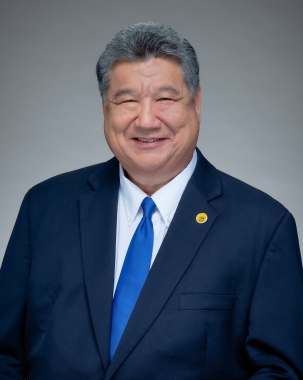
Ron Kouchi
DDemocratic
Ask Maddy
·
AI policy assistant
Ask Maddy about SB 3073
Scope: HI
Hi! I can help you understand SB 3073. What would you like to know?
Try one of these
i
Maddy answers using official bill text and legislative records. Always verify before sharing.
Sources cited inline