

RELATING TO REMEDIES.
Summary
Clarifies the applicability of the statute of repose for actions arising from construction defects. Clarifies the required contents of a notice of claim of construction defect served on a contractor. Amends the process and time frame for a claimant to accept a contractor's offer to settle or inspect and authorize the contractor to proceed with repairs. Limits the amount a claimant can recover if the claimant rejects a contractor's reasonable proposal for inspection or a reasonable offer to remedy. Clarifies the consequences of rejecting an offer of settlement. Effective 7/1/2050. (SD1)
Bill status
passed
3 of 5 stages cleared
Introduction
Jan 2025
Committee Review
Feb 2025
Senate Passage
Feb 2025
House Passage
Governor
Introduced Jan 13, 2025
Last action Dec 8, 2025
Maddy AI version diff · 1 comparison
What changed between versions
SB179
→
SB179_SD1
·
4 edits
MODERATE
This bill updates the effective date of the Contractor Repair Act from July 1, 2025, to July 1, 2050, likely to allow more time for the new dispute resolution processes to be implemented. It also rewrites the legislative findings to clarify that the housing crisis is driven by litigation costs and insurance requirements, and it modifies the inspection process to give contractors more control over scheduling repairs.
Scope change
The bill's scope remains focused on construction defect disputes, but the timeline for enforcement is significantly extended, and the procedural rules for inspections and settlements are clarified to favor early resolution.
TIMELINE
The effective date of the Act was changed from July 1, 2025, to July 1, 2050, delaying when the new rules apply.
REQUIREMENT
The process for accepting inspection proposals was rewritten to remove specific bracketed language regarding claimant obligations, simplifying the steps a claimant must take to authorize an inspection.
The bill now explicitly states that rejecting a contractor's reasonable offer to settle or inspect limits the amount a claimant can recover, clarifying the consequences of refusing a settlement.
DEFINITION
The legislative findings were updated to emphasize that high housing costs are caused by litigation and insurance costs, and to specify that the doctrine of fraudulent concealment does not apply to the ten-year statute of limitations.
Floor votes
How they voted
This bill passed the Senate by voice vote (no roll call recorded).
Full legislative history
Actions timeline
Total actions
8
Key actions
3
Committee
4
Feb 14, 2025
Upper · Passed
Report adopted; Passed Second Reading, as amended (SD 1) and referred to JDC.
upper
Feb 14, 2025
Committee
Reported from CPN (Stand. Com. Rep. No. 507) with recommendation of passage on Second Reading, as amended (SD 1) and referral to JDC.
upper
Feb 10, 2025
Upper · Passed
The committee(s) on CPN recommend(s) that the measure be PASSED, WITH AMENDMENTS. The votes in CPN were as follows: 4 Aye(s): Senator(s) Keohokalole, McKelvey, Richards; Aye(s) with reservations: Senator(s) Fukunaga ; 1 No(es): Senator(s) Awa; and 0 Excused: none.
upper
Feb 6, 2025
Upper · Passed
The committee(s) on CPN has scheduled a public hearing on 02-10-25 9:35AM; Conference Room 229 & Videoconference.
upper
Jan 17, 2025
Committee
Referred to CPN, JDC.
upper
Jan 15, 2025
Introduced
Introduced and passed First Reading.
upper
Jan 13, 2025
Introduced
Pending Introduction.
upper
1 primary · 0 co-sponsors
Sponsors
Role
Legislator
Party
State
District
P
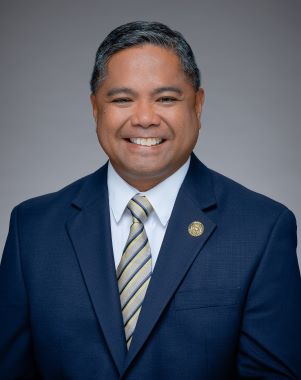
Henry Aquino
DDemocratic
Ask Maddy
·
AI policy assistant
Ask Maddy about SB 179
Scope: HI
Hi! I can help you understand SB 179. What would you like to know?
Try one of these
i
Maddy answers using official bill text and legislative records. Always verify before sharing.
Sources cited inline