

In committee Sep 10, 2026
0 co-sponsors
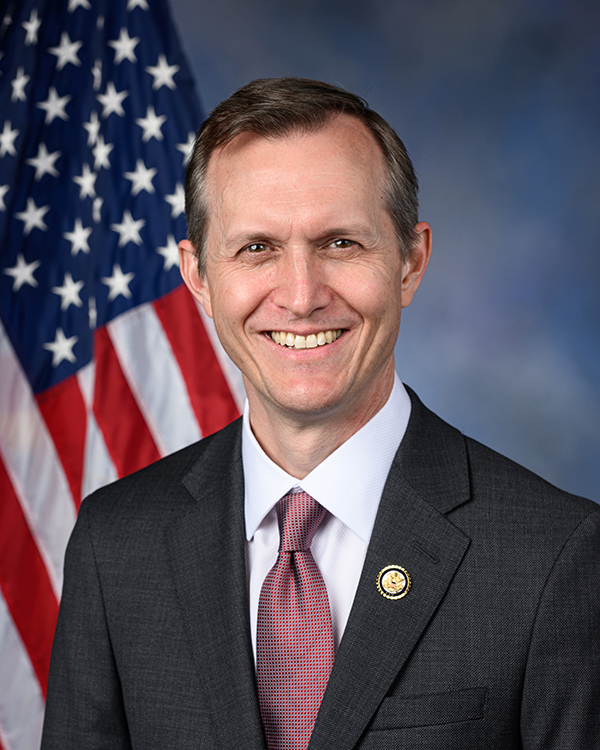
Rep. George Whitesides
Total votes
650
all sessions
Attendance
98%
16 missed
Near the chamber average
With party
93%
of cast votes
Lower than 88% of chamber peers
Bipartisan score
4%
crosses aisle rarely
Higher than 87% of chamber peers
Sponsored
315
bills & resolutions
Near the chamber average
Committees
6
assignments
315 bills and resolutions
Sponsored bills
Total
315
Primary
22
Co-sponsor
293
This page
315
matching current filters
Strategic Task Force on Scam Prevention Act
Maddy summaryHR 5967 establishes a federal task force led by the FTC and DOJ to combat scams. The task force, including agencies like the FBI, SEC, and Social Security Administration, will develop a national strategy using existing tools such as the Consumer Sentinel Network and Internet Crime Complaint Center. Key actions include public education, coordination with industry (like banks and social media platforms), and enforcement using current laws against fraud and money laundering. The task force must report to Congress within one year and dissolve after 10 years.
In committee Sep 1, 2026
1 co-sponsor
In committee Aug 31, 2026
1 co-sponsor
Self-Improving AI Monitoring Act
Maddy summaryThe Self-Improving AI Monitoring Act amends the National Institute of Standards and Technology Act to require NIST to assess trends in AI capabilities, specifically focusing on systems that can autonomously conduct research or develop other AI. The bill mandates that before entering into pre-deployment evaluation agreements with developers of frontier AI systems, NIST must ensure these agreements include specific disclosure requirements. Developers would be required to provide information on the extent to which AI was used to build the new system, including metrics and estimates of how much development occurred without human review. Additionally, any such evaluations must explicitly test the system's ability to autonomously facilitate or conduct AI research and development.
In committee Aug 27, 2026
0 co-sponsors
Stop Predator Dumping Act
Maddy summaryThe Stop Predator Dumping Act requires states with civil commitment laws for sexually violent predators to adopt specific rules for placing individuals upon their conditional release. These rules mandate that no two released individuals live within 10 miles of each other and prohibit placing a new individual in a county area that already has fewer such residents than another area in the same county. Additionally, the bill caps the number of placements in any single district of large counties at 25 percent of the total for that county. The Attorney General is directed to conduct a study on current placement patterns and distribute best practices for equitable distribution, with federal grants available to help states implement these new guidelines.
In committee Aug 27, 2026
0 co-sponsors
No Insider Trading on National Security Act of 2026
Maddy summaryThe No Insider Trading on National Security Act of 2026 requires the Department of Defense Inspector General to submit a report to Congress by January 1, 2027. This report must detail all complaints regarding insider trading in prediction and energy markets that occurred during Operation Epic Fury. The document will identify whether the accused were military personnel, civilian employees, or contractors, and outline the outcomes of any investigations. Additionally, the Inspector General must assess security risks associated with these activities and provide recommendations for future safeguards to prevent similar incidents.
In committee Aug 20, 2026
0 co-sponsors
Military Readiness Through Resilient Lands Act
Maddy summaryThe Military Readiness Through Resilient Lands Act amends the Sikes Act to require the Department of Defense to develop standardized metrics for assessing natural resources on military installations, with a focus on mission readiness, climate resilience, and community safety. The bill mandates the use of advanced technologies, such as remote sensing and artificial intelligence, to collect data on biodiversity, water quality, wildfire risk, and other ecosystem services. Military leaders must use this data to set measurable goals for maintaining or improving environmental conditions and to regularly update their integrated natural resources management plans. Additionally, the Secretary of Defense is required to submit reports to Congress every five years detailing progress in implementing these metrics and how they streamline environmental permitting processes.
In committee Aug 6, 2026
0 co-sponsors
Wildfire Response and Readiness Act
Maddy summaryThe Wildfire Response and Readiness Act establishes a national prescribed fire program that requires federal agencies to increase the acreage of controlled burns on public lands by 10 percent annually for a decade. It creates a ten-year national wildfire plan to coordinate landscape-scale forest restoration, reforestation, and watershed protection efforts across federal, state, tribal, and private boundaries. The bill also authorizes new funding for community resilience, including grants for home hardening, satellite monitoring technology, and a joint office dedicated to fire environment data and prediction. Additionally, it modernizes the firefighting workforce by establishing training academies, expanding civilian conservation centers, and providing liability protections for non-federal partners conducting prescribed fires.
In committee Aug 6, 2026
1 co-sponsor
To designate the facility of the United States Postal Service located at 6444 San Fernando Road in Glendale, California, as the "Paul Ignatius Post Office".
This bill designates the facility of the United States Postal Service located at 6444 San Fernando Road in Glendale, California, as the "Paul Ignatius Post Office".
Passed Aug 6, 2026
1 co-sponsor
To designate the facility of the United States Postal Service located at 130 South Patterson Avenue in Santa Barbara, California, as the Brigadier General Frederick R. Lopez Post Office Building.
Maddy summaryHR 2175 designates the U.S. Postal Service facility at 130 South Patterson Avenue in Santa Barbara, California, as the "Brigadier General Frederick R. Lopez Post Office Building." The bill updates all official U.S. government references to this location to reflect the new name. This is a ceremonial naming bill with no policy changes or direct impact on residents or services.
Passed Aug 6, 2026
1 co-sponsor
Ask Maddy
·
AI policy assistant
Ask Maddy about George Whitesides
Scope: georgia
Hi! I can help you understand George Whitesides's legislative record. What would you like to know?
Try one of these
i
Maddy answers using official bill text and legislative records. Always verify before sharing.
Sources cited inline