

Maddy summaryThis House resolution formally recognizes suicide as a serious public health problem in the United States and expresses support for designating September 2026 as National Suicide Prevention Month and September 10, 2026, as World Suicide Prevention Day. The bill cites data from the CDC, SAMHSA, and the VA to highlight that suicide is a leading cause of death among young people, veterans, and during the postpartum period, while also noting the significant economic costs associated with it. It declares suicide prevention a national priority and emphasizes that mental health is as important as physical health. The resolution supports the development of strategies to improve access to quality mental health, substance abuse, and suicide prevention services for all communities.
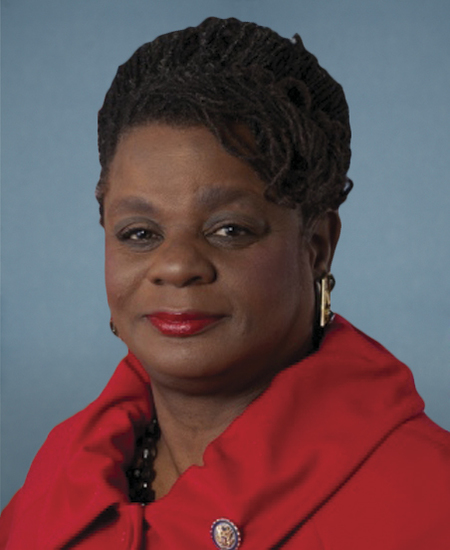
Rep. Gwen Moore
Sponsored bills
Maddy summaryThis bill authorizes the establishment of two memorials honoring Wisconsin infantry regiments at Civil War battle sites. It directs the Secretary of the Interior to approve locations within Antietam National Battlefield for regiments that fought at Antietam (1862) and within Manassas National Battlefield Park for regiments that fought at the Second Battle of Bull Run (1862). The memorials must be funded and built by private entities - no federal funds may be used for design, acquisition, site preparation, or installation - and the National Park Service will assume maintenance responsibility after installation.
Maddy summaryThis bill modifies tax rules to provide relief for individuals affected by major disasters. It allows taxpayers to deduct disaster-related losses (like damaged homes or personal property) more easily by creating a new "disaster loss deduction" that combines certain casualty losses and adjusts for income limits. It also excludes wildfire relief payments (such as compensation for lost wages or home damage not covered by insurance) from taxable income for people in federally declared wildfire areas, effective 2026 through 2030. These changes apply to losses incurred in taxable years starting after 2024, specifically for disasters declared between 2025 and 2027.
Maddy summaryThis bill, known as the Presidential Tax Accountability and Audit Integrity Act, prevents the President and their close family members or related business associates from entering into agreements that waive or release federal tax debts while the President is in office. It stops the IRS from honoring any such waivers or orders made during the President's term and requires the agency to publicly report the identities of any taxpayers affected by these instruments within seven days. Additionally, the law ensures that the standard time limits for the government to collect unpaid taxes or sue for collection do not expire until at least three years after the President leaves office. These measures aim to increase transparency and maintain the integrity of the tax system by restricting special treatment for the highest office holder and their connections.
Maddy summaryThe Protect American Values Act prohibits the use of federal funds to implement, administer, or enforce a specific Department of Homeland Security rule regarding the "Public Charge" ground of inadmissibility. This legislation directly affects immigrants and mixed-status families by preventing the government from using public benefits as a factor in determining eligibility for lawful permanent resident status. The bill includes a statement of congressional intent arguing that the targeted rule would restrict access to essential services like food, medical care, and housing, while also negatively impacting state and local economies. By cutting off funding for this specific policy, the act aims to maintain current immigration standards and prevent what Congress describes as an unauthorized reversal of long-standing law.
Maddy summaryHR 5831 designates the U.S. Postal Service facility at 306 South Main Street in Waupaca, Wisconsin, as the "Master Sergeant Melvin O. Handrich Post Office Building." The bill updates all official federal references - such as laws, maps, and documents - to use this new name for the building. It does not create new policies or affect services, but formally changes the facility's official designation. The bill directly impacts how the building is identified in all federal communications and records.
Maddy summaryThis bill (HR 4635) designates the U.S. Postal Service facility at 890 East 152nd Street in Cleveland, Ohio, as the "Technical Sergeant Alma Gladys Minter Post Office Building." It updates all official references to the location to use this new name, with no policy changes or direct impact on residents or services beyond the ceremonial renaming.
Maddy summaryThis joint resolution expresses the support of the U.S. House of Representatives for designating November 9 of each year as Gold Star Father's Day. The bill honors fathers who have lost a child while serving in the Armed Forces by recognizing their sacrifice and the unique bond between fathers and their children. It does not create new legal requirements or funding but serves as a formal statement of congressional backing for this observance, which has already been adopted by several state legislatures.
Maddy summaryThe Family Poverty is Not Child Neglect Act requires states to ensure that children are not separated from their parents solely because of poverty. It mandates that states develop or improve services, such as housing and unemployment assistance, to help low-income families stay together safely. Additionally, the bill directs the Department of Health and Human Services to submit a report within two years detailing how poverty influences child welfare investigations, removals, and foster care placements. This legislation aims to prevent the separation of families due to financial hardship and to gather data on the link between poverty and child neglect cases.
Maddy summaryThe Rise Up for Child Care Act of 2026 expands federal child care funding to guarantee services for current and former recipients of public assistance programs, removing previous restrictions on how states must use these funds. It eliminates state-imposed spending caps and changes the funding structure to an open-ended entitlement, allowing states to request unlimited sums to support child care needs. Additionally, the bill creates a separate matching rate of 75 percent for states that invest in wages and benefits for home-based child care providers and funds a study to evaluate the impact of these changes.