

Maddy summaryThis House resolution expresses support for designating the week of September 19 through September 26, 2026, as National Estuaries Week to raise public awareness about the importance of these coastal ecosystems. The bill highlights that estuaries support a significant portion of the U.S. population and economy while providing critical services such as flood control, water filtration, and habitat for fish and wildlife. It acknowledges ongoing threats to estuary health, including pollution and sea level changes, and recognizes the efforts of government agencies, organizations, and individuals working to protect and restore these areas.

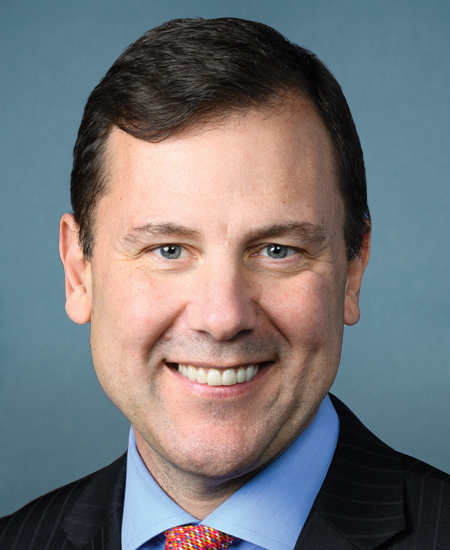
Rep. Thomas H. Kean, Jr.
Sponsored bills
Maddy summaryThis resolution expresses support for designating November 20, 2026, as "Carbon Monoxide Poisoning Awareness Day." It highlights that carbon monoxide is an odorless and colorless gas produced by burning fuel, which causes over 400 deaths and 20,000 emergency room visits annually in the United States. The text also honors Suzan Hanna, who died from carbon monoxide poisoning while driving through floodwaters, and notes her family's advocacy for drivers to carry safety hammers.
Maddy summaryThis bill, known as the Ratepayer Protection Act, modifies federal energy laws to ensure that large industrial customers pay for the specific infrastructure upgrades needed to serve their high electricity demands. It directly affects non-residential facilities with a peak power usage of 100 megawatts or more, requiring utilities to charge these customers the full incremental cost of any necessary generation, transmission, or distribution improvements. Under the new rules, large customers must also provide financial guarantees or contributions before such upgrades are made, ensuring utilities can recover costs even if the customer leaves the contract early. State regulators have two years to implement these standards, though the bill exempts utilities in states that have already enacted similar measures or are actively considering them.
Maddy summaryHR 1031 establishes the Fort Ontario Holocaust Refugee Shelter National Historical Park in New York to preserve and interpret the site where 982 Holocaust refugees were housed from 1944 to 1946. The park will be managed by the National Park Service after the Secretary of the Interior acquires sufficient land (primarily through donation for state-owned property) to form a manageable unit. Key provisions require a Federal Register notice upon land acquisition, a management plan within three years, and cooperative agreements for public access and interpretation. The park directly affects the preservation of this historical site and serves the public by making its history accessible for education and reflection.
Maddy summaryThis House resolution formally recognizes New Jersey's law enforcement officers, firefighters, and emergency medical personnel for their roles in the rescue and recovery efforts following the September 11, 2001 attacks. It highlights specific contributions, such as the large-scale waterborne evacuation across the Hudson River and the deployment of the state's urban search and rescue team to Ground Zero. The measure also honors those who have died from 9/11-related illnesses in the years since the attacks. Finally, it reaffirms the federal commitment to funding the World Trade Center Health Program and the September 11th Victim Compensation Fund.
Maddy summaryThis bill limits the amount of Post-9/11 GI Bill benefits available for flight training at public colleges and universities. It sets a $100,000 maximum total benefit for such training (adjusted annually for inflation), affecting veterans pursuing flight programs at public institutions. The inflation adjustment uses the Consumer Price Index, increasing the cap each year based on prior cost-of-living changes. The limit applies only to veterans starting flight training on or after August 1, 2026. This is a direct change to benefit eligibility under the VA's education program.
Maddy summaryHR 5267, the American Franchise Act, clarifies when franchisors can be considered joint employers of franchisee employees under federal labor laws. It defines "substantial direct and immediate control" over essential employment terms like wages, benefits, hours, hiring, and discipline - requiring franchisors to actively set these terms to be deemed joint employers. The bill explicitly excludes routine brand standards, training, or minimal safety requirements from constituting such control. This directly affects franchisors and franchisees by limiting joint employer liability to cases where franchisors exert significant, ongoing influence over core employment decisions. The law applies prospectively to new cases after enactment, not past disputes.