

Maddy summaryThe Title IX Clarification Act of 2026 amends federal education law to explicitly define the terms "sex," "female," and "male" based on biological characteristics. Specifically, it states that "sex" refers to an individual's biologically determined status as male or female, while "female" and "male" are defined by the presence of specific reproductive systems capable of producing ova or sperm, respectively. These definitions apply to all education programs and activities that receive federal financial assistance starting on the date the bill becomes law. The legislation aims to clarify existing statutes by removing ambiguity around biological sex definitions in the context of Title IX protections.

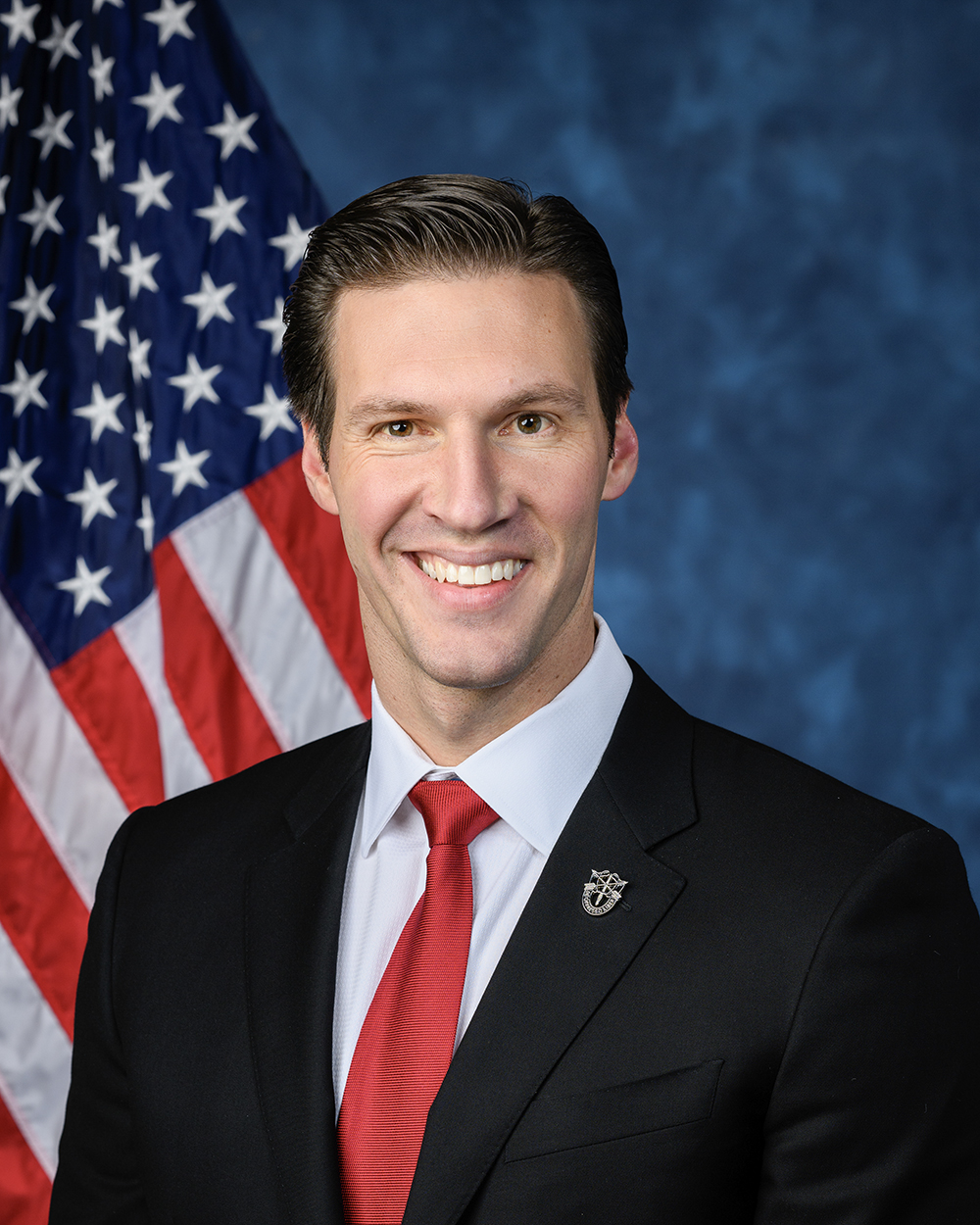
Rep. Pat Harrigan
Sponsored bills
Maddy summaryHR 5267, the American Franchise Act, clarifies when franchisors can be considered joint employers of franchisee employees under federal labor laws. It defines "substantial direct and immediate control" over essential employment terms like wages, benefits, hours, hiring, and discipline - requiring franchisors to actively set these terms to be deemed joint employers. The bill explicitly excludes routine brand standards, training, or minimal safety requirements from constituting such control. This directly affects franchisors and franchisees by limiting joint employer liability to cases where franchisors exert significant, ongoing influence over core employment decisions. The law applies prospectively to new cases after enactment, not past disputes.
Maddy summaryThis House resolution marks the 25th anniversary of the September 11, 2001 terrorist attacks by formally honoring the memory of the nearly 3,000 victims and recognizing the sacrifices made by first responders, military personnel, and the passengers of United Airlines Flight 93. The bill acknowledges the ongoing health challenges faced by survivors and responders, highlighting the role of the World Trade Center Health Program in providing long-term medical support. It also credits charitable organizations and community groups that have continued to assist victims' families and veterans over the past two decades. Finally, the resolution urges the American public to observe the anniversary with ceremonies and reaffirms Congress's commitment to remembering the events and lessons of that day.
Maddy summaryHR 6152, the Foreign Robocall Elimination Act, establishes an interagency task force to address foreign robocalls entering the United States. The task force, composed of the FCC, FTC, DOJ, and private sector representatives, will study the origins, impacts, and potential solutions to foreign robocalls and must submit a report to Congress within 360 days. The bill also modifies existing law to require FCC notices about robocall mitigation every three years instead of annually, and introduces a bond requirement for providers using the Robocall Mitigation Database. This legislation affects telecommunications providers, federal agencies, and all U.S. telephone users who receive unwanted calls. The bill aims to improve coordination between U.S. agencies and foreign countries in combating illegal robocalls through concrete policy changes.
Maddy summaryThis bill authorizes the Secretary of the Army to transfer approximately 20 acres of land at Fort Bragg in North Carolina to the state government without charge. The property is intended for the construction of a veterans' home under the jurisdiction of the North Carolina Department of Military and Veterans Affairs. The state is required to pay all costs associated with the transfer, including environmental reviews and administrative fees, with any excess prepayments refunded by the federal government. If the land is no longer used for the designated veterans' facility, ownership may revert to the United States at the Secretary's discretion.
Maddy summaryThe Self-Improving AI Monitoring Act amends the National Institute of Standards and Technology Act to require NIST to assess trends in AI capabilities, specifically focusing on systems that can autonomously conduct research or develop other AI. The bill mandates that before entering into pre-deployment evaluation agreements with developers of frontier AI systems, NIST must ensure these agreements include specific disclosure requirements. Developers would be required to provide information on the extent to which AI was used to build the new system, including metrics and estimates of how much development occurred without human review. Additionally, any such evaluations must explicitly test the system's ability to autonomously facilitate or conduct AI research and development.
Maddy summaryThe Army Quantum Readiness Act requires the Secretary of the Army to establish a new initiative focused on integrating quantum computing and advanced technologies into military operations, intelligence, and logistics. This initiative aims to identify practical applications for these technologies, assess necessary infrastructure upgrades such as power and cybersecurity, and develop strategies for training the required workforce. The bill also authorizes the creation of pilot projects and demonstration activities to test quantum-enabled tools, including artificial intelligence and secure networking. Finally, it mandates that the Secretary submit a detailed report to Congress within 270 days outlining readiness requirements, recommended investments, and necessary legislative changes to accelerate this transition.
Maddy summaryThe GATE Act of 2026 prohibits U.S. national laboratories from admitting or granting access to foreign nationals from China, Russia, Iran, North Korea, and Cuba who are not permanent residents or U.S. citizens. This ban applies to individuals seeking to visit the facilities or work there for more than 30 consecutive days. The Secretary of Energy may issue a written waiver to allow specific exceptions if they determine that the benefits to the United States outweigh national security and economic risks, a decision made in consultation with intelligence officials. Any such waivers must be reported to relevant congressional committees within 30 days, including details on the individual's country of origin and the specific reasons for the exception.
Maddy summaryHR 10090 would impose a 10 percent excise tax on private colleges and universities that allow individuals defined as biologically male to participate in intercollegiate athletic programs designated for females. The bill defines sex strictly by biological reproductive systems, excluding state institutions from this requirement. To prevent the financial burden of the tax from being shifted to students, the legislation prohibits affected schools from raising tuition or mandatory fees as a result of the liability. These provisions would take effect for taxable years beginning after December 31, 2025.
Maddy summaryThe Right to Worship Act makes it unlawful for individuals to knowingly disrupt religious services or prevent people from entering houses of worship within 100 feet of an entryway during the hour before and after a scheduled service. The bill applies to conduct that meaningfully interferes with a service's normal operation or unreasonably hinders participation, while explicitly allowing free speech as long as it adheres to these specific time, place, and manner restrictions. Violators face escalating civil fines ranging from $2,500 for a first offense to $10,000 for subsequent offenses, assessed by the Attorney General. Additionally, the act permits aggrieved individuals, the U.S. Attorney General, or state attorneys general to file civil lawsuits seeking injunctive relief, compensatory damages, and attorney fees.