

Maddy summaryThe GATOR Act of 2026 directs the Comptroller General to conduct a study on how federal regulations affecting American alligators, common caimans, and brown caimans have impacted their populations in states where they reside. The investigation will examine whether these protections have led to overpopulation of alligators or caused caiman species to become invasive in Florida. Additionally, the study will assess if current rules make it harder to remove nuisance animals from residential and commercial waterways and how state management programs have been affected by federal oversight.

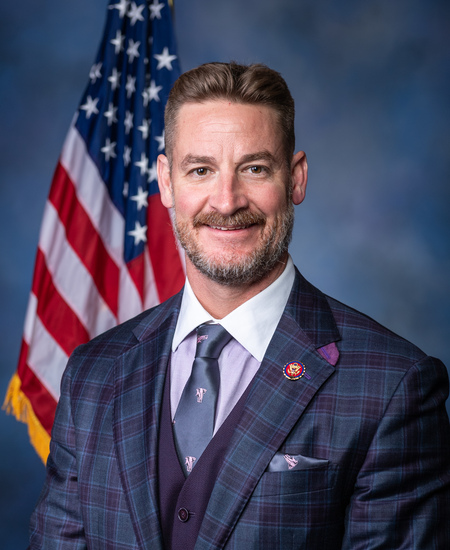
Rep. W. Gregory Steube
Sponsored bills
Maddy summaryThis bill, titled the Restore Florida Water Independence Act of 2026, aims to streamline environmental permitting for the State of Florida by recognizing a specific federal biological opinion as fully compliant with the Endangered Species Act. By deeming this existing document sufficient, the legislation eliminates the need for additional federal consultations regarding dredge and fill projects under the Clean Water Act. The primary effect is to allow the Environmental Protection Agency to approve Florida's request to manage its own state-level permitting program without further federal oversight on these specific environmental matters.
Maddy summaryThe Taxpayer Advocate Participation Act allows the National Taxpayer Advocate to formally participate in federal court cases involving tax law by submitting friend-of-the-court briefs. This provision specifically authorizes the advocate to present views on issues that broadly impact taxpayer rights, particularly those outlined in the Internal Revenue Code. Federal courts are required to grant the advocate's request to appear in these cases, ensuring their perspective is heard without changing the underlying tax laws. The change takes effect immediately upon the bill's enactment, expanding the role of the Taxpayer Advocate in the judicial process.
Maddy summaryThe Title IX Clarification Act of 2026 amends federal education law to explicitly define the terms "sex," "female," and "male" based on biological characteristics. Specifically, it states that "sex" refers to an individual's biologically determined status as male or female, while "female" and "male" are defined by the presence of specific reproductive systems capable of producing ova or sperm, respectively. These definitions apply to all education programs and activities that receive federal financial assistance starting on the date the bill becomes law. The legislation aims to clarify existing statutes by removing ambiguity around biological sex definitions in the context of Title IX protections.
Maddy summaryHR 5267, the American Franchise Act, clarifies when franchisors can be considered joint employers of franchisee employees under federal labor laws. It defines "substantial direct and immediate control" over essential employment terms like wages, benefits, hours, hiring, and discipline - requiring franchisors to actively set these terms to be deemed joint employers. The bill explicitly excludes routine brand standards, training, or minimal safety requirements from constituting such control. This directly affects franchisors and franchisees by limiting joint employer liability to cases where franchisors exert significant, ongoing influence over core employment decisions. The law applies prospectively to new cases after enactment, not past disputes.
Maddy summaryThis bill modifies tax rules to provide relief for individuals affected by major disasters. It allows taxpayers to deduct disaster-related losses (like damaged homes or personal property) more easily by creating a new "disaster loss deduction" that combines certain casualty losses and adjusts for income limits. It also excludes wildfire relief payments (such as compensation for lost wages or home damage not covered by insurance) from taxable income for people in federally declared wildfire areas, effective 2026 through 2030. These changes apply to losses incurred in taxable years starting after 2024, specifically for disasters declared between 2025 and 2027.
Maddy summaryThis bill designates a 34-mile segment of the Myakka River in Sarasota County, Florida, as part of the National Wild and Scenic Rivers System. It classifies specific river segments as "wild" (11.2 miles), "scenic" (multiple segments totaling 22.9 miles), or "recreational" (1.5 miles), based on their natural character. The bill establishes cooperative management through the existing Myakka River Management Coordinating Council and prohibits the Secretary of the Interior from administering the river as a National Park System unit or using land condemnation. It requires the Secretary to work with Florida and local entities to implement a management plan already developed under state law, without altering current land ownership or management authority.
This resolution states that the House of Representatives condemns and denounces socialism in all its forms, including the Democratic Socialists of America, and opposes the implementation of socialist policies in the United States; reaffirms its support for free, fair, and secure elections and calls for enactment of the SAVE America Act; reiterates that American elections are for American citizens only; and recommits itself to upholding the U.S. Constitution.
Maddy summaryHR 6152, the Foreign Robocall Elimination Act, establishes an interagency task force to address foreign robocalls entering the United States. The task force, composed of the FCC, FTC, DOJ, and private sector representatives, will study the origins, impacts, and potential solutions to foreign robocalls and must submit a report to Congress within 360 days. The bill also modifies existing law to require FCC notices about robocall mitigation every three years instead of annually, and introduces a bond requirement for providers using the Robocall Mitigation Database. This legislation affects telecommunications providers, federal agencies, and all U.S. telephone users who receive unwanted calls. The bill aims to improve coordination between U.S. agencies and foreign countries in combating illegal robocalls through concrete policy changes.
Maddy summaryThis bill, known as Kayleigh's Law Act of 2026, requires federal courts to issue permanent restraining orders against defendants convicted of certain serious crimes, prohibiting them from contacting their victims for the rest of their lives. The law applies specifically to individuals convicted of violent felonies or felony offenses involving sexual acts, including crimes like child exploitation and human trafficking. Courts must include these orders in sentencing, and violations are treated as contempt of court, while the only way to lift the order is if the conviction is overturned or pardoned. The bill also ensures that victims cannot be charged any fees for obtaining these protective orders and clarifies that the restrictions apply regardless of state laws.