

Maddy summaryThe Public Service Loan Forgiveness Inclusion Act of 2026 modifies federal student loan rules to make it easier for borrowers in public service jobs to qualify for debt cancellation. The bill changes how qualifying monthly payments are counted by allowing the first 60 payments to count regardless of their amount, while requiring subsequent payments to meet a specific minimum threshold based on a standard 10-year repayment schedule. It also expands eligibility to include payments made under the standard repayment plan and counts months where repayment was suspended due to administrative forbearance as qualifying payments if the borrower remained employed in public service. The Department of Education is required to notify affected borrowers about these changes within 180 days of enactment, with the new payment counting rules applying to those who have not yet made 120 monthly payments.
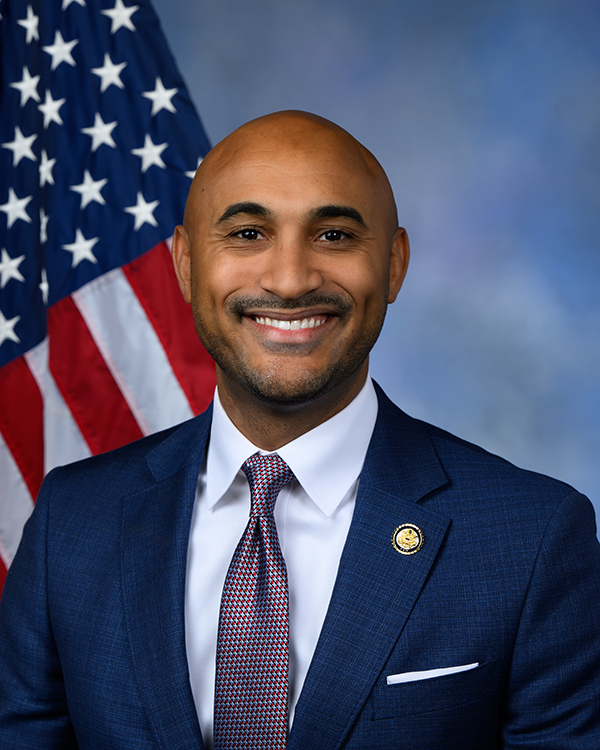
Rep. Shomari Figures
Sponsored bills
Maddy summaryThe REVOKE Act requires trucking companies and other commercial vehicle operators to maintain an active USDOT number in order to legally conduct business. It prohibits employers from operating without this active status and mandates that the Department of Transportation only issue numbers after verifying all registration requirements are met. Additionally, the bill directs officials to immediately deactivate any USDOT number if a company lacks valid registration or fails to submit required periodic updates.
Maddy summaryThe Protecting American Beef Producers Act would nullify a 2026 presidential proclamation aimed at keeping beef prices affordable and prohibit federal agencies from spending money to implement that order. The bill also restricts the President and other officials from lowering tariffs or fees on imported beef without explicit approval from Congress. This legislative action directly affects domestic beef producers by removing executive branch authority to reduce trade barriers, thereby requiring a new law or a declared state of emergency regarding the domestic beef supply before any import duties can be cut.
Maddy summaryThe Restoring Opportunity for Advanced Education Act amends the Higher Education Act to permanently restore access to Federal Direct PLUS Loans for graduate and professional students. By removing specific time limits and expiration dates from the law, the bill ensures that these loans remain available without a set end date. This change directly affects graduate and professional students who rely on this funding source for their advanced education.
Maddy summaryThe HEIRS Act of 2025 establishes two grant programs to help homeowners with "heirs' property" - residential land held by multiple heirs without clear title due to intestacy. It provides $30 million annually (2026-2036) to states/local governments that adopt the Uniform Partition of Heirs Property Act, funding title documentation, legal fees, and estate planning. An additional $10 million annually (2026-2030) supports HUD-approved housing counselors and legal services to assist low- and moderate-income minority homeowners in clearing title and retaining homes. The bill requires grantees to prioritize neighborhoods with high concentrations of affected residents and includes mandatory education about heirs' property risks and solutions.
Maddy summaryThe High School Voter Empowerment Act of 2026 requires all public high schools in the United States to be designated as voter registration agencies under federal law. Schools must conduct at least one voter registration drive each academic year, with a specific goal of registering eligible students who are at least 17 years old and enrolled in American Government or Economics classes. To support these efforts, the Department of Education would establish a grant program that reimburses schools for the reasonable costs associated with running these drives. Additionally, state election officials may provide voting machines to schools upon request for use in student council elections.
Maddy summaryThis bill (HR 4635) designates the U.S. Postal Service facility at 890 East 152nd Street in Cleveland, Ohio, as the "Technical Sergeant Alma Gladys Minter Post Office Building." It updates all official references to the location to use this new name, with no policy changes or direct impact on residents or services beyond the ceremonial renaming.
Maddy summaryThe PERFORM Act restricts the Postmaster General from receiving bonuses or performance-based pay if the Postal Service runs a financial deficit, misses service targets, or fails to pass its annual audit. To enforce this, the law requires the Postmaster General to submit an annual report to Congress detailing all executive compensation, the metrics used to justify those payments, and the agency's financial and service performance data. Additionally, the Postal Service Inspector General must review these reports to ensure compliance with the new restrictions. These measures directly affect the compensation of senior Postal Service leadership and increase transparency regarding the agency's financial and operational results.
Maddy summaryThe WINGS Act of 2026 expands federal financial aid eligibility to cover specific aviation training expenses for students enrolled in qualifying aviation programs at colleges and universities. Under this bill, students could use federal funds to pay for costs such as flight simulator hours, aircraft instruction, aviation training materials, and licensing exam fees. The legislation defines eligible programs as those offering associate's or bachelor's degrees in aviation-related fields and includes professional degree programs that meet specific regulatory training standards. These changes would take effect on July 1, 2027, allowing students to access financial support for practical aviation training components starting with the 2027-2028 award year.
Maddy summaryThe Polling Place Standards Act requires states to establish at least one voting location for every 2,000 registered voters before federal elections, ensuring these sites are spread across diverse geographic areas rather than concentrated in specific regions. This law mandates that each polling place be adequately staffed to handle ballot processing, maintain security, and accommodate accessibility needs while keeping voter wait times at 30 minutes or less. States that allow voters to cast ballots via drop boxes or mail-in methods are exempt from these physical location requirements. To help states meet these new standards, the bill creates a federal grant program to provide funding for implementing the necessary changes.