HR 3019 United States House · 118th Congress

Federal Prison Oversight Act

The Federal Prison Oversight Act establishes a new inspections regime for federal prisons, requiring the Justice Department's Inspector General to conduct regular assessments of Bureau of Prisons facilities. These inspections will evaluate conditions of confinement, medical care, staffing levels, safety protocols, and policies related to visitation and programming. The bill also creates a new Ombudsman position within the Department of Justice to receive and address complaints from incarcerated people, their families, and staff about health, safety, and rights concerns. The Inspector General must submit public reports with recommendations, and the Bureau must respond with corrective action plans within 60 days. The law includes protections against retaliation for those filing complaints and requires the Bureau to provide multiple confidential channels for submitting complaints.
Sub-Topics: Corrections
Bill status signed all 5 stages cleared
Introduction
Apr 2023
Committee Review
Jul 2024
House Passage
May 2024
Senate Passage
Jul 2024
Signed into Law
Jul 2024
Introduced Apr 28, 2023 Signed Jul 25, 2024
Maddy AI version diff · 1 comparison

What changed between versions

Introduced in House Engrossed in House · 9 edits · May 21, 2024
MAJOR
The Engrossed version of HR 3019 makes several substantive changes: it expands who can file complaints with the Ombudsman (adding Members of Congress, judicial branch members, and staff representatives), broadens the definition of 'family member' to 'family advocate' to include friends, adds a 6-month deadline for Inspector General reports, extends record production deadlines from 20 to 30 business days, narrows the exclusion from covered facilities to only post-incarceration re-entry centers, and adds a new requirement for the Bureau of Prisons to implement an augmentation directive from a prior appropriations law.
DEFINITION

New definition of 'appropriate congressional committees' expands reporting obligations beyond just the Judiciary Committees to also include the Senate Committee on Homeland Security and Governmental Affairs and the House Committee on Oversight and Accountability.

Medical care language changed from 'gender-appropriate' to 'sex-specific' in the inspection criteria for medical and mental health care.

SCOPE

The exclusion from 'covered facility' changed from excluding State, local, Tribal, or territorial facilities to excluding only post-incarceration residential re-entry centers. This narrows what is excluded and clarifies that re-entry centers fall outside the inspections regime.

ELIGIBILITY

The term 'family member' was renamed to 'family advocate' and expanded to include friends of the incarcerated person or their family, not just people related by blood, adoption, marriage, civil union, romantic, or fostering relationships.

The Ombudsman's complaint intake was expanded to accept complaints from representatives of staff, Members of Congress, and members of the judicial branch of the Federal Government, in addition to the previously listed complainants.

REQUIREMENT

A 6-month deadline was added requiring the Inspector General to submit a final report to the Attorney General, congressional committees, employee representative organizations, and the public after completing an inspection.

A new subsection (c) requires the Bureau of Prisons to implement an augmentation directive specified in the joint explanatory statement accompanying Public Law 117-328, effective on the date the Act takes effect.

TIMELINE

Record production deadlines were extended: general records changed from 20 to 30 business days, and urgent records (deaths, threats of bodily harm, denial of medical treatment) changed from 5 to 10 business days.

ENFORCEMENT

A new exception was added allowing facility heads to restrict Inspector General and Ombudsman access during ongoing events that pose a risk of serious and immediate physical harm to visitors.

Floor votes · House May 21, 2024

How they voted

This bill passed the Senate by voice vote (no roll call recorded).
Full legislative history

Actions timeline

Total actions
20
Key actions
6
Committee
4
Amendments
3
Jul 25, 2024
Signed into law
Signed by President.
executive
Jul 10, 2024
Upper · Passed
Passed Senate without amendment by Unanimous Consent. (consideration: CR S4334-4337)
upper
Jul 10, 2024
Upper · Passed
Passed/agreed to in Senate: Passed Senate without amendment by Unanimous Consent. (consideration: CR S4334-4337)
upper
Jul 10, 2024
Upper · Passed
Senate Committee on the Judiciary discharged by Unanimous Consent.
upper
May 22, 2024
Committee
Received in the Senate and Read twice and referred to the Committee on the Judiciary.
upper
May 21, 2024
Introduced
On motion to suspend the rules and pass the bill, as amended Agreed to by the Yeas and Nays: (2/3 required): 392 - 2 (Roll no. 220). (text: CR H3369-3372)
lower
May 21, 2024
Lower · Passed
Passed/agreed to in House: On motion to suspend the rules and pass the bill, as amended Agreed to by the Yeas and Nays: (2/3 required): 392 - 2 (Roll no. 220). (text: CR H3369-3372)
lower
May 21, 2024
Introduced
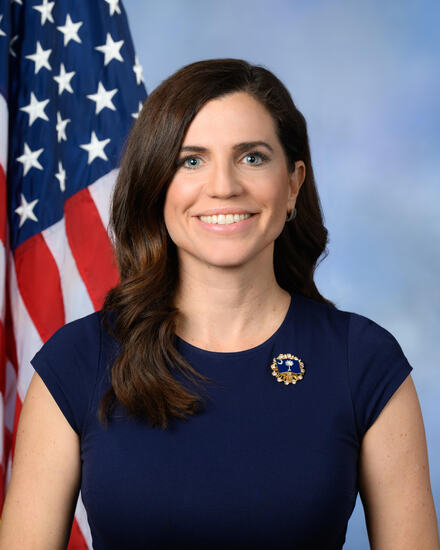
Ms. Mace moved to suspend the rules and pass the bill, as amended.
lower
Apr 10, 2024
Introduced
Ordered to be Reported (Amended) by the Yeas and Nays: 41 - 1.
lower
Apr 10, 2024
Lower · Passed
Committee Consideration and Mark-up Session Held
lower
Apr 28, 2023
Committee
Referred to the House Committee on Oversight and Accountability.
lower
Apr 28, 2023
Introduced
Introduced in House
lower
1 primary · 39 co-sponsors
Sponsors