

Dry Needling
Summary
Dry Needling; Defining the terms “dry needling” and “myofascial trigger point”; requiring the Board of Occupational Therapy to establish minimum standards of practice for the performance of dry needling by occupational therapists, including specified standards; requiring the board, if it deems it necessary for patient safety, to adopt additional supervision and training requirements for occupational therapists to perform dry needling on specified areas, etc.
Bill status
in committee
3 of 5 stages cleared
Introduction
Jan 2026
Committee Review
Feb 2026
Senate Passage
Feb 2026
House Passage
Governor
Introduced Jan 13, 2026
Last action Mar 5, 2026
Maddy AI version diff · 1 comparison
What changed between versions
S 914 Filed
→
S 914 c1
·
4 edits
MODERATE
The bill evolved from a version requiring occupational therapists to train only under other occupational therapists to a version allowing supervision by physical therapists or chiropractors as well. Additionally, the training entity approval authority shifted from an external accreditor to the state Board of Occupational Therapy, and the curriculum was expanded to include post-intervention care and adverse incident reporting.
Scope change
The bill's scope of eligible supervisors was expanded to include physical therapists and chiropractic physicians in addition to occupational therapists.
ELIGIBILITY
Supervisors for required supervised practice sessions were expanded to include physical therapists and chiropractic physicians, whereas the original version only allowed occupational therapists to supervise.
REQUIREMENT
The entity providing the required continuing education changed from one 'accredited' by an external body to one 'approved' by the Board of Occupational Therapy.
The mandatory training curriculum was updated to include a new section on post-intervention care, adverse responses, and reporting obligations.
The description of psychomotor skills training was slightly clarified to specify skills needed to 'safely' perform dry needling.
Floor votes · Senate Feb 24, 2026
How they voted
23–0
Passed · 1 other
Total votes 24
Feb 24, 2026
D
Democratic5
100% Yea
I
Independent1
0% Nay
R
Republican18
100% Yea
Vote distribution
All Yea
All Nay
Mixed
No data
Full legislative history
Actions timeline
Total actions
19
Key actions
8
Committee
8
Feb 24, 2026
Senate · Passed
Senate Vote: pass (23-0-1)
senate
Feb 24, 2026
Upper · Passed
Favorable by- Rules; YEAS 23 NAYS 0
upper
Feb 19, 2026
Upper · Passed
On Committee agenda-- Rules, 02/24/26, 12:00 pm, 412 Knott Building
upper
Feb 18, 2026
Upper · Passed
Favorable by Appropriations Committee on Health and Human Services; YEAS 9 NAYS 0
upper
Feb 13, 2026
Upper · Passed
On Committee agenda-- Appropriations Committee on Health and Human Services, 02/18/26, 8:30 am, 412 Knott Building
upper
Feb 4, 2026
Upper · Passed
Now in Appropriations Committee on Health and Human Services
upper
Feb 3, 2026
Upper · Passed
Pending reference review under Rule 4.7(2) - (Committee Substitute)
upper
Jan 28, 2026
Upper · Passed
On Committee agenda-- Health Policy, 02/02/26, 3:30 pm, 412 Knott Building
upper
Jan 13, 2026
Introduced
Introduced
upper
Jan 5, 2026
Committee
Referred to Health Policy; Appropriations Committee on Health and Human Services; Rules
upper
1 primary · 0 co-sponsors
Sponsors
Role
Legislator
Party
State
District
P
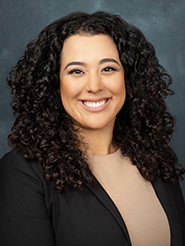
Alexis Calatayud
RRepublican
Ask Maddy
·
AI policy assistant
Ask Maddy about SB 914
Scope: FL
Hi! I can help you understand SB 914. What would you like to know?
Try one of these
i
Maddy answers using official bill text and legislative records. Always verify before sharing.
Sources cited inline