

Maddy summaryThis bill extends the funding authorization for the Accelerating Access to Critical Therapies for ALS Act from 2026 to 2031, ensuring continued financial support for research into treatments for amyotrophic lateral sclerosis. It requires the Food and Drug Administration to review clinical trial data more rigorously by assessing patient enrollment numbers and requesting interim results from drug manufacturers before renewing research grants. Additionally, the legislation clarifies that clinical trials in phase 3 include combined phase 2/3 studies and planned trials that have not yet started enrolling participants. The bill also mandates the FDA to publish a report within a year of enactment detailing its progress on rare neurodegenerative disease action plans and how it coordinates with broader disease communities. Finally, it adjusts the timeline for a Government Accountability Office report to cover a five-year period instead of four.
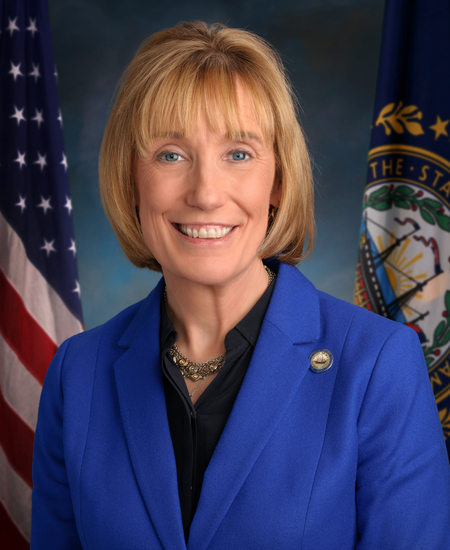
Sen. Margaret Wood Hassan
Sponsored bills
Maddy summaryThis bill (S 2677) amends U.S. trade law to expand how U.S. Customs and Border Protection (CBP) shares information about suspected intellectual property rights violations. It allows CBP to share nonpublic merchandise details - including data from online marketplaces, shipping companies, and freight forwarders - with these entities when CBP has a reasonable suspicion of violations. The bill also adds new provisions permitting CBP to share information with other parties deemed relevant by the Commissioner. It directly affects CBP, online platforms, shipping operators, and importers by changing information-sharing protocols for IP enforcement. The changes focus on clarifying and broadening the scope of permissible information sharing during trade inspections.
Maddy summaryThis bill extends two existing public health programs focused on tick-borne diseases through 2030. It updates the funding timeline for national vector-borne disease centers and health department support from 2021-2025 to 2026-2030. The bill does not change program content or eligibility but ensures continued funding for efforts addressing tick-related illnesses. It directly affects public health agencies administering these programs, not specific individuals.
Maddy summaryThis bill amends the existing Northern Border Security Review Act to update reporting requirements for U.S. Customs and Border Protection. It mandates a threat analysis of northern border apprehensions (including sector-level data) by September 2, 2025, and every three years thereafter, and requires the DHS Secretary to update the border security strategy by September 2, 2026, and every five years, incorporating the latest analysis. The bill also adds a requirement for classified briefings to Congress within 30 days of each threat analysis submission. No new funding is authorized for these changes.
National Plan for Epilepsy Act This bill requires the Department of Health and Human Services (HHS) to establish a national plan, form an advisory council, and take other actions to address epilepsy. The requirements sunset on December 31, 2035. Specifically, the bill requires HHS to carry out a National Plan for Epilepsy to prevent, diagnose, treat, and cure epilepsy. In carrying out the plan, HHS must implement activities such as coordinating research and services across all federal agencies and soliciting public comments. Also, HHS must establish an Advisory Council on Epilepsy Research, Care, and Services. The advisory council must report to HHS and Congress every two years with an evaluation of federally funded efforts. Additionally, HHS must annually report to Congress with recommended actions based on its assessments of the nation’s progress on epilepsy.
Maddy summaryThis Senate resolution designates September 2026 as National Child Awareness Month to highlight the work of charities and youth-serving organizations across the United States. The measure aims to increase public awareness of these groups, which provide essential services such as healthcare, education, and social support. It specifically recognizes the importance of addressing the needs of vulnerable children, including those experiencing homelessness, foster care, or trauma.
Maddy summaryThis resolution designates the week of August 22 through August 30, 2026, as "National Park Week." It directly affects the public by encouraging responsible visits and support for the National Park System, which includes parks, battlefields, and historical sites located across the United States and its territories. The measure serves as a formal declaration to highlight the parks' role in recreation, education, and economic activity without altering any laws or funding.
Maddy summaryThe HCBS Access Act would require states to cover home and community-based services (HCBS) as a mandatory benefit under Medicaid, effectively eliminating waiting lists for individuals with disabilities and older adults who need support to live in their communities rather than institutions. To fund this expansion, the bill provides a 100% federal matching rate for these services if states meet specific requirements, such as improving workforce wages, removing access barriers, and establishing infrastructure to support self-directed care models. Additionally, the legislation creates a national technical assistance center and authorizes grants to recruit, train, and retain direct care workers, while also prohibiting states from placing liens on the assets of Medicaid recipients for medical assistance correctly paid.
Maddy summaryThe Campus Lifeline Act expands federal grant programs to support student-led mental health and substance use disorder interventions at institutions of higher education. It authorizes funding for peer awareness activities, such as suicide prevention education and digital campaigns that encourage students to seek help, while requiring grantees to provide accessible resources for online and distance-learning students. Additionally, the bill directs the National Suicide Prevention Lifeline program to coordinate with schools and universities to list hotline numbers on student identification cards and promote behavioral health resources through public service announcements.
Maddy summaryThe READ Act aims to improve student literacy by directing federal funding toward evidence-based reading instruction known as the science of reading, which explicitly teaches phonics and decoding while prohibiting the use of the three-cueing model. Under this bill, the U.S. Department of Education would distribute grants to states, with a specific focus on those performing in the lowest tier of reading assessments, to implement statewide policies, update teacher training standards, and provide universal early literacy screenings for all students before third grade. The legislation also requires schools to notify parents when a student is identified as at risk for reading difficulties and mandates that these notifications be provided in the family's primary language. Additionally, the act allocates funds to support high-quality instructional materials, literacy coaching for teachers, and interventions like tutoring for struggling readers, while ensuring that federal money supplements rather than replaces local education spending.