

Maddy summaryHB 6066 requires the Department of Developmental Services to submit a report to the legislature detailing how it is addressing findings from the 2021-2022 audit by the Auditors of Public Accounts. The bill also mandates an informational hearing by the government oversight committee to examine specific areas, including delays in mortality reviews, documentation of abuse investigations, and monitoring of workers' compensation light-duty assignments. The hearing will assess internal controls needed to fix audit shortcomings and determine if leadership or staff negligence contributed to issues. This bill directly affects the Department of Developmental Services and its oversight by the legislature, focusing on accountability for audit findings.
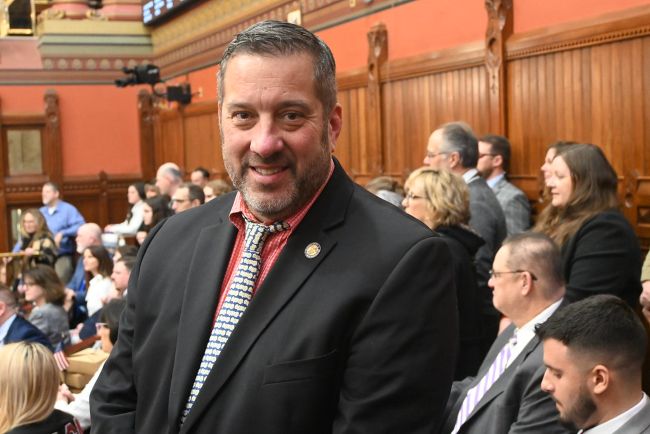
Rep. Jay Case
Sponsored bills
Maddy summaryHB 6111 creates an expedited process for property owners to remove unauthorized occupants from residential properties using the state marshal, bypassing standard court timelines. Owners can file a sworn complaint with the marshal, who verifies property ownership and the complaint's accuracy before removal. The bill also establishes a legal remedy for wrongfully removed individuals to recover triple the fair market rent plus attorney fees. This directly affects residential property owners seeking quick resolution and occupants facing potential unlawful removal.
Maddy summaryHB 6165 creates a legal framework for supported decision-making agreements as a less restrictive alternative to court-appointed conservatorships or guardianships for adults with disabilities. The bill amends state law to allow individuals with disabilities to use these agreements - where they receive support for decisions while retaining legal autonomy - instead of having a court appoint a conservator or guardian. It directly affects adults with disabilities who currently face conservatorship or guardianship proceedings, offering them a more self-determined option. The key provision establishes this agreement process as a formal alternative within existing legal structures, without requiring court involvement.
Maddy summaryHB 5540 raises the sales price threshold for motor vehicles subject to a 7.75% sales and use tax rate to over $100,000. This means vehicles priced at $100,000 or below will now pay a lower tax rate, while only the most expensive vehicles will qualify for the higher rate. The bill directly affects buyers of luxury new vehicles that previously fell under the higher tax bracket. It modifies the tax structure by expanding the price range eligible for the standard tax rate.
Maddy summaryHB 5536 allows municipalities with at least two existing commercial solar farms to approve or reject new nonresidential solar projects and impose construction moratoriums. It directly affects local governments in communities that already host commercial solar infrastructure, giving them control over future solar development. The bill creates a specific process for municipal review of new solar facility proposals, without altering state-level energy policies or requiring additional state funding. This change aims to balance local land-use authority with renewable energy development.
Maddy summaryHB 5626 eliminates the requirement for food protection managers at Class 2 food establishments (such as restaurants and cafes) to pass a test as part of their certification. The bill amends state law to remove this testing component from the food protection manager certification program. This change directly affects managers at these specific food service locations, though other certification requirements remain unchanged. The legislation focuses solely on removing the testing mandate without altering other aspects of the certification process.
Maddy summaryHB 5632 requires that any fines collected by the state for traffic violations occurring on U.S. Route 44 in the town of Winchester be paid directly to the town of Winchester, rather than to the state treasury. This bill directly affects the town of Winchester by redirecting revenue from existing traffic citations issued on that specific highway. The key provision is a statutory change directing the state to remit these specific traffic infraction fines to the town. The bill does not create new penalties or alter traffic laws, only modifies where the collected funds are deposited.
Maddy summaryHB 5715 allows municipal transfer stations to sell catalytic converters collected from the public to scrap metal processors, junk dealers, or junkyard owners. The bill amends state law to explicitly permit these businesses to receive catalytic converters directly from municipal transfer stations. This change enables transfer stations to generate revenue by selling these converters, which they previously could not do. The policy directly affects municipal waste facilities and scrap metal industry businesses. It creates a clear legal pathway for the transfer and sale of catalytic converters collected at public disposal sites.
Maddy summaryHB 5391 creates a state task force to study how aircraft engine exhaust particles impact air quality within the state. This procedural bill directly affects state environmental oversight by establishing a formal group to examine this specific pollution source. The key mechanism is the creation of this task force, which will conduct research on the effects of aircraft exhaust on air quality. The bill does not make new laws or impose requirements, but rather initiates a study to gather data. (1 sentence summary as it is procedural)