

Fee Sharing with Nonlawyers in Legal Practice
Summary
The act prohibits a lawyer or law firm, in connection with providing legal services concerning a legal right arising in whole or in part in Colorado (legal services), from:Providing any portion of legal fees or revenues to a nonlawyer or an organization that economically participates in the provision of legal services or shares in the profits of legal fees or revenues and is owned or controlled by one or more nonlawyers (alternative business structure);Entering into a financial or contractual arrangement with an alternative business structure, which arrangement relates to providing legal services;Forming an entity recognized under Colorado law with a nonlawyer if any of the activities of the entity consist of providing legal services;Practicing with or in the form of a professional company authorized to provide legal services if a nonlawyer owns an interest in the company or a nonlawyer has the right to direct the judgment of a lawyer; andCompensating a person that provides administrative or nonlegal business services to a lawyer or law firm unless the compensation is not contingent upon a percentage of legal fees or revenues and not determined by reference to recoveries, settlements, or other case outcomes. The act exempts certain arrangements, activities, and organizations from the prohibitions in the act. The act also creates a private right of action that allows the following persons to enforce the prohibitions in the act:A person to whom a lawyer or law firm provides legal services that are alleged to be in violation of the act; andA law firm doing substantial business in Colorado that has suffered or may suffer a loss in revenue due to a violation of the act by another law firm, which law firm doing substantial business is not eligible for recovery of economic damages. A person may seek economic damages, injunctive relief, declaratory relief, and any other relief the circumstances may require for violations of the act. If a court determines that a lawyer, law firm, or other person has violated the act, the court must order the funds received or paid in violation of the act to be disgorged and paid to the state treasurer, except to the extent that the funds are paid as economic damages to a plaintiff. The state treasurer must deposit any disgorged funds into the general fund. The act repeals on September 1, 2029.(Note: This summary applies to this bill as enacted.)
Bill status
signed
all 5 stages cleared
Introduction
Apr 2026
Committee Review
May 2026
House Passage
Jun 2026
Senate Passage
Jun 2026
Signed into Law
Jun 2026
Introduced Apr 21, 2026
Signed Jun 4, 2026
Maddy AI version diff · 6 comparisons
What changed between versions
Final Act
→
Signed Act
·
3 edits
·
Jun 4, 2026
MINOR
The bill text was updated to reflect its official signing, including the addition of a 'Signed Act' header and the formal enrollment of the sponsoring legislators. Substantively, the text contains numerous formatting inconsistencies, such as missing spaces between words and irregular capitalization, which appear to be artifacts of the document conversion process rather than intentional policy changes. No new legal requirements, definitions, or enforcement mechanisms were added or removed in this version.
TECHNICAL
The document header was changed from a draft note to a 'Signed Act' status and the list of sponsoring representatives and senators was added.
Throughout the statute text, many words have lost their internal spacing (e.g., 'LAWYER' became 'LA WYER', 'RULES' became 'RULES'), and some capitalization was altered inconsistently.
Minor punctuation adjustments were made, such as changing 'word~' to 'word' and adjusting the spacing around parentheses in the legislative declaration section.
Floor votes · Senate May 12, 2026 · House May 1, 2026
How they voted
58–5
Passed · 1 other
Total votes 64
May 12, 2026
D
Democratic42
95% Yea
R
Republican22
81% Yea
Vote distribution
All Yea
All Nay
Mixed
No data
Full legislative history
Actions timeline
Total actions
14
Key actions
8
Committee
2
Amendments
1
Jun 4, 2026
Signed into law
Governor Signed
executive
Jun 3, 2026
Upper · Passed
Signed by the President of the Senate
upper
Jun 3, 2026
Lower · Passed
Signed by the Speaker of the House
lower
May 12, 2026
Introduced
House Considered Senate Amendments - Result was to Concur - Repass
lower
May 12, 2026
Senate · Passed
Senate Vote: pass (58-5-1)
senate
May 11, 2026
Upper · Passed
Senate Third Reading Passed - No Amendments
upper
May 6, 2026
Upper · Passed
Senate Committee on Judiciary Refer Amended to Senate Committee of the Whole
upper
May 4, 2026
Introduced
Introduced In Senate - Assigned to Judiciary
upper
May 1, 2026
Lower · Passed
House Third Reading Passed - No Amendments
lower
Apr 29, 2026
Lower · Passed
House Committee on Judiciary Refer Amended to House Committee of the Whole
lower
Apr 21, 2026
Introduced
Introduced In House - Assigned to Judiciary
lower
4 primary · 23 co-sponsors
Sponsors
Role
Legislator
Party
State
District
P

Jarvis Caldwell
RRepublican
P

Javier Mabrey
DDemocratic
P

Lindsey Daugherty
DDemocratic
P

Lisa Frizell
RRepublican
Co
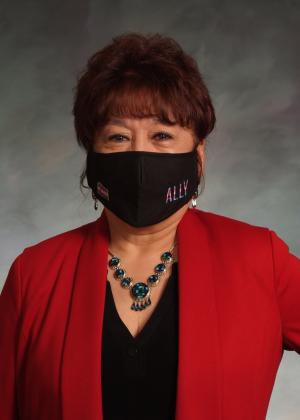
Adrienne Benavidez
DDemocratic
Co

Brianna Titone
DDemocratic
Co

Cathy Kipp
DDemocratic
Co

Eliza Hamrick
DDemocratic
Co

Emily Sirota
DDemocratic
Co
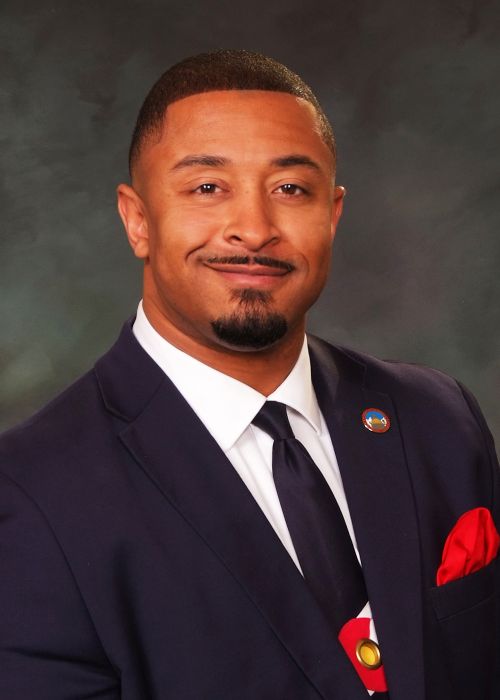
James Coleman
DDemocratic
Co

Jamie Jackson
DDemocratic
Co

Jennifer Bacon
DDemocratic
Co

Jenny Willford
DDemocratic
Co

Judy Amabile
DDemocratic









Ask Maddy
·
AI policy assistant
Ask Maddy about HB 1421
Scope: CO
Hi! I can help you understand HB 1421. What would you like to know?
Try one of these
i
Maddy answers using official bill text and legislative records. Always verify before sharing.
Sources cited inline