

Criminal Protection Order & Protection Order Violation
Summary
Under existing law, a person charged with a criminal offense is subject to a criminal protection order, which remains in effect until final disposition of the criminal action. The act: Prescribes what must be included in the standardized form for a criminal protection order; Limits a criminal protection order to orders for the protection of a witness to, or victim of, the acts charged and prohibits a court from including in a criminal protection order an order to enforce a mandated condition of bond or a condition of bond that assists in obtaining the appearance of the defendant in court or ensuring community safety; Requires a court to inform a defendant that a violation of a criminal protection order may constitute a misdemeanor offense of violation of a protection order and that conduct that violates the criminal protection order may constitute a felony offense of intimidating a witness or victim or retaliation against a witness or victim; Only allows a criminal protection order to prohibit possession or consumption of alcohol or controlled substances without a valid prescription when available information supports a sufficient nexus between that restriction and the safety of the alleged victim or witness; except that, in a case involving domestic violence or crimes listed in the "Victim Rights Act", the court may enter an order prohibiting possession or consumption of alcohol or controlled substances without a valid prescription if the court deems it appropriate for the safety of an alleged victim or witness; and Requires a court to review a criminal protection order at the time of sentencing or other resolution of the criminal case. Under existing law, a sentence for violating a protection order runs consecutively with any sentence imposed for the crime that gave rise to the protection order. The act limits this consecutive sentence provision to crimes involving domestic violence or crimes listed in the "Victim Rights Act". The act grants a peace officer discretion to arrest, seek a warrant to arrest, or issue a summons to a restrained person for violating, or attempting to violate, a protection order by possessing or consuming alcohol or controlled substances; violating a term included in the protection order to protect the protected person from imminent danger to life or health in cases that do not involve domestic violence or crimes listed in the "Victim Rights Act"; or failing to timely file a signed affidavit or written statement with the court as required by law. (Note: This summary applies to this bill as enacted.)
Bill status
signed
all 5 stages cleared
Introduction
Jan 2025
Committee Review
Mar 2025
House Passage
Mar 2025
Senate Passage
Apr 2025
Signed into Law
Apr 2025
Introduced Jan 29, 2025
Signed Apr 30, 2025
Maddy AI version diff · 7 comparisons
What changed between versions
Rerevised (04/04/2025)
→
Revised (04/03/2025)
·
2 edits
MINOR
The bill was revised to clarify that protection orders issued under this section are specifically limited to protecting witnesses or victims of charged acts and cannot include conditions related to pretrial release. This change ensures that protection orders do not improperly interfere with existing pretrial release conditions set by the court.
Scope change
The bill's scope was narrowed to explicitly exclude pretrial release conditions from protection orders, clarifying the relationship between protection orders and existing criminal procedure laws.
REQUIREMENT
Added a new provision stating that protection orders under this section are limited to protecting witnesses or victims of charged acts and must not include orders relating to conditions of pretrial release as provided in Section 16-4-105.
Added specific language clarifying that protection orders cannot prohibit the restrained person from possession or consumption of alcohol or controlled substances as a condition of pretrial release.
Floor votes · Senate Apr 4, 2025 · House Mar 5, 2025
How they voted
22–12
Passed · 1 other
Total votes 35
Apr 4, 2025
D
Democratic23
95% Yea
R
Republican12
91% Nay
Vote distribution
All Yea
All Nay
Mixed
No data
Full legislative history
Actions timeline
Total actions
12
Key actions
5
Committee
2
Apr 30, 2025
Signed into law
Governor Signed
executive
Apr 4, 2025
Upper · Passed
Senate Third Reading Passed - No Amendments
upper
Mar 31, 2025
Upper · Passed
Senate Committee on Judiciary Refer Unamended to Senate Committee of the Whole
upper
Mar 10, 2025
Introduced
Introduced In Senate - Assigned to Judiciary
upper
Mar 5, 2025
Lower · Passed
House Third Reading Passed - No Amendments
lower
Feb 26, 2025
Lower · Passed
House Committee on Judiciary Refer Amended to House Committee of the Whole
lower
Jan 29, 2025
Introduced
Introduced In House - Assigned to Judiciary
lower
4 primary · 15 co-sponsors
Sponsors
Role
Legislator
Party
State
District
P

Jennifer Bacon
DDemocratic
P

Julie Gonzales
DDemocratic
P

Michael Carter
DDemocratic
P

Mike Weissman
DDemocratic
Co

Alex Valdez
DDemocratic
Co

Iman Jodeh
DDemocratic
Co
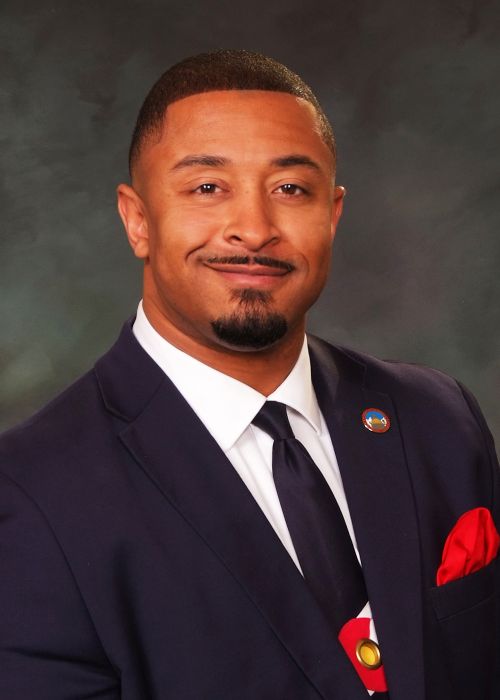
James Coleman
DDemocratic
Co

Jamie Jackson
DDemocratic
Co

Javier Mabrey
DDemocratic
Co

Jenny Willford
DDemocratic
Co

Katie Wallace
DDemocratic
Co

Kyle Brown
DDemocratic
Co

Lisa Cutter
DDemocratic
Co

Mandy Lindsay
DDemocratic




Ask Maddy
·
AI policy assistant
Ask Maddy about HB 25-1148
Scope: CO
Hi! I can help you understand HB 25-1148. What would you like to know?
Try one of these
i
Maddy answers using official bill text and legislative records. Always verify before sharing.
Sources cited inline