

Limitations on Local Anti-Growth Land Use Policies
Summary
The act expands the definition of an anti-growth law, which local governmental entities are generally prohibited from enacting or enforcing, to include a generally applicable land use law that, in census urban areas as defined by the United States census bureau, explicitly decreases the permitted residential density or residential uses of land to a lower residential density or fewer residential uses than were allowed by the land's usage and zoning as of July 1, 2025, without ensuring a corresponding increase of residential density or residential uses elsewhere in the jurisdiction. The act provides that certain limitations on anti-growth laws do not apply to land that contains or is directly adjacent to a wildlife crossing structure. The act also permits a municipality to seek a judicial determination as to the legality of a proposed municipal initiative for a land use ordinance that restricts or limits the development or use of land that is submitted to the legislative body of the municipality, allows the owners of a property that is specifically subject to the proposed ordinance and persons designated as representing the petition proponents to intervene in the proceeding, and tolls the period within which the municipality is required to adopt the proposed initiated ordinance or call an election during the pendency of the judicial determination. (Note: This summary applies to this bill as enacted.)
Bill status
signed
all 5 stages cleared
Introduction
Jan 2025
Committee Review
Mar 2025
House Passage
Feb 2025
Senate Passage
Mar 2025
Signed into Law
Mar 2025
Introduced Jan 27, 2025
Signed Mar 31, 2025
Maddy AI version diff · 8 comparisons
What changed between versions
Revised (03/13/2025)
→
PA2 (03/07/2025)
·
3 edits
MINOR
This bill was amended to clarify how it defines 'anti-growth laws' and to expand the ability for property owners to challenge land-use restrictions. The changes make the definition of anti-growth laws more specific about what counts as a decrease in residential density, and they allow more parties to intervene in legal challenges against new land-use ordinances.
Scope change
The bill's scope was expanded to include more specific criteria for what constitutes an anti-growth law and to allow additional parties to participate in legal proceedings related to land-use restrictions.
DEFINITION
The definition of 'anti-growth law' was rewritten to more clearly specify that laws explicitly decreasing permitted residential density in census urban areas count as anti-growth laws.
ELIGIBILITY
Property owners specifically affected by a proposed land-use ordinance and designated representatives of petition proponents were added as parties entitled to intervene in legal proceedings challenging the ordinance.
REQUIREMENT
The language regarding tolling of time periods for adopting ordinances was reorganized and clarified to ensure legal procedures are not delayed during related legal actions.
Floor votes · Senate Mar 14, 2025 · House Feb 18, 2025
How they voted
34–0
Passed
Total votes 34
Mar 14, 2025
D
Democratic22
100% Yea
R
Republican12
100% Yea
Vote distribution
All Yea
All Nay
Mixed
No data
Full legislative history
Actions timeline
Total actions
14
Key actions
5
Committee
2
Amendments
1
Mar 31, 2025
Signed into law
Governor Signed
executive
Mar 17, 2025
Introduced
House Considered Senate Amendments - Result was to Concur - Repass
lower
Mar 14, 2025
Upper · Passed
Senate Third Reading Passed with Amendments - Floor
upper
Mar 6, 2025
Upper · Passed
Senate Committee on Local Government & Housing Refer Amended to Senate Committee of the Whole
upper
Feb 21, 2025
Introduced
Introduced In Senate - Assigned to Local Government & Housing
upper
Feb 18, 2025
Lower · Passed
House Third Reading Passed - No Amendments
lower
Feb 12, 2025
Lower · Passed
House Committee on Transportation, Housing & Local Government Refer Amended to House Committee of the Whole
lower
Jan 27, 2025
Introduced
Introduced In House - Assigned to Transportation, Housing & Local Government
lower
4 primary · 14 co-sponsors
Sponsors
Role
Legislator
Party
State
District
P
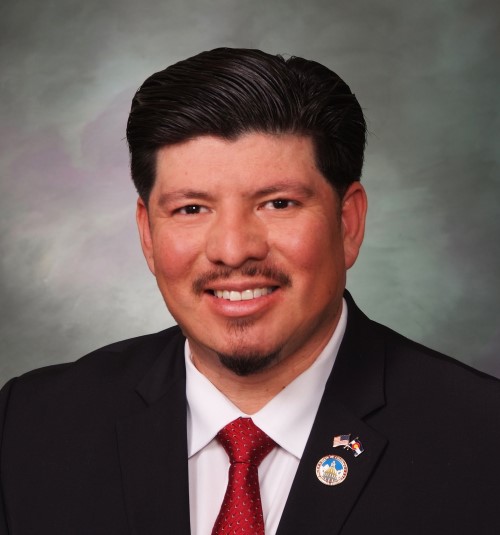
Carlos Barron
RRepublican
P

Matt Ball
DDemocratic
P

Nick Hinrichsen
DDemocratic
P

Rebekah Stewart
DDemocratic
Co

Alex Valdez
DDemocratic
Co

Andy Boesenecker
DDemocratic
Co

Cathy Kipp
DDemocratic
Co

Cecelia Espenoza
DDemocratic
Co
FW
Faith Winter
DDemocratic
Co

Javier Mabrey
DDemocratic
Co

Julie McCluskie
DDemocratic
Co

Junie Joseph
DDemocratic
Co

Lisa Cutter
DDemocratic
Co

Mandy Lindsay
DDemocratic



Ask Maddy
·
AI policy assistant
Ask Maddy about HB 25-1093
Scope: CO
Hi! I can help you understand HB 25-1093. What would you like to know?
Try one of these
i
Maddy answers using official bill text and legislative records. Always verify before sharing.
Sources cited inline