

Intoxicating Cannabinoid Hemp And Marijuana
Summary
Colorado law requires the manufacturer of cosmetic products, dietary supplements, food products, and food additives, including hemp products, to be registered with the department of public health and environment (department). The act creates a new framework for the department to regulate and register hemp products and certain intoxicating hemp products and for the marijuana enforcement division (division) in the department of revenue to regulate intoxicating products or potentially intoxicating compounds that are or may be cannabinoids. This regulation includes: The power to promulgate rules authorizing or prohibiting chemical modification, conversion, or synthetic derivation to create certain types of intoxicating cannabinoids; Classifying and reclassifying cannabinoids as intoxicating, potentially intoxicating, or nonintoxicating; Labeling and advertising requirements; Production and testing requirements; Inspection, record-keeping, surveillance, and inventory tracking requirements; Prohibiting the export of a safe harbor hemp product that is a synthetic cannabinoid or that is being exported to a state where it is illegal; and Issuing a cease-and-desist order or clean-up order. Hemp- and marijuana-derived compounds and cannabinoids are classified into 3 classifications: Nonintoxicating cannabinoids; Potentially intoxicating cannabinoids; and Intoxicating cannabinoids. Nonintoxicating cannabinoids that are derived from hemp may be produced, distributed, or sold as a hemp product. With the exception of products manufactured or produced for export, which are referred to as "safe harbor hemp products" and with some exceptions for small amounts of THC, products containing potentially intoxicating compounds and intoxicating cannabinoids must only be produced, distributed, or sold by a person licensed by the division to produce, distribute, or sell the compound or cannabinoid as a product. The act clarifies that: Nonintoxicating cannabinoids, potentially intoxicating compounds, and intoxicating cannabinoids are marijuana or marijuana products for the purposes of the retail marijuana sales tax; and A person must be licensed by the division to manufacture potentially intoxicating compounds or intoxicating cannabinoids. The act prohibits the following acts: Manufacturing, selling, or delivering products that contain intoxicating cannabinoids in excess of limits established by rule; Manufacturing a product containing hemp that is not a cosmetic, a dietary supplement, a food, a food additive, or an herb; Manufacturing, producing, selling, distributing, or holding for sale or distribution a safe harbor hemp product without registering with the department; Selling a hemp product to an individual who is under 21 years of age if the hemp product has a ratio of cannabidiol to tetrahydrocannabinol (THC) of less than 20:1 and the hemp product contains more than 1.25 milligrams of THC, but this prohibition does not apply to products with no THC, tinctures, cosmetics, or hemp products that the United States food and drug administration has determined are generally recognized as safe; Selling a hemp product in a container with more than 5 servings if the hemp product has more than 1.25 milligrams of THC and a ratio of cannabidiol to THC of less than 20:1, but this prohibition does not apply to products with no THC, tinctures, cosmetics, or hemp products that the United States food and drug administration has determined are generally recognized as safe; or Selling a hemp product in a container with more than 30 servings if the hemp product has more than 1.25 milligrams of THC and a ratio of cannabidiol to THC of 20:1 or more, but this prohibition does not apply to products with no THC, tinctures, cosmetics, or hemp products that the United States food and drug administration has determined are generally recognized as safe. The penalty for a violation is up to $10,000 per day per violation. The act specifies factors to consider in determining the amount of the penalty. The act requires the executive director of the department of revenue to analyze the feasibility of establishing a standing committee to evaluate cannabinoids and cannabis-derived products for the purpose of determining and making recommendations regarding their safety profiles and potential for intoxication. The department of revenue may engage experts to inform its analysis. The bill sets standards for marijuana cultivation facilities to buy seeds and clones. To implement this act: $1,574,061 is appropriated to the department. This appropriation consists of $1,168,485 from the general fund and $405,576 from the wholesale food manufacturing and storage protection cash fund; $295,024 is appropriated from the general fund to the marijuana cash fund and reappropriated from the marijuana cash fund to the department of revenue; and Of the amounts appropriated to the departments of public health and environment and revenue, $437,764 is reappropriated to the department of law for the provision of legal services to those departments. The amounts are appropriated to the departments for the 2023-24 state fiscal year, and the departments are authorized to spend any amount not expended in the 2023-34 state fiscal year in the 2024-25 state fiscal year for the same purposes. APPROVED by Governor June 7, 2023 EFFECTIVE June 7, 2023 (Note: This summary applies to this bill as enacted.)
Bill status
signed
all 5 stages cleared
Introduction
Apr 2023
Committee Review
May 2023
Senate Passage
Apr 2023
House Passage
May 2023
Signed into Law
Jun 2023
Introduced Apr 6, 2023
Signed Jun 7, 2023
Floor votes · Senate Apr 27, 2023 · House May 7, 2023
How they voted
30–0
Passed
Total votes 30
Apr 27, 2023
D
Democratic21
100% Yea
R
Republican9
100% Yea
Vote distribution
All Yea
All Nay
Mixed
No data
Full legislative history
Actions timeline
Total actions
19
Key actions
9
Committee
8
Jun 7, 2023
Signed into law
Governor Signed
executive
May 8, 2023
Lower · Passed
House Consideration of First Conference Committee Report result was to Adopt Committee Report - Repass
lower
May 8, 2023
Legislature · Passed
First Conference Committee Result was to Adopt Rerevised w/ Amendments
legislature
May 8, 2023
Upper · Passed
Senate Consideration of First Conference Committee Report result was to Adopt Committee Report - Repass
upper
May 8, 2023
Upper · Passed
Senate Considered House Amendments - Result was to Not Concur - Request Conference Committee
upper
May 7, 2023
Lower · Passed
House Third Reading Passed with Amendments - Floor
lower
May 4, 2023
Lower · Passed
House Committee on Appropriations Refer Amended to House Committee of the Whole
lower
May 1, 2023
Committee
House Committee on Finance Refer Unamended to Appropriations
lower
Apr 27, 2023
Introduced
Introduced In House - Assigned to Finance
lower
Apr 27, 2023
Upper · Passed
Senate Third Reading Passed - No Amendments
upper
Apr 24, 2023
Upper · Passed
Senate Committee on Appropriations Refer Amended to Senate Committee of the Whole
upper
Apr 18, 2023
Committee
Senate Committee on Finance Refer Amended to Appropriations
upper
Apr 6, 2023
Introduced
Introduced In Senate - Assigned to Finance
upper
4 primary · 0 co-sponsors
Sponsors
Role
Legislator
Party
State
District
P
CK
Chris Kennedy
DDemocratic
P

Dylan Roberts
DDemocratic
P
KV
Kevin Van Winkle
RRepublican
P
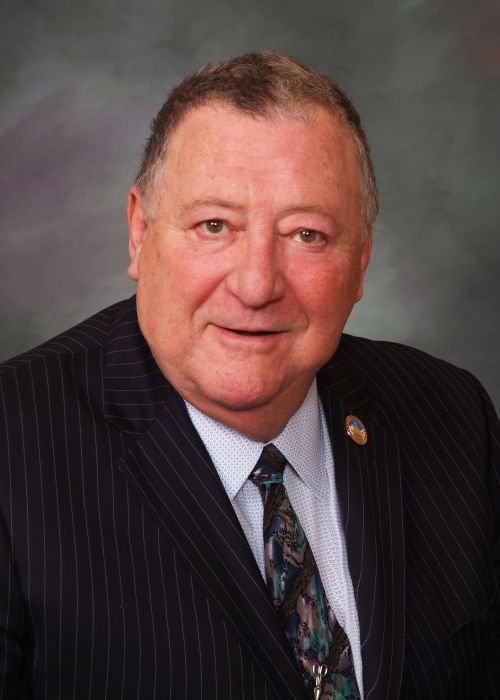
Marc Snyder
DDemocratic
Ask Maddy
·
AI policy assistant
Ask Maddy about SB 23-271
Scope: CO
Hi! I can help you understand SB 23-271. What would you like to know?
Try one of these
i
Maddy answers using official bill text and legislative records. Always verify before sharing.
Sources cited inline