

Electric Vehicle Charging And Parking Requirements
Summary
Section 2 of the act requires the state electrical board (board) to adopt rules requiring compliance, starting March 1, 2024, with the provisions of the model electric ready and solar ready code that require multifamily buildings to comply with the electric vehicle (EV) power transfer infrastructure requirements. The board is precluded from adopting rules that prohibit the installation or use of EV charging stations unless the rules address a bona fide safety concern. Sections 3 and 4 expand the prohibition against a landlord of rental property or a management association (association) of a common interest community from unreasonably prohibiting the installation of EV charging equipment in the leased premises or a unit in the common interest community (unit) to also apply to an assigned or a deeded parking space for the leased premises or unit, to parking spaces accessible to both the tenant or unit owner and other tenants or unit owners, and to commercial rental property.A landlord or association must also allow an EV or a plug-in hybrid vehicle to park on the premises. Colorado law grants a local government the ability to regulate parking, and this regulation includes requiring that buildings meet minimum parking standards. Sections 5, 6, and 7 require a local government, when counting minimum parking spaces, to count: Any parking space that is served by an EV charging station as at least one standard automobile parking space; and Any van-accessible parking space that is wheelchair accessible and served by an EV charging station as at least 2 standard automobile parking spaces. Sections 8 and 9 prohibit local governments from adopting an ordinance or a resolution that prohibits the installation or use of EV charging stations or restricts parking based on a vehicle being a plug-in hybrid vehicle or plug-in electric vehicle unless the ordinance or resolution addresses a bona fide safety concern. The decision is subject to judicial review. Sections 10 and 11 give local governments that have electrical, elevator and escalator, and plumbing codes adopted by reference to state codes the option to not adopt certain energy efficiency codes when their electrical, elevator and escalator, and plumbing codes are automatically updated because the state has updated these codes. Section 12 exempts, until 2030, EV charging systems from the levy and collection of property tax. Federal law prohibits the construction of automotive service stations or other commercial establishments for serving motor vehicle users along interstate highway rights-of-way, including rest areas. Due to this prohibition, the state cannot construct EV charging systems along interstate highway rights-of-way, including rest areas, in the state. Section 13 specifies that, when the federal law no longer prohibits the construction of EV charging systems along interstate highway rights-of-way, the department of transportation may collaborate with public or private entities to develop projects for the construction of EV charging systems along interstate highway rights-of-way. In addition, the department of transportation may develop these types of projects along state highways. Section 14 defines the phrase "disproportionately impacted community" for state government to include communities in which: The proportion of households that are below 200% of the federal poverty level is greater than 40%; The proportion of households that spend more than 30% of household income on housing is greater than 50%; The proportion of the population that identifies as people of color is greater than 40%; The proportion of the population that is linguistically isolated is greater than 20%; The population has a history of being subject to environmental racism perpetuated through redlining or through anti-indigenous, anti-immigrant, anti-Latino, or anti-Black laws, policies, or practices and that present-day demographic factors and data demonstrate that the community currently faces environmental health disparities; The community is identified by a statewide agency as being one where multiple factors, including socioeconomic stressors, vulnerable populations, disproportionate environmental burdens, vulnerability to environmental degradation or climate change, and lack of public participation, may act cumulatively to affect health and the environment and may contribute to persistent disparities; The community is a mobile home park; or The community is located on the Southern Ute or Ute Mountain Ute Indian reservation. All statewide agencies are required to use the definition of disproportionately impacted community, but the agencies are given flexibility in applying the definition. APPROVED by Governor May 23, 2023 EFFECTIVE May 23, 2023(Note: This summary applies to this bill as enacted.)
Bill status
signed
all 5 stages cleared
Introduction
Mar 2023
Committee Review
Apr 2023
House Passage
Apr 2023
Senate Passage
May 2023
Signed into Law
May 2023
Introduced Mar 8, 2023
Signed May 23, 2023
Floor votes · Senate May 2, 2023 · House Apr 11, 2023
How they voted
31–2
Passed · 1 other
Total votes 34
May 2, 2023
D
Democratic22
95% Yea
R
Republican12
83% Yea
Vote distribution
All Yea
All Nay
Mixed
No data
Full legislative history
Actions timeline
Total actions
18
Key actions
5
Committee
2
Amendments
2
May 23, 2023
Signed into law
Governor Signed
executive
May 4, 2023
Introduced
House Considered Senate Amendments - Result was to Concur - Repass
lower
May 3, 2023
Introduced
House Considered Senate Amendments - Result was to Laid Over Daily
lower
May 2, 2023
Upper · Passed
Senate Third Reading Passed with Amendments - Floor
upper
Apr 19, 2023
Upper · Passed
Senate Committee on Transportation & Energy Refer Unamended to Senate Committee of the Whole
upper
Apr 14, 2023
Introduced
Introduced In Senate - Assigned to Transportation & Energy
upper
Apr 11, 2023
Lower · Passed
House Third Reading Passed - No Amendments
lower
Mar 29, 2023
Lower · Passed
House Committee on Energy & Environment Refer Amended to House Committee of the Whole
lower
Mar 8, 2023
Introduced
Introduced In House - Assigned to Energy & Environment
lower
4 primary · 0 co-sponsors
Sponsors
Role
Legislator
Party
State
District
P
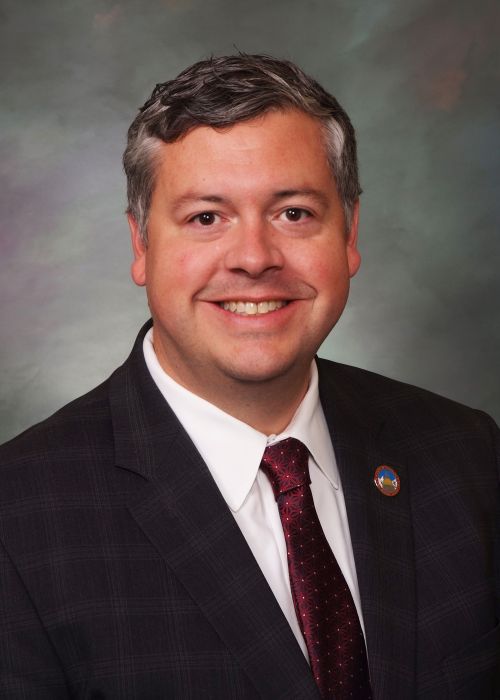
Alex Valdez
DDemocratic
P
FW
Faith Winter
DDemocratic
P
KP
Kevin Priola
DDemocratic
P
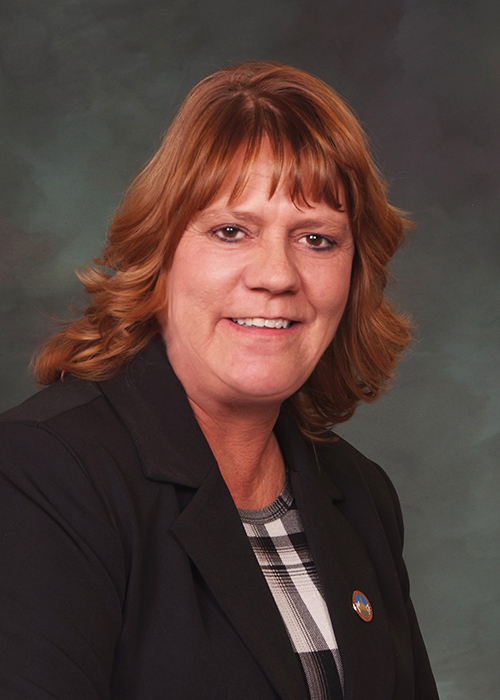
Tisha Mauro
DDemocratic
Ask Maddy
·
AI policy assistant
Ask Maddy about HB 23-1233
Scope: CO
Hi! I can help you understand HB 23-1233. What would you like to know?
Try one of these
i
Maddy answers using official bill text and legislative records. Always verify before sharing.
Sources cited inline