

Internal Election Security Measures
Summary
The act increases election security measures for the secretary of state's office, election officials, candidates for elective office, and voters. Section 4 of the act requires the district court and the supreme court, if applicable, to expedite scheduling and the issuance of any orders in connection with an enforcement action brought by the attorney general or the secretary of state to enforce the provisions of the election code to ensure that a final ruling is made within specified periods. Section 5 requires a designated election official for a county, a coordinated election official for a county, and employees in the election division of the department of state (department), at the discretion of the secretary of state, to complete a certification program for election officials provided by the secretary of state (certification program). The secretary of state is strongly encouraged to complete the certification program. Employees, designated election officials, and coordinated election officials are required to complete the certification program within a specified period and may not serve as the designated election official for a county or the coordinated election official for a county without completing the certification program. Section 6 requires that the certification program curriculum include courses in voter registration and list maintenance, accessibility, coordinated elections, mail ballot and in-person voting processes, voting systems testing, risk-limiting audits, and canvass. Section 7 specifies that a person is ineligible to serve as a designated election official for a county or as a coordinated election official if the person has been convicted of an election offense or of committing or conspiring to commit sedition, insurrection, treason, conspiracy to overthrow the government, or another similar federal offense. Section 8 requires the secretary of state to invoice any county that uses a voting system in an instant runoff voting election for its share of the cost as a proportion of the number of registered active voters in all participating municipalities in that county compared to the total number of registered active voters in all participating municipalities in the state as determined by the secretary of state. Section 9 modifies the prohibition for certain elected officials or candidates for elective office from preparing, maintaining, or repairing any voting equipment or device that is to be used in an election to apply to any contact with the voting equipment or device, rather than just physical contact. In a political subdivision with a population of 100,000 or more, section 9 also prohibits any elected official, any candidate for elective office, and the secretary of state from having key card access to or being present in a room with components of a voting system without being accompanied by one or more persons with authorized access. Section 10 requires that for elections conducted under the "Uniform Election Code of 1992", the governing body of any political subdivision is required to adopt an electronic or electromechanical voting system to be used for tabulating votes at all elections held by the political subdivision. This requirement does not apply to counties with fewer than 1,000 active electors at the date of the last general election. Section 11 prohibits a county from creating, permitting any person to create, or disclosing to any person an image of the hard drive of any voting system component without the express written permission of the department. Section 12 specifies that if a software or hardware malfunction makes it impossible to count all or a part of the ballots with electronic vote-tabulating equipment, the secretary of state, after consultation with the designated election official, may permit the designated election official to direct that such ballots be counted manually. Section 13 requires a designated election official to keep all components of a voting system in a location where entry is controlled by use of a key card access system and that is under video security surveillance recording. The designated election official is required to ensure that records in connection with access to the location of the voting system and video recordings of the location are created and maintained for specified periods. Section 3 defines terms in connection with these requirements. Section 13 also directs the general assembly to appropriate the following amounts for the 2022-23 state fiscal year: One million dollars from the general fund to the department to administer a grant program, which is created by the act, to provide assistance to counties in complying with the security requirements of the act; and $117,000 from the department of state cash fund to the department to assist the state and counties with assessing potential risks to the proper administration of elections. In addition, section 13 requires the general assembly to make appropriations for the 2023-24 state fiscal year and each state fiscal year thereafter from the department of state cash fund to the department to assist the state and counties with assessing potential risks to the proper administration of elections. Section 14 states that if a majority of a canvass board in a county is unable to or does not certify the abstract of votes for any reason by the applicable deadline, the secretary of state is required to review the noncertified abstract of votes and other evidence provided by the canvass board. If, after review, the secretary of state determines that the noncertified abstract of votes is sufficiently explicit in showing how many votes were cast for each candidate, ballot question, or ballot issue, the secretary of state is required to certify the results for the county and proceed to certifying state results. Section 15 specifies that in addition to complying with certain existing rules of the secretary of state when carrying out the duties of the secretary of state, a person is also required to comply with other policies of the secretary of state, including the acceptable use policy for the statewide voter registration system, when carrying out such duties. Section 15 also specifies that any person who willfully interferes with a person in notifying or obstructs a person from notifying the department of a potential violation or retaliates against a person for providing such notice is subject to current penalties for election offenses. Section 16 prohibits a person from accessing electronic voting equipment or an election-night reporting system without authorization and specifies that a person who accesses such equipment or system is guilty of a class 5 felony. Section 16 also specifies that an authorized person who knowingly publishes or causes to be published passwords or other confidential information relating to a voting system will immediately have their authorized access revoked and is guilty of a class 5 felony. (Note: This summary applies to this bill as enacted.)
Bill status
signed
all 5 stages cleared
Introduction
Mar 2022
Committee Review
Apr 2022
Senate Passage
Mar 2022
House Passage
May 2022
Signed into Law
Jun 2022
Introduced Mar 11, 2022
Signed Jun 2, 2022
Floor votes · Senate May 10, 2022 · House May 10, 2022
How they voted
27–7
Passed
Total votes 34
May 10, 2022
D
Democratic20
100% Yea
R
Republican14
50% Nay
Vote distribution
All Yea
All Nay
Mixed
No data
Full legislative history
Actions timeline
Total actions
18
Key actions
5
Committee
4
Amendments
1
Jun 2, 2022
Signed into law
Governor Signed
executive
May 10, 2022
Introduced
Senate Considered House Amendments - Result was to Concur - Repass
upper
May 10, 2022
Lower · Passed
House Third Reading Passed with Amendments - Floor
lower
Apr 26, 2022
Lower · Passed
House Committee on Appropriations Refer Amended to House Committee of the Whole
lower
Apr 18, 2022
Committee
House Committee on State, Civic, Military, & Veterans Affairs Refer Amended to Appropriations
lower
Mar 25, 2022
Introduced
Introduced In House - Assigned to State, Civic, Military, & Veterans Affairs
lower
Mar 25, 2022
Upper · Passed
Senate Third Reading Passed - No Amendments
upper
Mar 18, 2022
Upper · Passed
Senate Committee on Appropriations Refer Amended to Senate Committee of the Whole
upper
Mar 15, 2022
Committee
Senate Committee on State, Veterans, & Military Affairs Refer Amended to Appropriations
upper
Mar 11, 2022
Introduced
Introduced In Senate - Assigned to State, Veterans, & Military Affairs
upper
3 primary · 0 co-sponsors
Sponsors
Role
Legislator
Party
State
District
P
KP
Kevin Priola
DDemocratic
P
SF
Steve Fenberg
DDemocratic
P
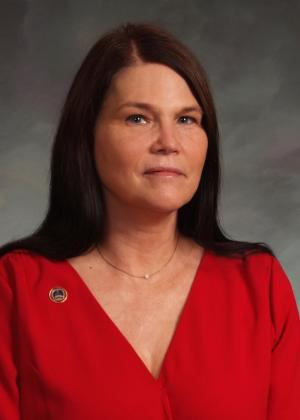
Susan Lontine
DDemocratic
Ask Maddy
·
AI policy assistant
Ask Maddy about SB 22-153
Scope: CO
Hi! I can help you understand SB 22-153. What would you like to know?
Try one of these
i
Maddy answers using official bill text and legislative records. Always verify before sharing.
Sources cited inline