

State Entity Authority For Public-private Partnerships
Summary
The executive director of the department of personnel (executive director) is required to: Create requirements regarding the authority for state public entities to initiate requests for proposals or bids or to review any private partner-initiated proposals for public projects to be completed through public-private partnerships; Create requirements regarding the authority for state public entities to execute public-private partnership agreements for public projects; Further define any relevant terms defined in the act; and Develop cost thresholds for public projects that qualify as a public-private partnership or a public-private agreement. The public-private collaboration unit is established in the department of personnel (department). The unit is required to: In coordination with relevant state public entities, identify, prioritize, and advance potential public projects that may be best delivered through a public-private partnership; Facilitate collaboration between state public entities and private partners in connection with public projects; Provide technical assistance and expertise to state public entities in connection with any aspect of proposed or approved public-private partnerships; Create best practices that incorporate lessons learned from other public-private partnerships for every stage of the life cycle of a public-private partnership; Conduct public and stakeholder engagement to encourage transparency, accountability, and information sharing regarding public-private partnerships; Track proposed, ongoing, and completed public-private partnerships; Attract private investments for public projects; and In coordination with the department of early childhood, distribute funding to help increase the supply of child care facilities using public buildings or other appropriate public assets. For the 2023-24 state fiscal year and for each state fiscal year thereafter, money is appropriated from the general fund to the department for the standard operating expenses of the public-private collaboration unit, including personal services and related costs. A state public entity is authorized to initiate solicitations, review any private partner-initiated proposals, execute public-private partnership agreements, or execute public-private agreements to develop or operate a public project subject to the requirements of the act. Any public-private agreement entered into pursuant to the act must comply with applicable state laws and processes developed by the executive director. Nothing in the act prohibits, limits, or otherwise modifies the specific statutory authority of state public entities to enter into a public-private partnership, a public-private agreement, or other agreement or to use a statutory mechanism as authorized by any other provision of law. Public-private partnerships authorized by the act are exempt from the state "Procurement Code". The Colorado economic development commission is required to establish a public-private partnership subcommittee (subcommittee) to review proposed contracts, sales, and leases of state property. The subcommittee consists of at least 3 members of the commission as selected by the commission. A state public entity that intends to enter into a contract, sale, or lease of state property is required to submit the proposed contract, sale, or lease of state property to the subcommittee for review before entering into the contract, sale, or lease of state property. The state public entity, in coordination with the Colorado economic development commission staff, is required to submit a report to the subcommittee regarding the anticipated use of the state property. The subcommittee is required to review the report and make any recommendations it deems necessary to the state public entity. The executive director is required to annually report on the implementation and use of public-private partnerships pursuant to the act at its presentation to its committee of reference at a hearing held pursuant to the "State Measurement for Accountable, Responsive, and Transparent (SMART) Government Act". The executive director is also required to submit the report to the joint budget committee. The existing definition of "unused state-owned real property" is modified to require that the unused state-owned real property be identified in the inventory list of unused state-owned real property maintained by the department and that the property is not being used at its optimal or best use. Money in the existing unused state-owned real property fund is continuously, rather than annually, appropriated to the department for existing purposes and for public-private agreements and any associated costs of the agreements. The state, by and through the division of employment and training the department of labor and employment, is authorized to dispose of a parcel of real property in Summit County. The proceeds must be credited to the employment support fund. (Note: This summary applies to this bill as enacted.)
Bill status
signed
all 5 stages cleared
Introduction
Feb 2022
Committee Review
Apr 2022
Senate Passage
Apr 2022
House Passage
Apr 2022
Signed into Law
May 2022
Introduced Feb 9, 2022
Signed May 26, 2022
Floor votes · Senate Apr 6, 2022 · House Apr 29, 2022
How they voted
30–3
Passed · 2 other
Total votes 35
Apr 6, 2022
D
Democratic21
95% Yea
R
Republican14
71% Yea
Vote distribution
All Yea
All Nay
Mixed
No data
Full legislative history
Actions timeline
Total actions
17
Key actions
5
Committee
4
Amendments
2
May 26, 2022
Signed into law
Governor Signed
executive
May 4, 2022
Introduced
Senate Considered House Amendments - Result was to Concur - Repass
upper
May 2, 2022
Introduced
Senate Considered House Amendments - Result was to Laid Over Daily
upper
Apr 29, 2022
Lower · Passed
House Third Reading Passed - No Amendments
lower
Apr 26, 2022
Lower · Passed
House Committee on Appropriations Refer Amended to House Committee of the Whole
lower
Apr 14, 2022
Committee
House Committee on Business Affairs & Labor Refer Amended to Appropriations
lower
Apr 6, 2022
Introduced
Introduced In House - Assigned to Business Affairs & Labor
lower
Apr 6, 2022
Upper · Passed
Senate Third Reading Passed - No Amendments
upper
Apr 1, 2022
Upper · Passed
Senate Committee on Appropriations Refer Amended to Senate Committee of the Whole
upper
Mar 2, 2022
Committee
Senate Committee on Business, Labor, & Technology Refer Amended to Appropriations
upper
Feb 9, 2022
Introduced
Introduced In Senate - Assigned to Business, Labor, & Technology
upper
3 primary · 0 co-sponsors
Sponsors
Role
Legislator
Party
State
District
P
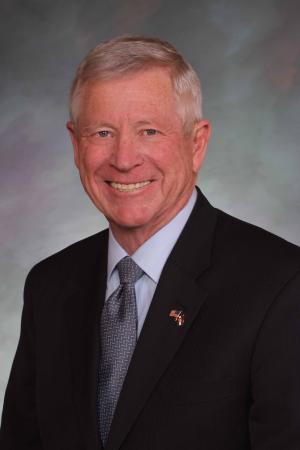
Bob Rankin
RRepublican
P
CH
Chris Hansen
DDemocratic
P

Julie McCluskie
DDemocratic
Ask Maddy
·
AI policy assistant
Ask Maddy about SB 22-130
Scope: CO
Hi! I can help you understand SB 22-130. What would you like to know?
Try one of these
i
Maddy answers using official bill text and legislative records. Always verify before sharing.
Sources cited inline