

Concerning Successful High School Transitions
Summary
The act amends the high school innovative learning pilot program (ILOP) that authorizes school districts, district charter schools, and institute charter schools (local education providers) to count as full-time students high school students participating in innovative learning opportunities regardless of whether they meet the number of teacher-pupil instruction and contact hours for full-time enrollment. The act allows a school of a school district to participate in an ILOP with a district or independently and requires all applicants to demonstrate how their innovative learning plan disproportionately benefits underserved students.In selecting applicants to participate in the pilot program, the act requires the department of education (department) and the state board of education (state board) to consider whether the innovative learning plan includes opportunities for students to participate in registered or unregistered apprenticeships, internships, and technical training or skills programs through an industry provider, teacher training opportunities, concurrent enrollment, and industry certificates.Further, subject to available appropriations, the state board is encouraged to select up to 20 applicants and is not limited to choosing applicants that had part-time students in the prior year and that enroll fewer than 5,000 students.The act creates the fourth-year innovation pilot program (pilot program) in the department of higher education to disburse state funding to postsecondary education and training programs on behalf of low-income students who graduate early from a high school participating in the pilot program prior to enrolling in the fourth year of high school or prior to enrolling in the second semester of their fourth year in high school.The state funding awarded to a student graduating prior to enrolling in the fourth year of high school is equal to the greater of 75% of the average state share amount of the statewide average per-pupil funding for public elementary and secondary schools for the 2021-22 budget year, as calculated during the 2021 legislative session, or $3,500. The state funding for a student graduating prior to the second semester of their fourth year in high school is equal to the greater of 45% of the average state share amount of the statewide average per-pupil funding for public elementary and secondary schools for the 2021-22 budget year, as calculated during the 2021 legislative session, or $2,000. The state funding is disbursed to the postsecondary program on behalf of the eligible graduate and may be used for the eligible graduate's cost of attendance for the postsecondary program, as determined by the department of higher education. The local education provider from which the student graduated early prior to the fourth year of high school receives a portion of the state savings for school finance obligations due to the early graduation. An eligible graduate must enroll in a postsecondary program within 18 months after graduating or the state funding is forfeited.The act requires the department of higher education to report annually to the department, the governor's office of state planning and budgeting, the joint budget committee, and the education committees of the general assembly concerning certain information specified in the act relating to the pilot program. The act creates the fourth-year innovation pilot program fund for the pilot program. The pilot program repeals, effective December 31, 2027.For the 2021-22 state fiscal year, the act appropriates:$220,115 and 0.3 FTE to the department of education for the high school innovative learning pilot program; and $44,222 and 0.6 FTE to the department of higher education to implement the for the fourth-year innovation pilot program .(Note: This summary applies to this bill as enacted.)
Bill status
signed
all 5 stages cleared
Introduction
Feb 2021
Committee Review
May 2021
Senate Passage
May 2021
House Passage
May 2021
Signed into Law
Jul 2021
Introduced Feb 18, 2021
Signed Jul 7, 2021
Floor votes · Senate May 3, 2021 · House May 28, 2021
How they voted
33–0
Passed · 1 other
Total votes 34
May 3, 2021
D
Democratic20
100% Yea
R
Republican14
92% Yea
Vote distribution
All Yea
All Nay
Mixed
No data
Full legislative history
Actions timeline
Total actions
15
Key actions
5
Committee
4
Jul 7, 2021
Signed into law
Governor Signed
executive
May 28, 2021
Lower · Passed
House Third Reading Passed - No Amendments
lower
May 25, 2021
Lower · Passed
House Committee on Appropriations Refer Unamended to House Committee of the Whole
lower
May 12, 2021
Committee
House Committee on Education Refer Unamended to Appropriations
lower
May 4, 2021
Introduced
Introduced In House - Assigned to Education
lower
May 3, 2021
Upper · Passed
Senate Third Reading Passed - No Amendments
upper
Apr 30, 2021
Upper · Passed
Senate Committee on Appropriations Refer Amended - Consent Calendar to Senate Committee of the Whole
upper
Mar 11, 2021
Committee
Senate Committee on Education Refer Amended to Appropriations
upper
Feb 18, 2021
Introduced
Introduced In Senate - Assigned to Education
upper
4 primary · 0 co-sponsors
Sponsors
Role
Legislator
Party
State
District
P
BM
Barbara McLachlan
DDemocratic
P
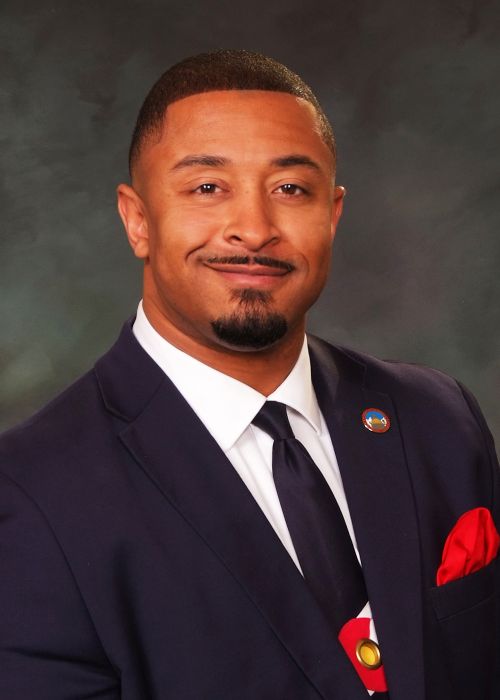
James Coleman
DDemocratic
P
KP
Kevin Priola
DDemocratic
P

Mark Baisley
RRepublican
Ask Maddy
·
AI policy assistant
Ask Maddy about SB 21-106
Scope: CO
Hi! I can help you understand SB 21-106. What would you like to know?
Try one of these
i
Maddy answers using official bill text and legislative records. Always verify before sharing.
Sources cited inline