

Public Utilities Commission Modernize Electric Transmission Infrastructure
Summary
Section 1 of the act authorizes the public utilities commission (PUC) to approve utilities' applications to build new transmission facilities if the PUC, consistent with its authority, finds that the new facilities would assist the utilities in meeting the state's clean energy goals established in 2019. In constructing or expanding transmission facilities, a utility must use its own employees, engage a contractor whose employees have access to federally approved apprenticeship programs, or both. Section 1 also requires the PUC to consider the ability of the proposed facilities to support future expansion as needed to enable the utility to participate in an organized wholesale market (OWM), which is defined in section 2 as an organization established for the purpose of coordinating and managing the transmission of electricity among multiple public utilities on a multistate or regional basis. An application for construction or expansion of transmission facilities is deemed approved if the PUC does not deny it within 240 days after the application is complete and public notice has been given.Section 6 imposes a 180-day deadline for approval by a local government if local government approval is required.Sections 4 and 7 create the Colorado electric transmission authority (CETA) as an independent special purpose authority, and section 4 specifies the composition and manner of appointment of the board of directors that governs the authority. CETA is authorized to select a qualified transmission operator to finance, plan, acquire, maintain, and operate eligible electric transmission and interconnected storage facilities (eligible facilities).Under sections 4, 8, and 9, CETA is granted various powers necessary to accomplish its purposes, including the power to:Issue revenue bonds; Identify and establish intrastate electric transmission corridors; Coordinate with other entities to establish interstate electric transmission corridors; Exercise the power of eminent domain to acquire eligible facilities; and Collect payments of reasonable rates, fees, interest, or other charges from persons using eligible facilities. CETA is generally subject to state open-records and open-meetings requirements, but proprietary confidential information that it holds, including power purchase agreements, costs of production, costs of transmission, transmission service agreements, credit reviews, detailed power models, and financing statements, is not subject to inspection. Section 10 authorizes payment of CETA's administrative expenses, not to exceed $500,000 annually, from an existing cash fund administered by the PUC.Section 2 sets out deadlines and conditions under which an electric utility that owns and controls transmission facilities (transmission utility) is required to join an OWM. The commission may delay or waive this requirement for a utility that is unable, despite its best efforts, to find a viable and available OWM to join or if the commission determines, based on its evaluation of specified factors, that requiring the transmission utility to join an OWM would not be in the public interest. A transmission utility that joins an OWM may recover costs of participating in the OWN from its ratepayers.Under current law, a cooperative electric association with an electric easement on real property is authorized to install or to allow a commercial broadband supplier to install broadband facilities on the real property, subject to notice and procedural requirements. Section 3 expands the authorization to apply to any non-investor-owned, non-municipally-owned, vertically integrated supplier of electric energy to its customers or members.Section 9 specifies that when a right-of-way is taken for an interstate electric transmission line, the court shall evaluate public purpose in light of the transmission system as a whole, including public use and benefits occurring either within Colorado or at a regional level.(Note: This summary applies to this bill as enacted.)
Bill status
signed
all 5 stages cleared
Introduction
Feb 2021
Committee Review
May 2021
Senate Passage
Apr 2021
House Passage
Jun 2021
Signed into Law
Jun 2021
Introduced Feb 16, 2021
Signed Jun 24, 2021
Floor votes · Senate Apr 14, 2021 · House Jun 3, 2021
How they voted
27–6
Passed · 1 other
Total votes 34
Apr 14, 2021
D
Democratic20
95% Yea
R
Republican14
57% Yea
Vote distribution
All Yea
All Nay
Mixed
No data
Full legislative history
Actions timeline
Total actions
17
Key actions
5
Committee
4
Amendments
1
Jun 24, 2021
Signed into law
Governor Signed
executive
Jun 3, 2021
Introduced
Senate Considered House Amendments - Result was to Concur - Repass
upper
Jun 3, 2021
Lower · Passed
House Third Reading Passed - No Amendments
lower
May 28, 2021
Lower · Passed
House Committee on Appropriations Refer Unamended to House Committee of the Whole
lower
Apr 29, 2021
Committee
House Committee on Energy & Environment Refer Amended to Appropriations
lower
Apr 16, 2021
Introduced
Introduced In House - Assigned to Energy & Environment + Appropriations
lower
Apr 14, 2021
Upper · Passed
Senate Third Reading Passed - No Amendments
upper
Apr 1, 2021
Upper · Passed
Senate Committee on Appropriations Refer Amended to Senate Committee of the Whole
upper
Mar 16, 2021
Committee
Senate Committee on Transportation & Energy Refer Amended to Appropriations
upper
Feb 16, 2021
Introduced
Introduced In Senate - Assigned to Transportation & Energy
upper
4 primary · 0 co-sponsors
Sponsors
Role
Legislator
Party
State
District
P

Alex Valdez
DDemocratic
P
CH
Chris Hansen
DDemocratic
P
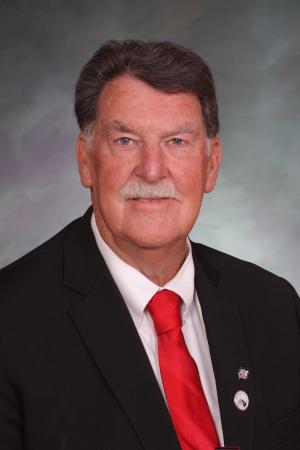
Don Coram
RRepublican
P

Marc Catlin
RRepublican
Ask Maddy
·
AI policy assistant
Ask Maddy about SB 21-072
Scope: CO
Hi! I can help you understand SB 21-072. What would you like to know?
Try one of these
i
Maddy answers using official bill text and legislative records. Always verify before sharing.
Sources cited inline