

Pre-trial Detention Reform
Summary
The act requires a court to hold a bond setting hearing within 48 hours after an arrestee's arrival at a jail or holding center beginning on April 1, 2022.Under current law, a person is allowed to post bond within 2 hours after the sheriff receives the bond information. The act repeals that requirement. The act states a bond may be paid at a minimum by cash, money order, or cashier's check, and a judge, judicial officer, or bond hearing officer shall not require a monetary bond be paid in the defendant's name. Unless extraordinary circumstances exist, the custodian of a jail shall release a defendant who is granted a personal recognizance bond no later than 6 hours after the defendant is back in jail, and in cases when cash bond is set, the defendant shall be released no later than 6 hours after bond is set, after the defendant is physically present in the jail, and after the defendant or surety notifies the jail that the defendant or surety is prepared to post bond. If the custodian fails to release the defendant within 6 hours after the bond has been set, the custodian shall inform the defendant and any person posting bond on behalf of the defendant the reason for the delay and shall document the reason for delay in the defendant's file. The act requires that after a bond has been paid, the defendant and surety, if any, receive a copy of the bond paperwork, a notice of rights related to bonding, and information regarding the defendant's next court date. The act requires each jurisdiction to establish a way to pay bond online by January 1, 2022. The act states that a bond is posted when the surety or defendant pays the bond as evidenced by the time stamp on the bond or bond receipt.Each sheriff shall post a notice of rights related to bonding on the sheriff's website, including information about how to file a complaint for violations. The sheriff shall include the notice in the inmate handbook and must provide the notice free of charge to anyone requesting a copy. The sheriff shall post a notice that contains the bonding information in the common area of the jail in a location clearly visible to the inmates and clearly visible in the public portion of the jail where a person posts bond.By October 1, 2021, each sheriff shall:Create written policies to comply with statutory bonding requirements; Review and update the sheriff's website, signage, paperwork, and forms related to bonding to reflect current law; and File a certificate of compliance with the statutory bonding provisions with the division of criminal justice in the department of public safety. The act provides that each defendant has a right to be represented by an attorney at a bond hearing and the prosecution has the right to be present at a bond hearing.The act creates the position of a bond hearing officer, who is a magistrate, to conduct bond hearings on weekends and holidays throughout the state using audiovisual technology. The bond hearing officer conducts bond hearings throughout the state in the counties that request the service of the bond hearing officer. The public will be able to view the hearings. For each case heard by the bond hearing officer, the arresting jurisdiction shall electronically transmit the arrest report, pretrial services information, and all other relevant information to the bond hearing officer prior to the hearing. The act creates the district attorney assistance for bond hearing grant program to assist smaller district attorneys' offices in covering the costs associated with the bond hearing officer hearings. The act appropriates $150,000 for the grant program.For the 2021-22 state fiscal year, the act appropriates $412,816 from the general fund and the judicial department information technology cash fund to the judicial department to implement the act. The act appropriates $67,136 from the general fund to the state public defender to implement the act. The act appropriates $19,500 from the general fund to the division of criminal justice in the department of public safety to implement the act.(Note: This summary applies to this bill as enacted.)
Bill status
signed
all 5 stages cleared
Introduction
Apr 2021
Committee Review
Jun 2021
House Passage
May 2021
Senate Passage
Jun 2021
Signed into Law
Jul 2021
Introduced Apr 16, 2021
Signed Jul 6, 2021
Floor votes · Senate Jun 4, 2021 · House May 20, 2021
How they voted
29–5
Passed
Total votes 34
Jun 4, 2021
D
Democratic20
100% Yea
R
Republican14
64% Yea
Vote distribution
All Yea
All Nay
Mixed
No data
Full legislative history
Actions timeline
Total actions
15
Key actions
5
Committee
4
Jul 6, 2021
Signed into law
Governor Signed
executive
Jun 4, 2021
Upper · Passed
Senate Third Reading Passed - No Amendments
upper
Jun 3, 2021
Upper · Passed
Senate Committee on Appropriations Refer Unamended - Consent Calendar to Senate Committee of the Whole
upper
May 25, 2021
Committee
Senate Committee on State, Veterans, & Military Affairs Refer Unamended to Appropriations
upper
May 20, 2021
Introduced
Introduced In Senate - Assigned to State, Veterans, & Military Affairs
upper
May 20, 2021
Lower · Passed
House Third Reading Passed - No Amendments
lower
May 14, 2021
Lower · Passed
House Committee on Appropriations Refer Amended to House Committee of the Whole
lower
May 5, 2021
Committee
House Committee on Judiciary Refer Amended to Appropriations
lower
Apr 16, 2021
Introduced
Introduced In House - Assigned to Judiciary
lower
4 primary · 0 co-sponsors
Sponsors
Role
Legislator
Party
State
District
P

Pete Lee
DDemocratic
P
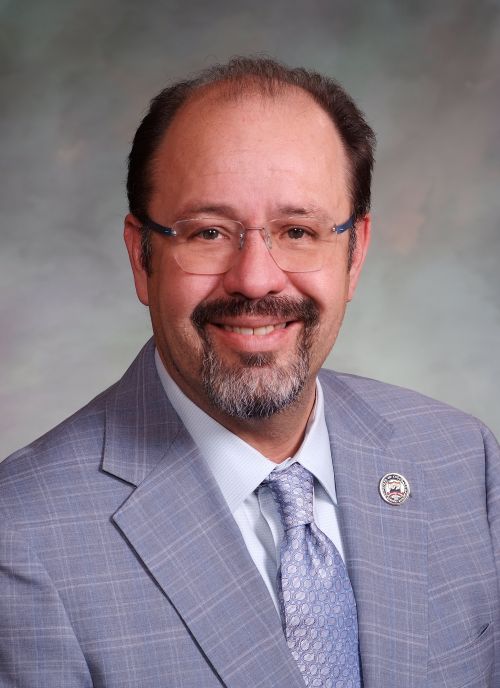
Robert Rodriguez
DDemocratic
P
SG
Serena Gonzales-Gutierrez
DDemocratic
P

Steven Woodrow
DDemocratic
Ask Maddy
·
AI policy assistant
Ask Maddy about HB 21-1280
Scope: CO
Hi! I can help you understand HB 21-1280. What would you like to know?
Try one of these
i
Maddy answers using official bill text and legislative records. Always verify before sharing.
Sources cited inline