

Update Processes Juvenile Sex Offender Registry
Summary
The act implements various recommendations of the legislative oversight committee concerning the treatment of persons with mental health disorders in the criminal and juvenile justice systems regarding juveniles who have committed sex offenses, including:Specifying that if a juvenile who is moving to Colorado would be otherwise required to register on Colorado's sex offender registry (registry) but the juvenile's duty to register in another state has been terminated by a court order, then the juvenile is not required to register or petition the court for removal from the registry; Expanding judicial discretion at the time of sentencing to exempt from registration or from requiring juveniles to register for all first offense registerable juvenile sex crimes if a sex offender management board evaluator recommends exemption and the juvenile is otherwise statutorily eligible; Adding language to adult or juvenile provisions that currently reference only crimes defined as "unlawful sexual behavior" to also include convictions and adjudications for nonsexual crimes where there has been, pursuant to statute, a judicial finding of an underlying factual basis involving unlawful sexual behavior; Adding a requirement for the court to send notice before the end of each juvenile's sentence concerning a juvenile's duty to register and set a hearing to consider the juvenile's ongoing duty to register; Adding language that if a person is required to register due to an adjudication or disposition as a juvenile, the duty to register automatically terminates either when the person reaches 25 years of age or 7 years from the date the juvenile was required to register, whichever occurs later; Adding language that if a person whose duty to register has automatically terminated either attempts to register or inquires with local law enforcement as to whether the duty to register has automatically terminated, local law enforcement shall advise the person that the person's duty to register terminated, remove the person from any local law enforcement registry, and notify the Colorado bureau of investigation (CBI) that the person's duty to register has terminated. Local law enforcement or the CBI may charge a fee, not to exceed $15, to determine whether a person's duty to register has terminated. Allowing a person whose duty to register arose from an adjudication or disposition as a juvenile, and whose duty to register automatically terminated when the person reached 25 years of age or 7 years had passed from the date the person was required to register, whichever was later, but the person's name has not already been removed from the sex offender registry, to petition for an order to remove the person's name from the sex offender registry; Changing the current law that allows the Colorado bureau of investigation (CBI) to inform a requesting party if a person is on the registry so that the CBI may release information about a juvenile only under certain restrictions; Requiring the CBI to collect data on the number of times information is requested and released concerning juveniles on the registry; Creating a new unclassified misdemeanor for members of the public who submit a false statement to the CBI for purposes of obtaining juvenile registry information or who use such information in a prohibited manner; Updating current law regarding the posting of information on the registry to the internet to specifically exclude juveniles; Clarifying that a local law enforcement agency may not release or post on its website information regarding juveniles on the registry; Changing current law that requires lifetime registration for an adult who has more than one adjudication as a juvenile so that juvenile adjudications alone may not trigger mandatory lifetime registration; and Updating language in the Colorado "Crime Victim Rights Act" to clarify victim rights when a petition or motion is made to terminate sex offender registration. For the 2021-22 state fiscal year, the act appropriates $7,200 to the department of public safety for use by the Colorado bureau of investigation. This appropriation is from the general fund. To implement this act, the division may use this appropriation for CCIC program support operating expenses related to the Colorado crime information center.(Note: This summary applies to this bill as enacted.)
Bill status
signed
all 5 stages cleared
Introduction
Feb 2021
Committee Review
May 2021
House Passage
Apr 2021
Senate Passage
May 2021
Signed into Law
Jun 2021
Introduced Feb 16, 2021
Signed Jun 24, 2021
Floor votes · Senate May 24, 2021 · House Apr 29, 2021
How they voted
23–11
Passed
Total votes 34
May 24, 2021
D
Democratic20
95% Yea
R
Republican14
71% Nay
Vote distribution
All Yea
All Nay
Mixed
No data
Full legislative history
Actions timeline
Total actions
14
Key actions
5
Committee
4
Jun 24, 2021
Signed into law
Governor Signed
executive
May 24, 2021
Upper · Passed
Senate Third Reading Passed - No Amendments
upper
May 21, 2021
Upper · Passed
Senate Committee on Appropriations Refer Unamended to Senate Committee of the Whole
upper
May 12, 2021
Committee
Senate Committee on Judiciary Refer Unamended to Appropriations
upper
Apr 30, 2021
Introduced
Introduced In Senate - Assigned to Judiciary
upper
Apr 29, 2021
Lower · Passed
House Third Reading Passed - No Amendments
lower
Apr 28, 2021
Lower · Passed
House Committee on Appropriations Refer Amended to House Committee of the Whole
lower
Feb 23, 2021
Committee
House Committee on Judiciary Refer Unamended to Appropriations
lower
Feb 16, 2021
Introduced
Introduced In House - Assigned to Judiciary
lower
3 primary · 0 co-sponsors
Sponsors
Role
Legislator
Party
State
District
P
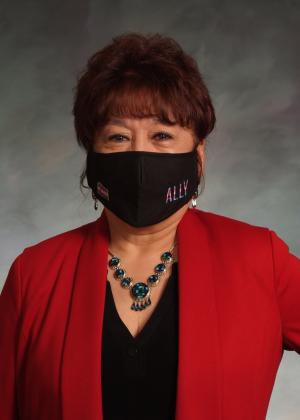
Adrienne Benavidez
DDemocratic
P

Judy Amabile
DDemocratic
P

Robert Rodriguez
DDemocratic
Ask Maddy
·
AI policy assistant
Ask Maddy about HB 21-1064
Scope: CO
Hi! I can help you understand HB 21-1064. What would you like to know?
Try one of these
i
Maddy answers using official bill text and legislative records. Always verify before sharing.
Sources cited inline