

Sunset Accountancy Board
Summary
State board of accountancy - continuing education requirements - continuation under sunset law. The automatic termination date of the regulation of accountants by the state board of accountancy is extended until September 1, 2030, pursuant to the provisions of the sunset law. The act implements the recommendations of the department of regulatory agencies' sunset review and report on the state board of accountancy by: Making the use of fraudulent, coercive, or dishonest practices, or the demonstration of incompetence, untrustworthiness, or financial irresponsibility, grounds for discipline (section 9 of the act); Clarifying that foreign corporations operating a Colorado office must register with the board and adding "limited liability partnership" to the list of business types that must register (section 8); Permitting a person that is not certified or registered to use an accounting designation that includes the word "management" conferred by a bona fide nationally recognized accounting organization if the designation does not purport to confer the right to perform audit or attest services (sections 4 and 7); Authorizing the board to take disciplinary action against uncertified or unregistered persons, including resident managers, if they provide services that require certification or registration (section 9); Allowing a person to request inactive status via any board-approved method (section 5); and Making technical changes (sections 5, 10, and 11). Section 3 updates the names of several regional accrediting agencies. Section 6 specifies that a nonresident certificate holder's completion of continuing education requirements in the holder's home state satisfies the Colorado continuing education requirements. Specified provisions of the act are contingent upon House Bill 19-1172 becoming law. (Note: This summary applies to this bill as enacted.) Read More
Bill status
signed
all 5 stages cleared
Introduction
Feb 2019
Committee Review
Apr 2019
Senate Passage
Apr 2019
House Passage
Apr 2019
Signed into Law
May 2019
Introduced Feb 21, 2019
Signed May 20, 2019
Floor votes · Senate Apr 26, 2019
How they voted
33–1
Passed
Total votes 34
Apr 26, 2019
D
Democratic21
100% Yea
R
Republican13
92% Yea
Vote distribution
All Yea
All Nay
Mixed
No data
Full legislative history
Actions timeline
Total actions
19
Key actions
5
Committee
6
Amendments
2
May 20, 2019
Signed into law
Governor Signed
executive
Apr 26, 2019
Senate · Passed
Senate Vote: pass (33-1)
senate
Apr 26, 2019
Introduced
Senate Considered House Amendments - Result was to Concur - Repass
upper
Apr 25, 2019
Introduced
Senate Considered House Amendments - Result was to Laid Over Daily
upper
Apr 24, 2019
Lower · Passed
House Third Reading Passed - No Amendments
lower
Apr 23, 2019
Committee
House Committee on Appropriations Refer Unamended to House Committee of the Whole
lower
Apr 19, 2019
Committee
House Committee on Finance Refer Unamended to Appropriations
lower
Apr 17, 2019
Committee
House Committee on Business Affairs & Labor Refer Amended to Finance
lower
Apr 11, 2019
Introduced
Introduced In House - Assigned to Business Affairs & Labor
lower
Apr 11, 2019
Upper · Passed
Senate Third Reading Passed - No Amendments
upper
Apr 9, 2019
Upper · Passed
Senate Committee on Appropriations Refer Unamended - Consent Calendar to Senate Committee of the Whole
upper
Mar 26, 2019
Committee
Senate Committee on Finance Refer Unamended to Appropriations
upper
Mar 13, 2019
Committee
Senate Committee on Business, Labor, & Technology Refer Amended to Finance
upper
Feb 21, 2019
Introduced
Introduced In Senate - Assigned to Business, Labor, & Technology
upper
4 primary · 0 co-sponsors
Sponsors
Role
Legislator
Party
State
District
P
AW
Angela Williams
DDemocratic
P
KP
Kevin Priola
DDemocratic
P
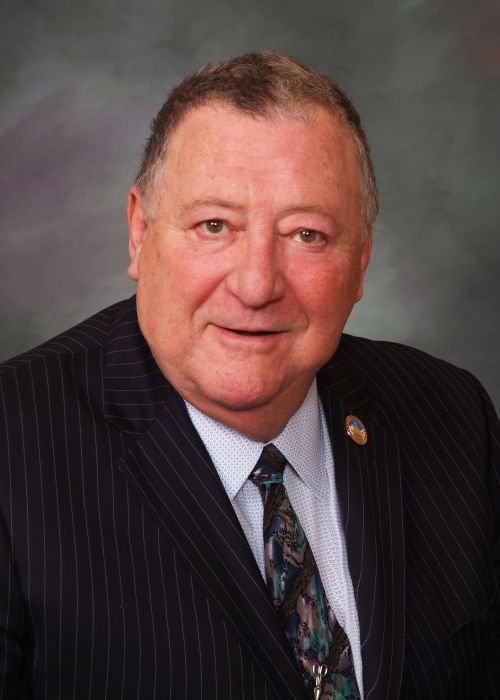
Marc Snyder
DDemocratic
P
TK
Tracy Kraft-Tharp
DDemocratic
Ask Maddy
·
AI policy assistant
Ask Maddy about SB 19-155
Scope: CO
Hi! I can help you understand SB 19-155. What would you like to know?
Try one of these
i
Maddy answers using official bill text and legislative records. Always verify before sharing.
Sources cited inline