

Enforce Requirements 811 Locate Underground Facilities
Summary
Current law requires a person, before conducting an excavation, to contact a nonprofit notification association (comprised of all owners and operators of underground facilities) by dialing '811' to learn the location of underground facilities in the excavation project area. The owners and operators must then accurately mark the location of their facilities. Violations of the excavation damage prevention law are enforced exclusively through civil actions initiated by damaged parties to collect specified civil penalties and damages. In 2016, the United States department of transportation's pipeline and hazardous materials safety administration (PHMSA) conducted an adequacy evaluation of Colorado's enforcement of its excavation damage prevention law and determined that the enforcement is inadequate, which may eventually result in the withholding of federal funds from Colorado. The bill creates the underground damage prevention safety commission (commission) as an independent agency within the department of labor and employment. The commission has rule-making and enforcement authority regarding specified portions of the excavation damage prevention law and is required to enter into a memorandum of understanding with the notification association to facilitate implementation and administration of the law. The notification association is required to provide administrative support to the commission in performing its duties. A review committee of the commission initially determines whether a violation of the law has occurred and, if appropriate, recommends remedial action, potentially including a fine. Fines range from $250 for a single minor violation within the previous 12 months to $75,000 for a fourth major violation within the previous 12 months. The full commission is bound by the review committee's determination of facts but determines the final agency action regarding alleged violations. Fines are credited to the damage prevention fund, which the commission will use to develop educational programming, including by making grants, that is designed to improve worker and public safety relating to excavation and underground facilities. Current law allows only an excavator to submit a location request to the notification association. The bill authorizes a licensed professional engineer designing excavation to submit a location request. The engineer is required to ensure that the engineering plans meet certain standards established by the American Society of Civil Engineers for defining the accuracy of an underground facility location. Current law creates 2 tiers of membership in the notification association. Tier 2 members are limited members with limited benefits and include certain special districts, local governments, cable television providers, and small telecommunications providers; tier 1 members are full members with full benefits, and tier 1 consists of all other owners and operators. If, after receiving a location request, the notification association determines that a tier 1 member owns or operates the underground facilities, the notification association contacts the tier 1 member to arrange for the marking of the underground facilities. If a tier 2 member owns or operates the underground facilities, the excavator must contact the tier 2 member to arrange for the marking of the underground facilities. Effective January 1, 2021, all underground facility owners and operators are full members of the notification association with full benefits, and excavators will no longer need to contact the owners or operators to arrange for the marking. All new underground facilities installed on or after January 1, 2020, must be electronically locatable when installed. Home rule local governments and power authorities are not subject to the commission's enforcement authority, but the governing body of a home rule local government or power authority is required to either adopt a similar enforceable damage prevention safety program or waive its exemption and delegate its damage prevention enforcement authority to the commission. Information regarding the location of underground facilities is exempt from the 'Colorado Open Records Act', pursuant to the existing exemption for specialized details of critical infrastructure. (Note: This summary applies to the reengrossed version of this bill as introduced in the second house.) , Read More
Bill status
signed
all 5 stages cleared
Introduction
Feb 2018
Committee Review
May 2018
Senate Passage
Apr 2018
House Passage
May 2018
Signed into Law
May 2018
Introduced Feb 12, 2018
Signed May 25, 2018
Floor votes · House May 3, 2018
How they voted
52–1
Passed
Total votes 53
May 3, 2018
D
Democratic29
96% Yea
R
Republican24
100% Yea
Vote distribution
All Yea
All Nay
Mixed
No data
Full legislative history
Actions timeline
Total actions
17
Key actions
2
Committee
5
Amendments
1
May 25, 2018
Signed into law
Governor Signed
executive
May 3, 2018
House · Passed
House Vote: pass (52-1)
house
May 3, 2018
Introduced
Senate Considered House Amendments - Result was to Concur - Repass
upper
May 2, 2018
Committee
House Committee on Appropriations Refer Unamended to House Committee of the Whole
lower
Apr 30, 2018
Committee
House Committee on Finance Refer Amended to Appropriations
lower
Apr 27, 2018
Introduced
Introduced In House - Assigned to Finance
lower
Apr 24, 2018
Committee
Senate Committee on Appropriations Refer Amended to Senate Committee of the Whole
upper
Mar 1, 2018
Committee
Senate Committee on Finance Refer Amended to Appropriations
upper
Feb 22, 2018
Committee
Senate Committee on Transportation Refer Amended to Finance
upper
Feb 12, 2018
Introduced
Introduced In Senate - Assigned to Transportation
upper
4 primary · 0 co-sponsors
Sponsors
Role
Legislator
Party
State
District
P
FW
Faith Winter
DDemocratic
P

Kerry Donovan
DDemocratic
P
LS
Lori Saine
RRepublican
P
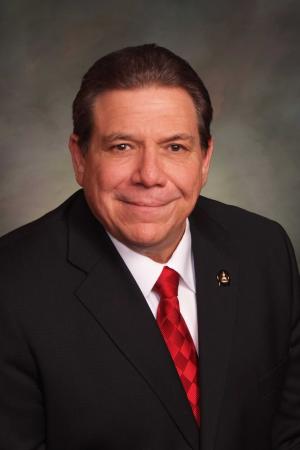
Ray Scott
RRepublican
Ask Maddy
·
AI policy assistant
Ask Maddy about SB 18-167
Scope: CO
Hi! I can help you understand SB 18-167. What would you like to know?
Try one of these
i
Maddy answers using official bill text and legislative records. Always verify before sharing.
Sources cited inline