

Freestanding Emergency Departments Required Consumer Notices
Summary
The bill requires a freestanding emergency department (FSED), whether operated by a hospital at a separate, off-campus location or operating independently of a hospital system, to provide any individual that enters the FSED seeking treatment a written statement of patient information, which an FSED staff member or health care provider must explain orally and which must indicate that: The facility is an emergency medical facility that treats emergency medical conditions; For FSEDs that do not include an urgent care clinic on site, the facility is not an urgent care center or primary care provider; For FSEDs that includes an urgent care clinic on site, the facility contains an urgent care center and operates at specified hours; The FSED will screen and treat the individual regardless of ability to pay; The individual has a right to ask questions about treatment options and costs and to receive prompt and reasonable responses; The individual has a right to reject treatment; The FSED encourages the individual to defer questions until after being screened for an emergency medical condition; and The facility will provide the patient a more comprehensive statement of patient's rights after initial screening or treatment, as applicable. The state board of health is authorized to update the patient information statement contents, by rule, as necessary. Additionally, an FSED must post a sign that states 'This is an emergency medical facility that treats emergency medical conditions.' The sign must also indicate whether the facility contains an urgent care clinic. After conducting an initial screening and determining that a patient does not have an emergency medical condition or after treatment has been provided to stabilize an emergency medical condition, the FSED must provide the patient a written disclosure that: Specifies whether the facility accepts patients enrolled in medicaid, medicare, the children's basic health plan, or TRICARE; Lists the particular health insurance provider networks and carriers with which the FSED participates or states that the FSED is not a participating provider in any provider networks; Specifies the price listed on the FSED's chargemaster or other fee schedule for the 25 most common health care services it provides; Contains the price listed on the FSED's chargemaster or other fee schedule for the facility fees associated with the 25 most common health care services the FSED provides; Contains a statement specifying that the price listed on the chargemaster or fee schedule for any given health care service is the maximum charge that any patient will be billed and that the actual charge for a health care service may be lower based on health insurance benefits and the availability of discounts and financial assistance; Contains a statement urging a person covered by health insurance to contact his or her health insurer for information about his or her financial responsibility and a person who is uninsured to contact the FSED's financial services office to discuss payment options and the availability of financial assistance prior to receiving health care services; Contains information about the facility fees that the FSED charges; and Includes the FSED's website address where the disclosure may be located. The FSED must also post the information in the written disclosure on its website and update the written and web-based disclosure at least once every 6 months. Additionally, the FSED must provide all information in a clear and understandable manner and in languages appropriate to the communities and patients it serves. The state board of health is authorized to adopt rules to implement and enforce the requirements of the bill. $34,725 is appropriated from the health facilities general licensure cash fund to the health facilities and emergency medical services division in the department of public health and environment for administration and operations. (Note: This summary applies to the reengrossed version of this bill as introduced in the second house.) , Read More
Bill status
signed
all 5 stages cleared
Introduction
Jan 2018
Committee Review
Apr 2018
Senate Passage
Mar 2018
House Passage
Apr 2018
Signed into Law
Apr 2018
Introduced Jan 29, 2018
Signed Apr 25, 2018
Floor votes · Senate Apr 10, 2018
How they voted
41–10
Passed · 2 other
Total votes 53
Apr 10, 2018
D
Democratic29
93% Yea
R
Republican24
58% Yea
Vote distribution
All Yea
All Nay
Mixed
No data
Full legislative history
Actions timeline
Total actions
19
Key actions
2
Committee
6
Amendments
1
Apr 25, 2018
Signed into law
Governor Signed
executive
Apr 10, 2018
Senate · Passed
Senate Vote: pass (41-10-2)
senate
Apr 10, 2018
Introduced
Senate Considered House Amendments - Result was to Concur - Repass
upper
Apr 6, 2018
Committee
House Committee on Appropriations Refer Unamended to House Committee of the Whole
lower
Mar 26, 2018
Committee
House Committee on Finance Refer Unamended to Appropriations
lower
Mar 15, 2018
Committee
House Committee on Health, Insurance, & Environment Refer Amended to Finance
lower
Mar 5, 2018
Introduced
Introduced In House - Assigned to Health, Insurance, & Environment
lower
Feb 27, 2018
Committee
Senate Committee on Appropriations Refer Amended to Senate Committee of the Whole
upper
Feb 20, 2018
Committee
Senate Committee on Finance Refer Unamended to Appropriations
upper
Feb 14, 2018
Committee
Senate Committee on Health & Human Services Refer Amended to Finance
upper
Jan 29, 2018
Introduced
Introduced In Senate - Assigned to Health & Human Services
upper
4 primary · 0 co-sponsors
Sponsors
Role
Legislator
Party
State
District
P
JS
Jim Smallwood
RRepublican
P
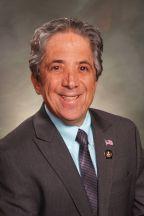
John Kefalas
DDemocratic
P
JS
Jonathan Singer
DDemocratic
P

Lang Sias
RRepublican
Ask Maddy
·
AI policy assistant
Ask Maddy about SB 18-146
Scope: CO
Hi! I can help you understand SB 18-146. What would you like to know?
Try one of these
i
Maddy answers using official bill text and legislative records. Always verify before sharing.
Sources cited inline