

Distributing Mill Levy Override Revenue To Schools
Summary
Beginning in the 2019-20 budget year, the bill requires school districts that collect revenue from mill levies in addition to the total program mill levy and that authorize an innovation school or a charter school to: adopt a plan for distributing the revenue to the schools of the school district for the benefit of the students enrolled in the school district; or distribute 95% of the per pupil amount of the revenue to the innovation schools and charter schools of the school district (per pupil distribution). The bill specifies the requirements for the plan and requirements that apply if the school district makes a per pupil distribution. In adopting a plan or making a per pupil distribution, the school district may distribute a portion of the revenue specifically for specified underserved populations. If a school district is distributing a portion of the mill levy revenue to the charter schools or innovation schools of the school district during the 2016-17 budget year, it must maintain the same distribution amount for the 2017-18 and 2018-19 budget years. By July 1, 2018, each school district that chooses to adopt a plan must post the plan on the school district's website. If the school district chooses to distribute 95% of the per pupil amount, the school district must post a notice of such intent by July 1, 2018, and, starting July 1, 2019, must post the amount received in revenue, the amount distributed for underserved populations, and the amount distributed to each charter school and each innovation school. Commencing July 1, 2018, the charter school institute and each school district, board of cooperative services, and charter school must post on its website a link to certain federal tax forms and schedules filed by the institute, school district, board of cooperative services, or charter school. Commencing July 1, 2017, each school district and each charter school must post a list of the waivers of state statute that it has received and, for each nonautomatic waiver, the plan for meeting the intent of the statute. The department of education, the state charter school institute, and a statewide association of charter schools must create a standardized description of each of the statutes for which the state board of education grants an automatic waiver and the rationale for granting the automatic waiver. Starting July 1, 2018, each charter school must post the description and rationale for each of the automatic waivers it is invoking. The bill creates the mill levy equalization fund, consisting of such money as the general assembly may appropriate to it, to provide additional funding for institute charter schools. (Note: This summary applies to the reengrossed version of this bill as introduced in the second house.)
Bill status
signed
all 5 stages cleared
Introduction
May 2017
Committee Review
May 2017
House Passage
May 2017
Senate Passage
May 2017
Signed into Law
Jun 2017
Introduced May 8, 2017
Signed Jun 2, 2017
Floor votes
How they voted
No floor votes recorded yet.
Full legislative history
Actions timeline
Total actions
12
Key actions
1
Committee
2
Jun 2, 2017
Signed into law
Governor Signed
executive
May 9, 2017
Committee
Senate Committee on State, Veterans, & Military Affairs Refer Unamended to Senate Committee of the Whole
legislature
May 9, 2017
Introduced
Introduced In Senate - Assigned to State, Veterans, & Military Affairs
legislature
May 8, 2017
Committee
House Committee on Education Refer Unamended to House Committee of the Whole
legislature
May 8, 2017
Introduced
Introduced In House - Assigned to Education
legislature
3 primary · 0 co-sponsors
Sponsors
Role
Legislator
Party
State
District
P
BP
Brittany Pettersen
DDemocratic
P
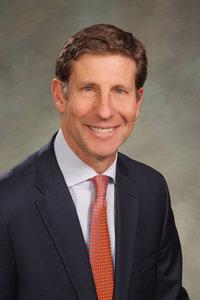
Lang Sias
RRepublican
P
OH
Owen Hill
RRepublican
Ask Maddy
·
AI policy assistant
Ask Maddy about HB 17-1375
Scope: CO
Hi! I can help you understand HB 17-1375. What would you like to know?
Try one of these
i
Maddy answers using official bill text and legislative records. Always verify before sharing.
Sources cited inline