

Maddy summaryHB 1001 reduces income tax rates for Arkansas residents, including individuals, trusts, estates, and both domestic and foreign corporations. For individuals, the bill establishes a progressive tax structure with rates ranging from 0% to 3.7% for income up to $94,700, while providing a specific tax credit for income between $94,701 and $97,600. Corporations see their tax brackets adjusted starting in 2027, with rates increasing from 1% to 4.1% on net income exceeding $11,000. The legislation also includes provisions for annual adjustments to the individual tax tables to account for inflation or other economic factors.

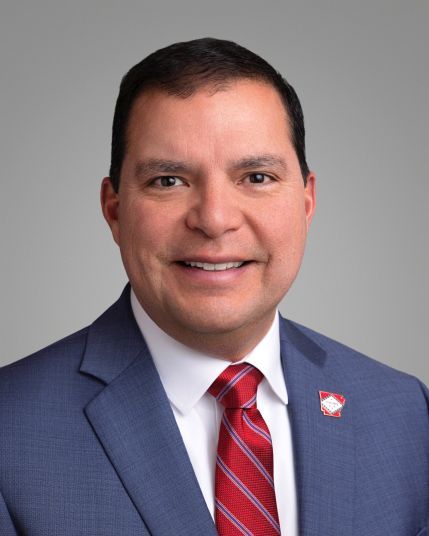
Rep. Randy Torres
Sponsored bills
Maddy summaryThis House Resolution expresses support for Arkansas poultry producers in the Illinois River Watershed and calls for good faith negotiations to resolve ongoing environmental disputes. The measure recognizes the economic importance of poultry farming to the state and acknowledges the industry's investments in conservation practices and wastewater treatment. By adopting this resolution, the House affirms its commitment to balancing agricultural viability with environmental protection without creating new laws or regulations.
Maddy summaryHouse Bill 1534 proposes to increase the existing homestead property tax credit. This bill directly affects homeowners by reducing the amount of property taxes they owe on their primary residence. The key mechanism is an adjustment to the credit amount, providing a larger tax reduction for eligible households.
Maddy summarySenate Bill 394, as amended, modifies the conditions under which a county's quorum court can refer changes in the allocation of county sales and use tax revenues for capital improvements to a public vote. It stipulates that such a public vote on revenue distribution among the county and its municipalities is permissible only if the population of the largest municipality in the county exceeds the population of the unincorporated areas of the county. This change directly affects county quorum courts and the process for altering how these specific tax revenues are divided within a county.
Maddy summarySB 526 proposed to prohibit the retail sale of specific disposable vapor products in Arkansas. It defined a "disposable vapor product" as one with a non-detachable battery that cannot be refilled and is designed for disposal after use. The bill would have banned retailers from selling such products if they originated from a "prohibited foreign party." The Director of Arkansas Tobacco Control could seize non-compliant products, with violations being a Class A misdemeanor, although FDA-approved products were exempt. A 90-day grace period was included for businesses to liquidate existing inventory.
Maddy summarySenate Bill 315, titled the "Farmer Protection Act," aims to prevent large financial institutions from discriminating against Arkansas agriculture producers. The bill prohibits financial institutions with over $100 billion in assets from denying or restricting financial services to farmers based on their greenhouse gas emissions, use of fossil-fuel derived fertilizer, or reliance on fossil-fuel powered machinery. It creates a rebuttable presumption of discrimination if such an institution with environmental, social, and governance (ESG) commitments denies services to a farmer. The Arkansas Attorney General and the Secretary of the Department of Agriculture are responsible for enforcing these provisions, with powers to investigate and assess civil penalties.
Maddy summaryHB 1180, also known as the "Baby Olivia Act," mandates specific video content for human fetal growth and development discussions. These discussions must include a high-definition ultrasound video showing early fetal organ development. Additionally, a video at least three minutes long depicting fertilization and every stage of human development inside the uterus until birth is required. The bill tasks the Division of Elementary and Secondary Education with approving a list of these videos, specifically mentioning the "Meet Baby Olivia" video. This legislation would affect the content of educational discussions on fetal development and the responsibilities of the Division of Elementary and Secondary Education.
Maddy summarySenate Bill 204 proposes to exempt certain financial gains from state gross income for tax purposes. This exemption would apply to taxpayers whose property is acquired by a government or entity under the right of eminent domain or the threat of condemnation. Essentially, any profit a property owner makes from such a forced sale would not be considered taxable income under this bill.
Maddy summaryHouse Bill 1626, as amended, aimed to prohibit the sale of certain disposable vapor products. The bill's central provision was to ban the sale of disposable vapor products that originate from a "prohibited foreign party," a term defined by referencing an existing legal statute (§ 18-11-802). This measure would have directly impacted retailers selling vapor products and consumers who purchase them. The bill did not pass and died in committee.
Maddy summaryHouse Joint Resolution 1004 (HJR 1004) proposes that the state formally requests the United States Congress to call a Convention of the States. The specific purpose of this convention would be to propose an amendment to the U.S. Constitution. This amendment would establish term limits for members of the United States Congress, directly affecting those who serve in the House of Representatives and the Senate.