

Maddy summaryHB 195 expands pharmacists' authority to independently prescribe and administer certain medications. It allows pharmacists to prescribe vaccines and opioid overdose drugs (like naloxone) without a physician's order, provided they complete board-approved training programs. The bill also updates licensing standards, requires pharmacists to register controlled substance prescriptions in a state database, and clarifies pharmacy facility and equipment requirements. These changes directly affect licensed pharmacists in Alaska and patients seeking vaccinations or emergency overdose treatment. The bill amends existing pharmacy practice laws to modernize pharmacist roles while maintaining safety oversight.

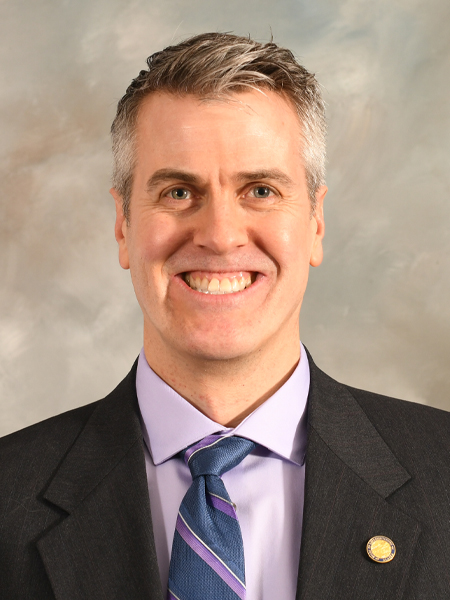
Rep. Andrew Gray
Sponsored bills
Maddy summaryHB 10 requires the University of Alaska Board of Regents to include at least one full-time, tenured faculty member from one of the three main campuses (Anchorage, Fairbanks, or Southeast) as a regent. This faculty regent must be selected through campus elections by each university's faculty senate, with the governor appointing from the submitted list within 60 days. The bill also reduces the board's quorum requirement from seven to six regents for meetings. These changes directly affect the governance structure of the University of Alaska system, ensuring faculty representation on its governing board.
Maddy summarySB 249 regulates virtual currency kiosks in Alaska by requiring operators to hold a money transmission license and register with the state before operating. It mandates detailed quarterly reports on transactions, locations, and declined transactions, plus annual reports on revenue, user complaints, refunds, and suspicious activity. Operators must also disclose terms clearly to users and provide transaction data to the department upon request. The bill directly affects kiosk operators by imposing licensing, registration, and reporting obligations, while protecting user data confidentiality (with public annual summaries). These provisions aim to ensure transparency and prevent deceptive practices in virtual currency transactions.
Maddy summaryHB 173 implements Alaska’s participation in the Occupational Therapy Licensure Compact, allowing licensed occupational therapists and assistants to practice across state lines without obtaining separate licenses in each state. The bill amends Alaska law to adopt the compact, which requires states to recognize licenses from other participating states while maintaining local regulatory authority. This directly affects licensed occupational therapists, assistants, and patients seeking services in multiple states, particularly those living near state borders. The compact aims to improve public access to occupational therapy services by simplifying cross-state practice under existing licensure standards.
Maddy summaryHB 110 enables Alaska to join a multi-state social work licensure compact, allowing licensed social workers from participating states to practice in Alaska without obtaining a separate license. The bill updates Alaska's licensing regulations to align with the compact, requiring continuing education, professional ethics standards, and practice guidelines for all licensees. It also clarifies penalties for practicing social work without a valid license or using restricted titles (like "LCSW") while holding a suspended or expired license. This directly affects social workers seeking to practice across state lines and the Alaska Board of Social Work, which must implement the compact's requirements. The changes take effect upon the bill's approval, streamlining licensure for mobile social work professionals.
Maddy summaryHB 36 amends Alaska law to allow minors aged 16 or older in foster care to consent to up to five outpatient mental health sessions without parental permission. After five sessions, mental health providers must obtain parental consent for medication or continued treatment. The bill also establishes documentation standards for homeless minors (16+ years) to self-certify eligibility for consent, requiring verification from specific officials or professionals. It directly affects youth in Alaska’s child welfare system receiving mental health services, particularly those in foster care or experiencing homelessness.
Maddy summaryHB 79 is a procedural bill that names a specific marine park unit within Alaska's state park system as "Vic Fischer Shoup Bay State Marine Park." It directly affects the official designation of this protected coastal area, which is part of Alaska's state park system. The bill amends Alaska Statutes to formally adopt this name for the marine park unit previously designated under section (a)(4) of AS 41.21.304. This change has no policy impact beyond the park's official naming.
Maddy summaryHB 39 requires Alaska public school districts to provide parents of deaf or hard of hearing students with unbiased information about hearing technology, communication methods (like sign language or spoken language), and support services. It mandates that districts allow parents to choose the communication method for their child and deliver services using that method through trained professionals. The bill also requires the state to support programs for deaf students, including residential options, and sets procedures for school districts operating these programs while maintaining special education responsibilities.
Maddy summaryHB 13 would allow Alaska municipalities to create optional property tax exemptions for specific housing types. It enables cities to exempt long-term rental units (90+ days), mobile home parks (for 10 years after construction), low-income rentals (rent ≤30% of local median income), owner-occupied homes, and first-time homebuyers' residences. Municipalities would decide whether to implement these exemptions via local ordinance, with no requirement to do so. The bill directly affects property owners in these categories and local governments managing tax policy.
Maddy summaryHB 96 establishes a Home Care Employment Standards Advisory Board within Alaska's Department of Health. The board, composed of 10 members representing home care providers, direct care workers, home care recipients, rate reviewers, seniors, and disability advocates, will advise on payment rates for home care services and investigate workforce conditions like wages and benefits. It requires the board to meet at least three times yearly, include public testimony, and focus on ensuring payment rates meet federal requirements and support a stable workforce. The bill directly affects home care workers, providers, and recipients of home care services in Alaska by creating a structured process to address payment adequacy and working conditions.